When Emotions Have Nowhere to Go, I Paint: Painting As Therapy for Mental Health
When emotions have nowhere to go, they live in the body. This essay explores painting as therapy. This is where color, movement, and mess become a way to release what words can’t hold.
For me, emotions are complicated. Some emotions are cocoons yielding butterflies that flit and flutter in my stomach. Others are electric, making me want to dance, sending chills and rhythm through my body like heartstrings plucked to bass.
And then there are the painful ones.
The excruciating emotions that break you open.
The ones we’re told are unacceptable.
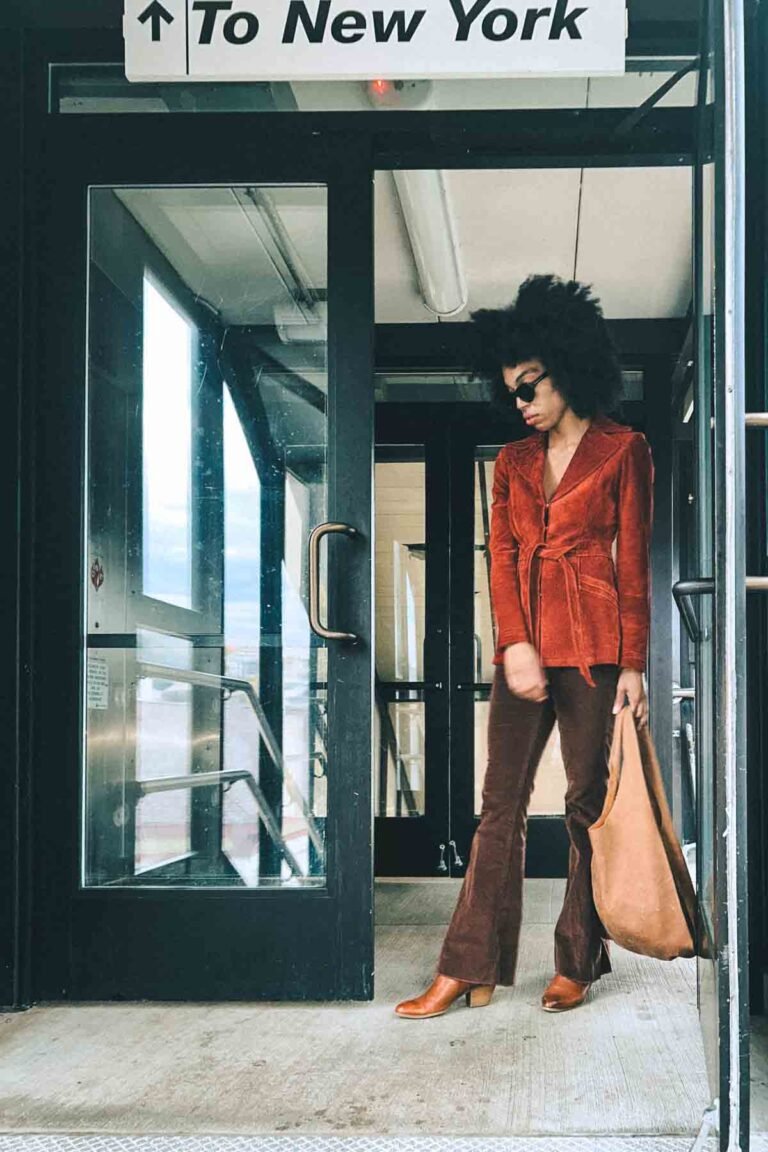
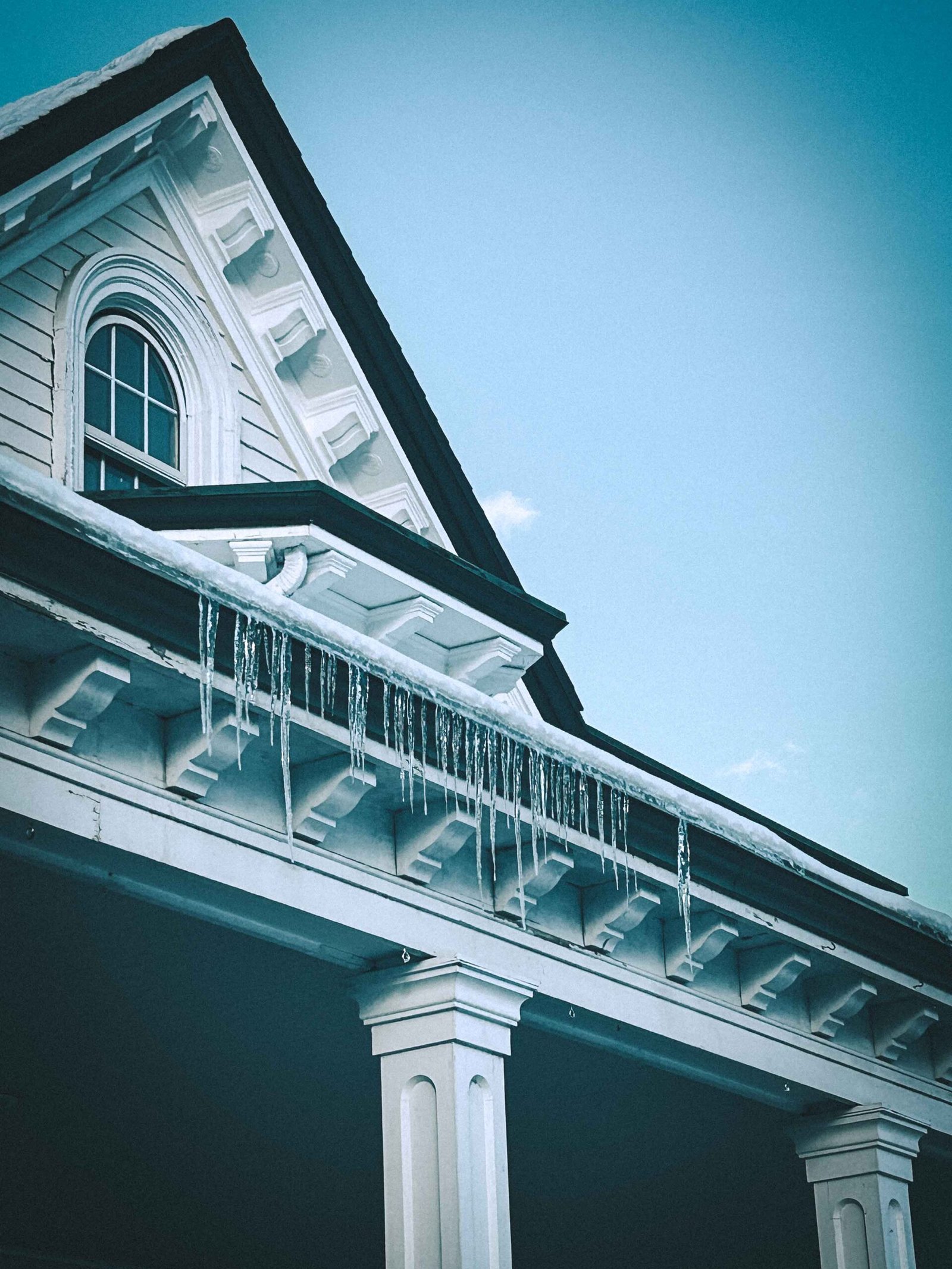
The ones we moralize and compartmentalize, as if being human means to only be happy and joyous. These feelings I often carry quietly, turning to painting as therapy when words fall short. The winter season in New York doesn’t make it any better, always gloomy and grey outside, mirroring the heaviness I feel when nothing seems to be happening.
I’ve tried to swat these emotions away. But the emotions burn in my chest like a gardener scraping frostbitten soil after an unexpected freeze—hands numb, ground unyielding. Deep and unrelenting, they feel like an axe striking the base of a tree hollowed out by months of sadness, its core rotted and then discarded.
I’d like to say emotions respond to logic.
To kind words from family and friends.
To accomplishments and hard work.
To retail therapy and carefully applied makeup meant to hide the sadness.
But mine don’t.
You’d never guess from the sheen of my lip gloss, glossy as the fashion magazines I hold close like gospel, or from my carefully done eyeliner. From the designer labels I find thrifting. From the art shows that look, from the outside, like success. From praise that disappears once the makeup is wiped away and the performance ends.
I wish I could say the gym dissolves it. Or that the thrill of hunting at Goodwill makes it lift. Sometimes it softens the edges. But the sadness doesn’t disappear; it waits. It settles back in, familiar and unannounced.
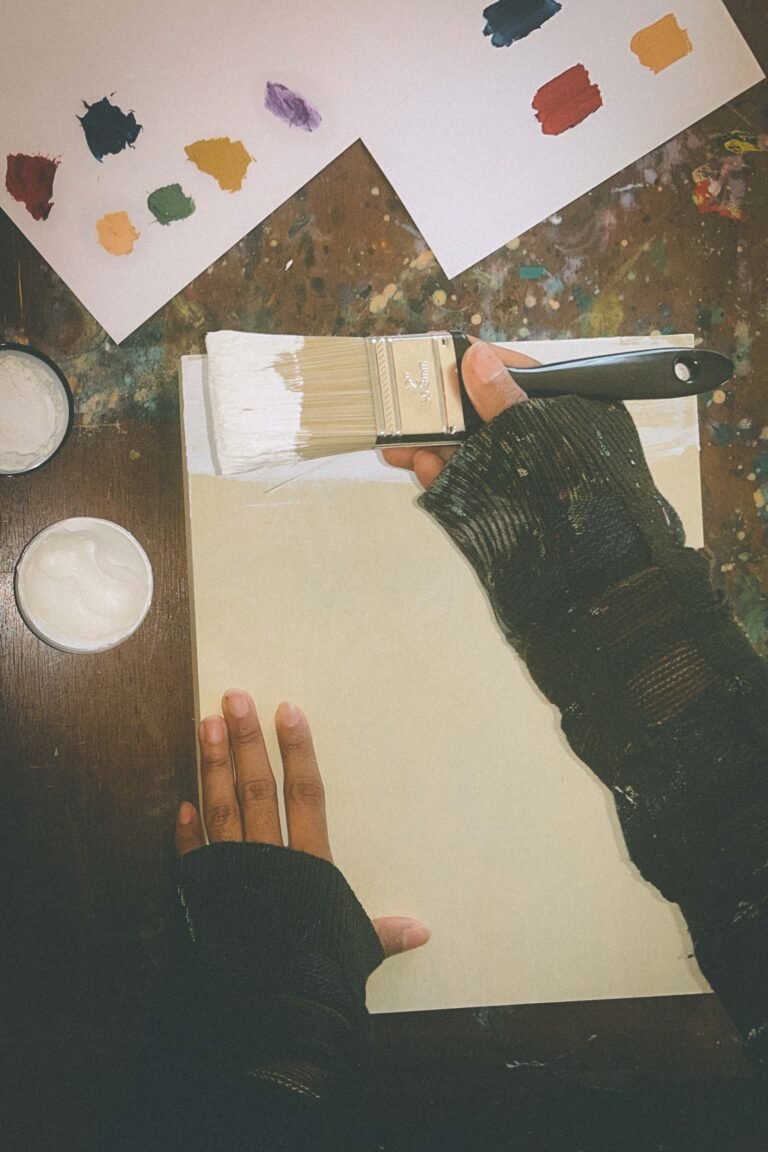
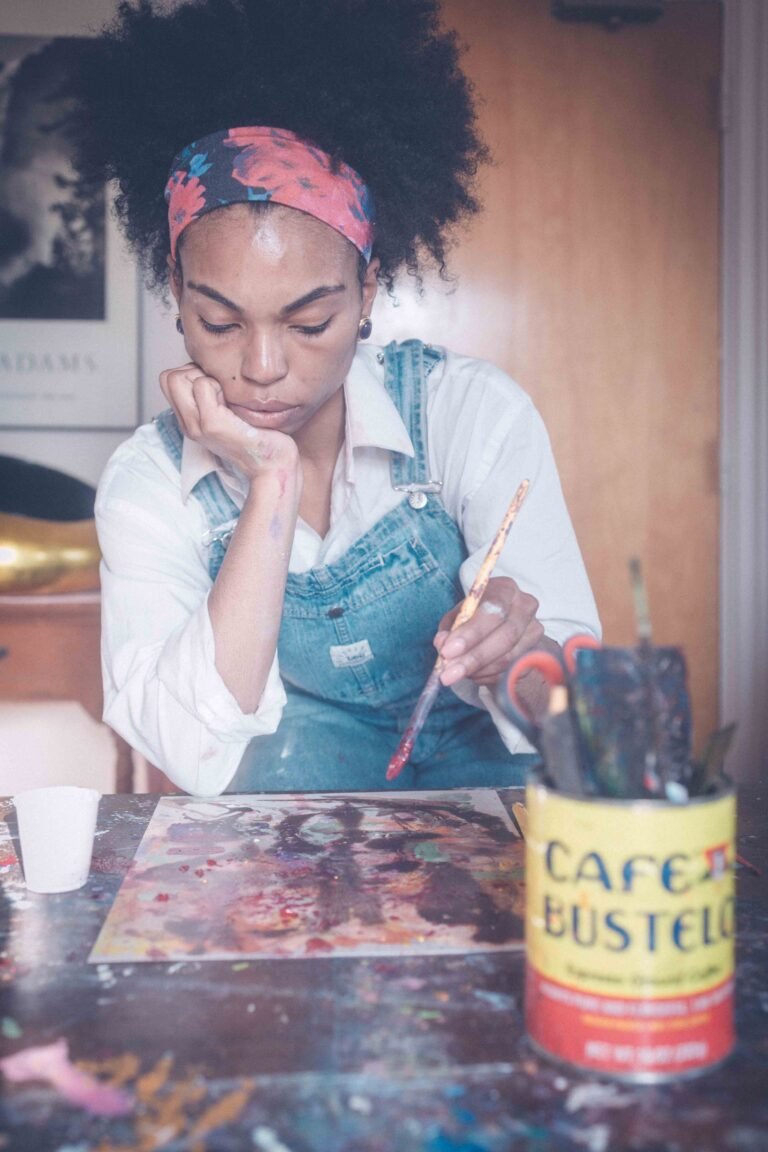
When I feel this way, bruised, beaten, and overflowing with angst, I go to my art table.
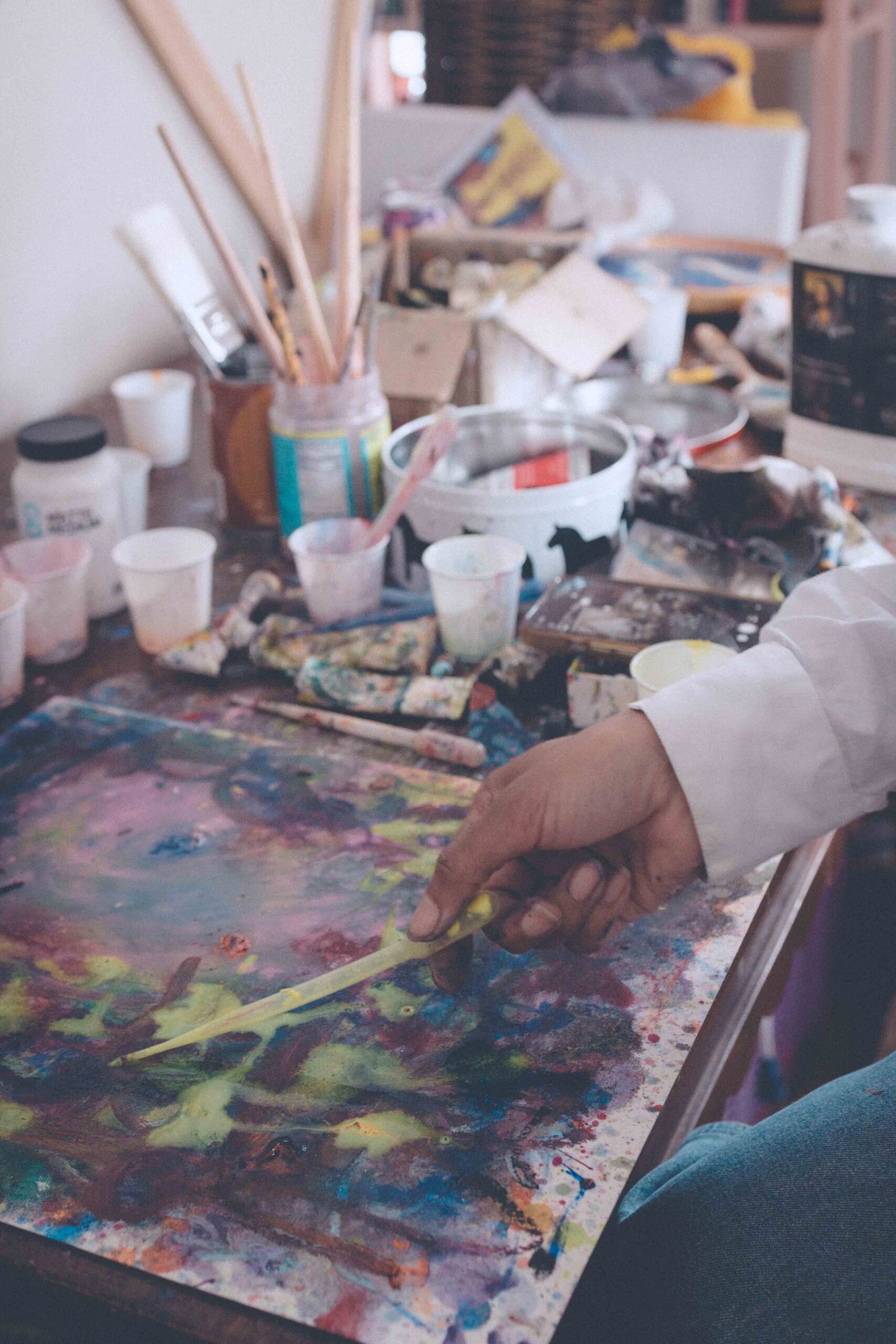
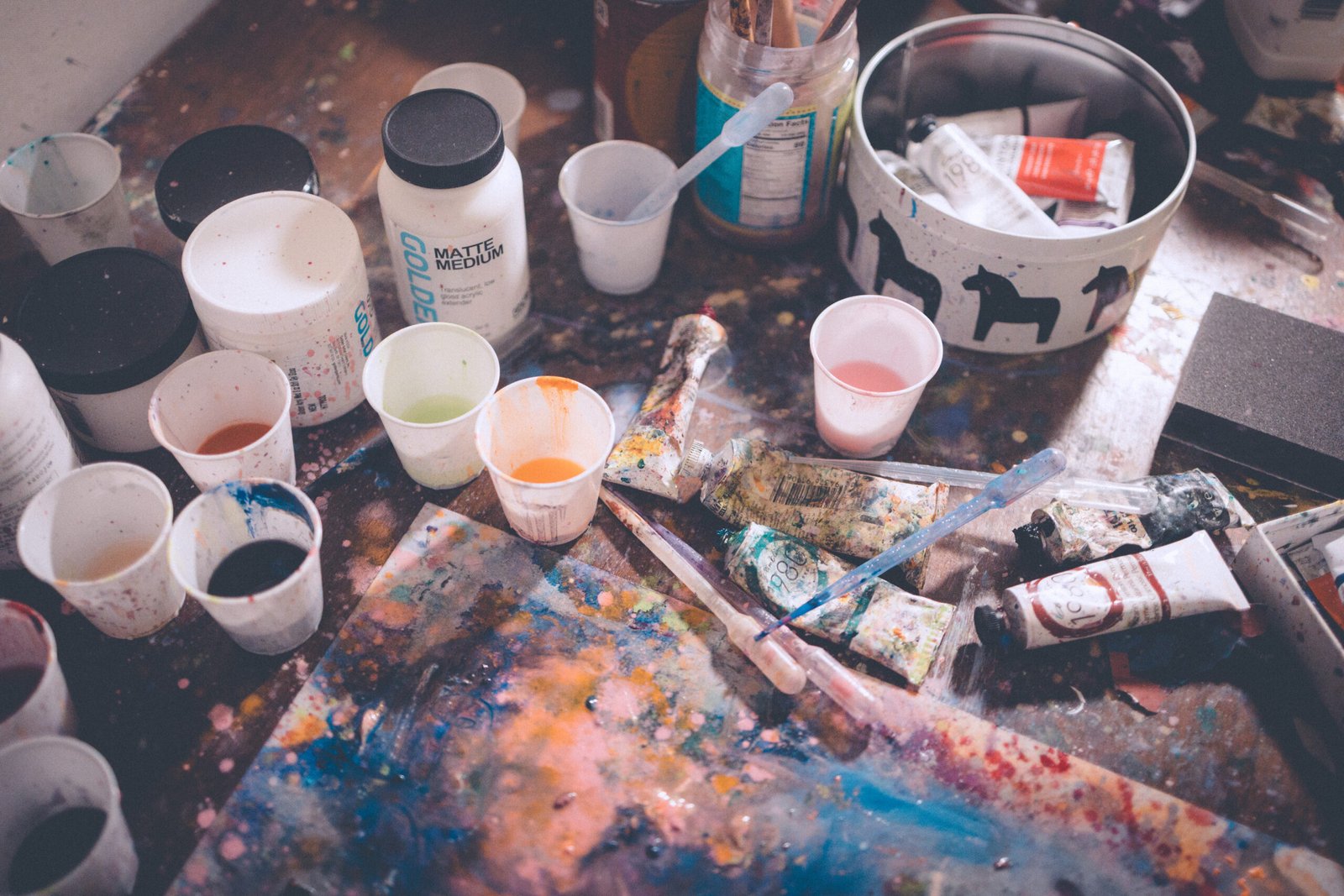
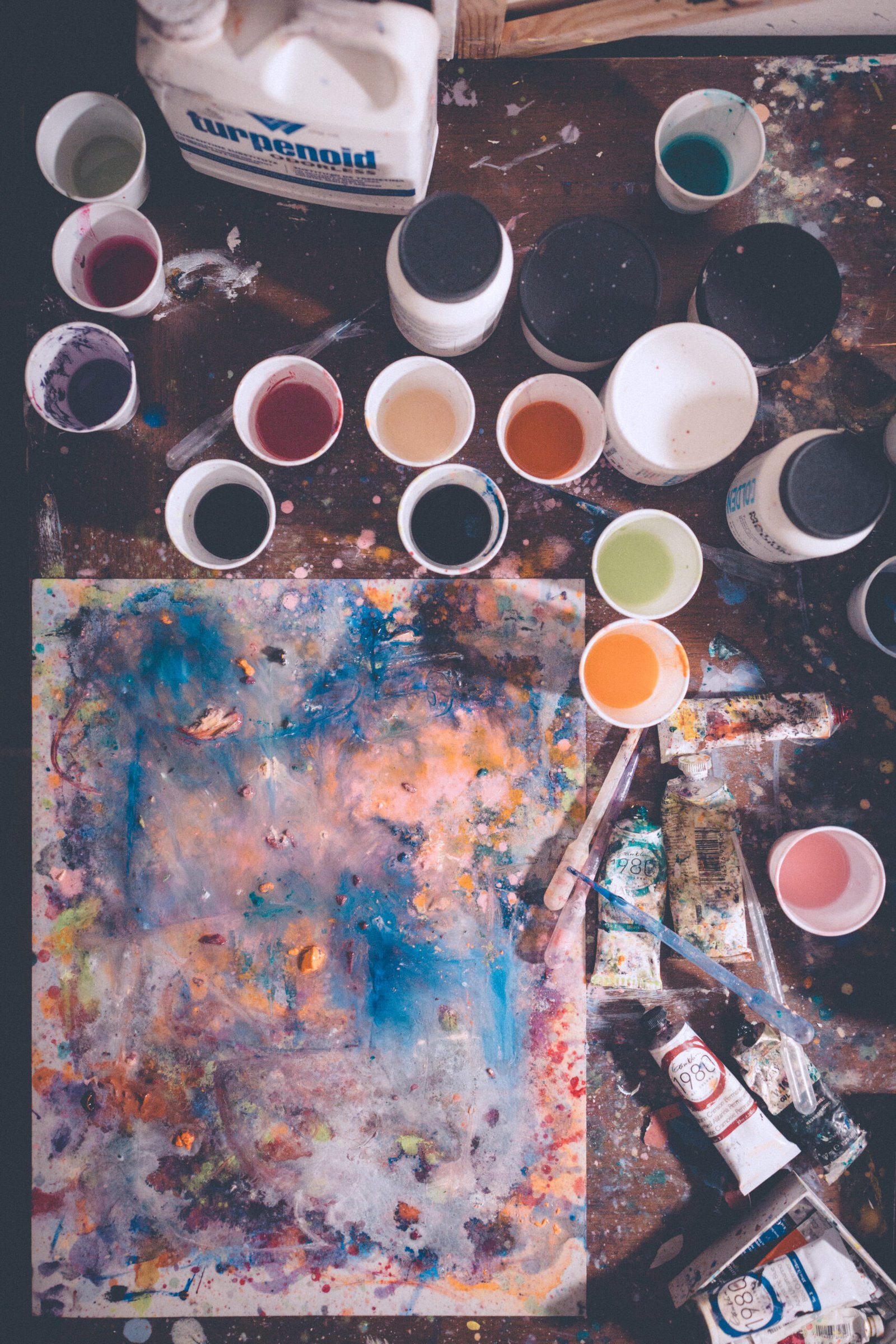
I find solace in painting. In creating with my hands. In gnarled tubes of paint and color dripping from fraying brushes. I deal with intense emotions through art. I feel them through intuitive painting when color becomes the words that often times get stuck in my throat and are left unsaid.
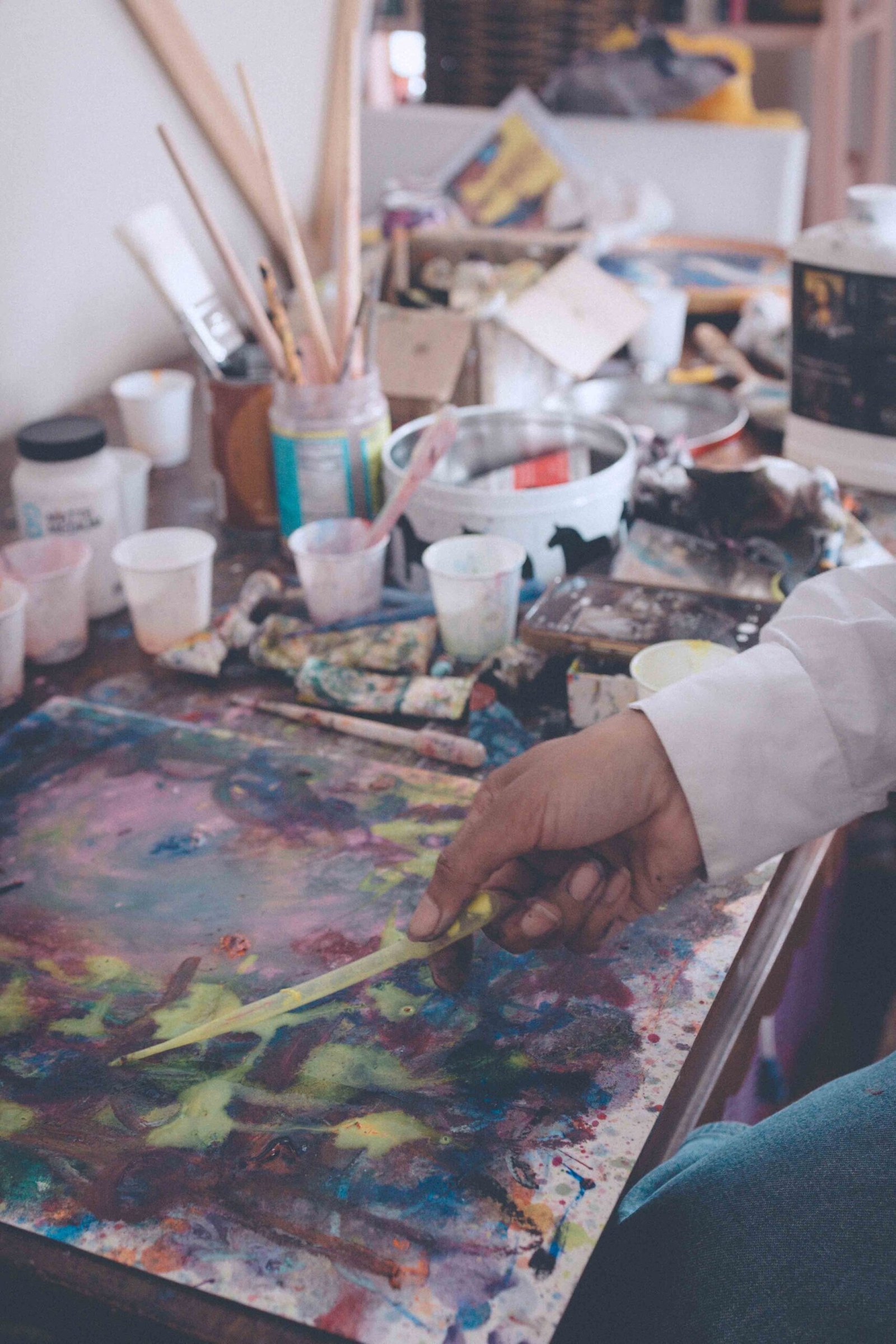
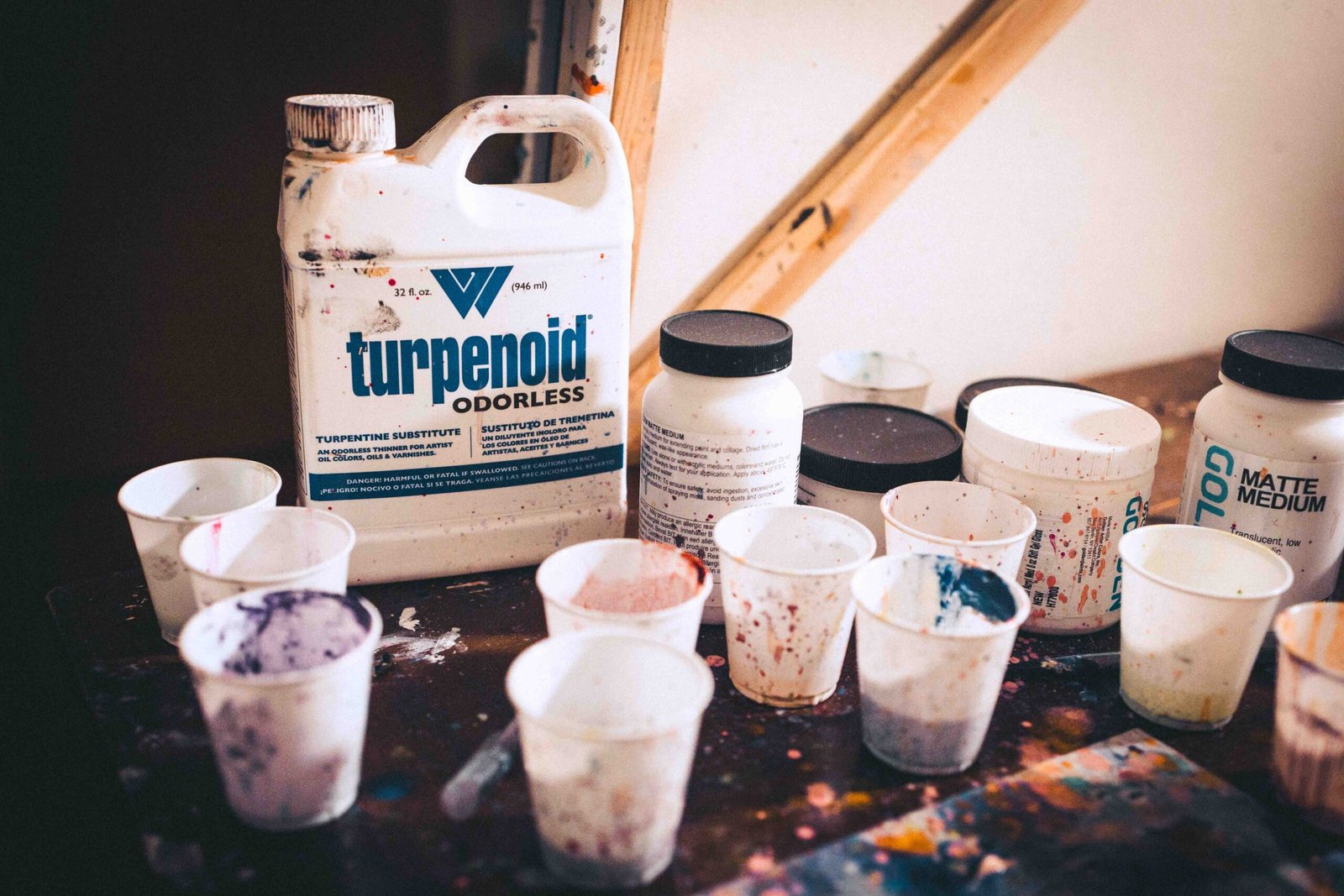
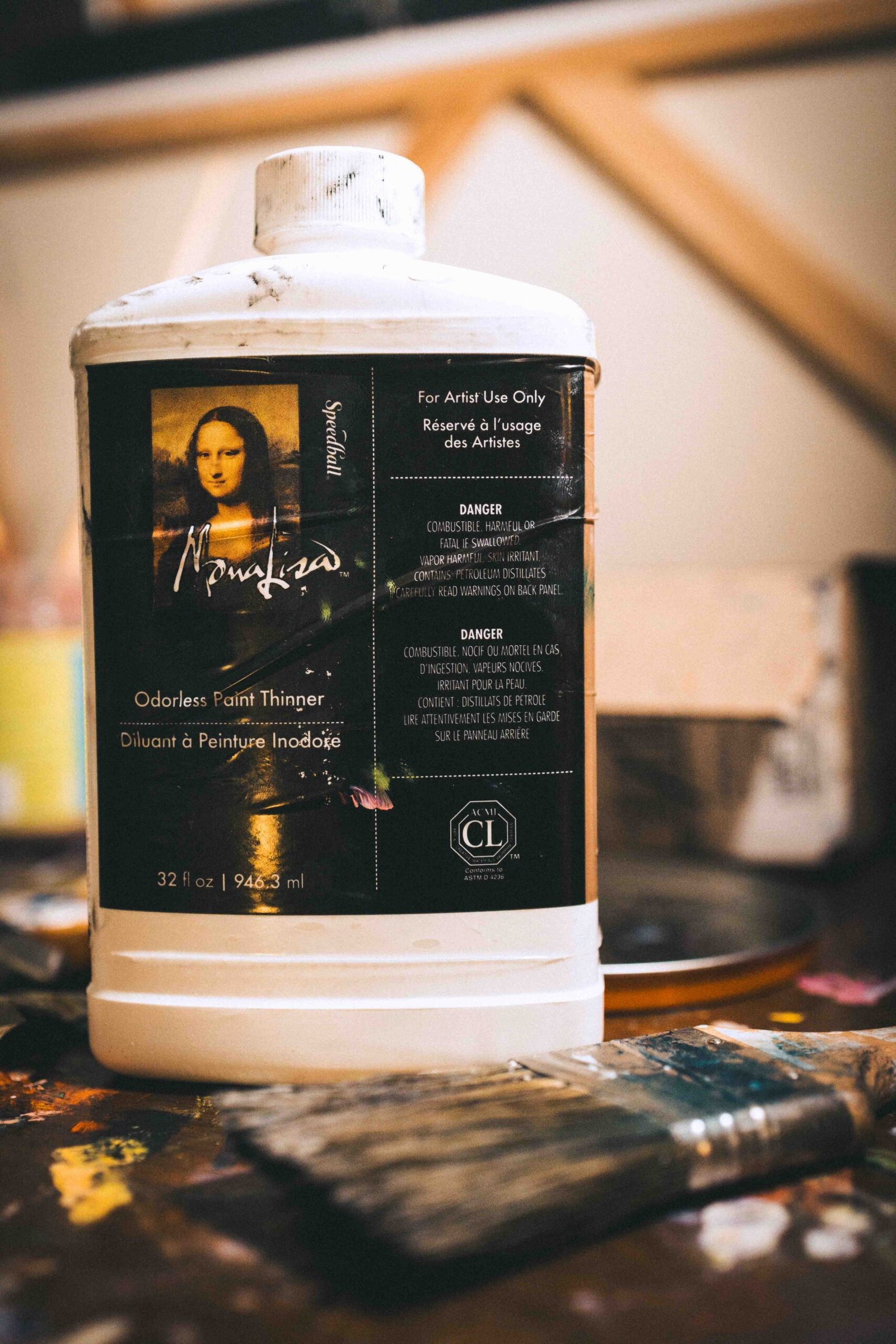
I use painting as therapy and my art practice becomes emotional release when words fail me. I use my art as creative ways to release anger and sadness.
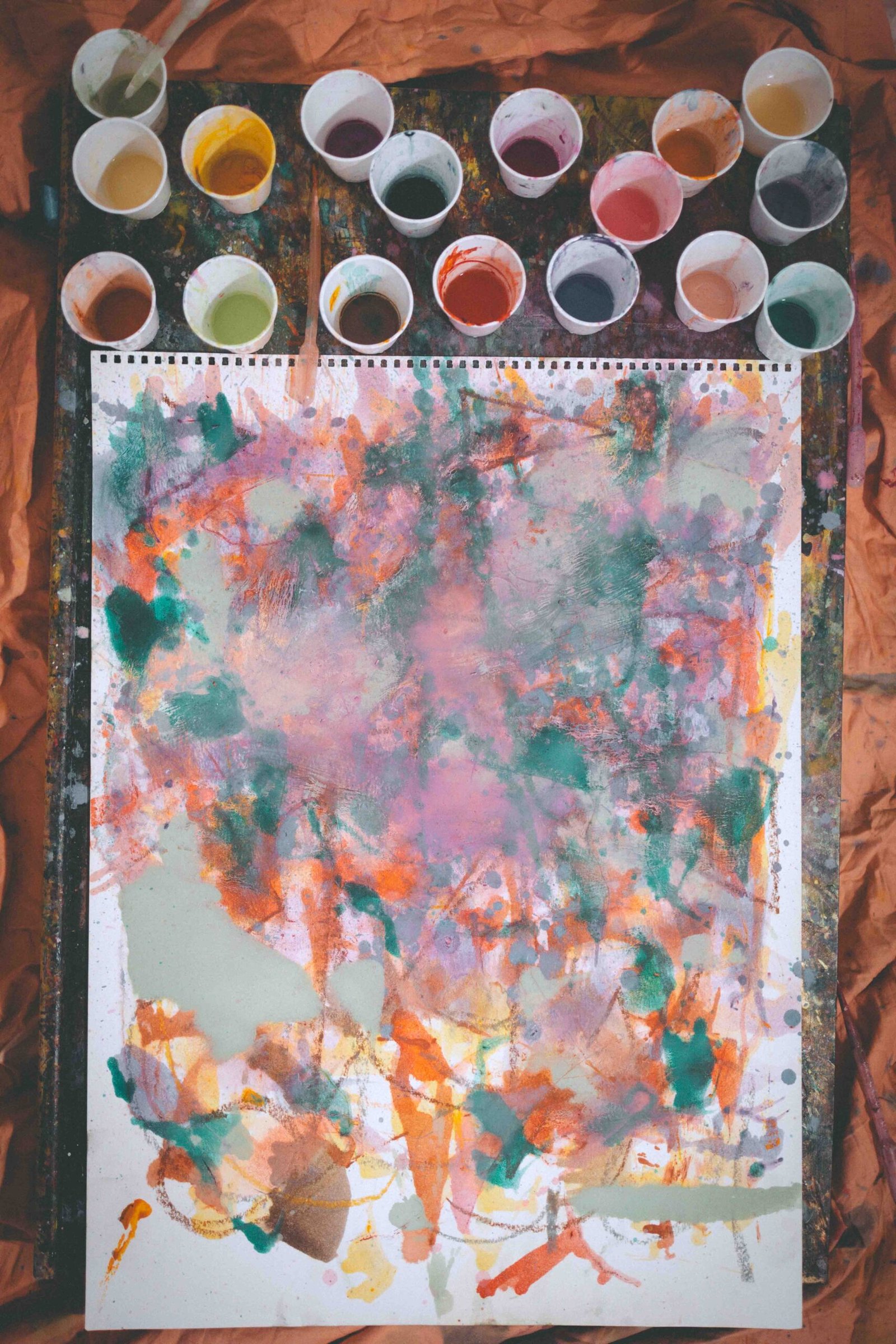
Thick globs of paint thud onto the paper the same way my emotions thud against my mind, shaking it until the room spins. I pour color onto the page. Indigo and yellow; bruised pinks and acid greens. They are like the contradictions I carry every day. I walk a tightrope stretched between melancholy and joy, joy so fragile that when I smile, it cracks, and you can see straight through the mask.
When I paint, I listen to music that speaks directly to my soul.
No filters.
No telling myself I shouldn’t feel this way.
No moral lectures about why bitterness or anger are bad for the soul.
No sermons echoing in my head about forgiveness and grace.
Just music that meets me in the ache. A conduit to my unconscious, where sadness and anger coexist, demanding attention.
Painting as therapy is how I uproot bitterness and let it breathe. It’s one of the most effective creative ways to express difficult emotions I’ve found myself feeling.
There’s no telling myself I’m wrong for feeling this way.
No judgment.
No pressure to be strong for anyone else.
Just me and my innermost self breaking open, dealing with intense emotions through art.
My heart breaks and colors spill out, muddy and messy,
the way life sometimes is.
This approach now guides a new art series I’m working on. It’s an exploration of painting as therapy through layered color, movement, and emotional tension. The series expands on these ideas visually, allowing the work to speak where language falls short. You can view the post about the new art series here.
Why Painting as Therapy Works When You Can’t Express Emotions With Words
For a long time, I felt wrong because I couldn’t permanently shove down the pain, no matter how hard I tried. Because logic didn’t soothe it. Because forgiveness felt like gravel in my mouth. Because productivity, praise, and the rat race of self-improvement never seemed to reach the place where the hurt hid.
What I’ve learned is that some emotions aren’t meant to be explained away. They don’t respond to pep talks or well-meaning advice. Some are deeply rooted. Some are inherited and passed down. Some bring relief and some demand to be paid attention to, not shoved away.
Art is my prescription for dealing with hurt when nothing else works. I process grief through painting. I use photography as creative expression for depression. I use creativity to heal emotional pain and while it doesn’t fix everything, it helps in a way nothing else can.
Lately, painting has become the vehicle I turn to for emotional release. For me, painting as therapy is as essential as water and air. When I can’t express emotions with words, my hands can do what my voice cannot yet. Colors and shapes make sense of my emotional landscape before my brain does.
I’m learning that anger and bitterness are not moral failures. They are signals. You are not a bad person for having them. I’m not suggesting you stay stuck there, or let them consume you. But I do believe they need movement.
What I’ve done is to create. I open my heart. Let the pain move through my hands and make something honest from the mess, without shame.
Painting as therapy works for me because it bypasses explanation. It doesn’t ask me to justify my anger or soften the grief. It lets my body do what my mind cannot, which is to release tension through movement, color, pressure, and repetition.
When I paint, I’m not trying to resolve the pain, I’m responding to it when words fall short. I feel the anger in every drop of color. The bitterness breaks through my skin and gives me wings. My voice is recovered after years of keeping it buried, keeping the peace, pretending everything is perfect.
Painting as therapy becomes a container sturdy enough to hold what I feel without collapsing under it.
How to Process Emotions Through Art: Therapeutic Painting Exercises
These are the creative self-care practices that help me work through depression, anxiety, grief, and the emotions that society sometimes makes us feel are unacceptable.
1. Face the Blank Page Like I’m Facing the Feeling
Starting a new painting is the hardest part about being a painter. The white sheet of paper, pristine and a stark white, stares at me, wondering what I’ll do with it. Sometimes my hands hesitate as I choose the colors. Thoughts of failure flicker in my mind like a movie I’d rather not watch. But I face the blank page and start by sitting with it instead of rushing past it or running away. The emptiness mirrors the anger, the resistance, the fear, the urge to avoid. I don’t wait to feel ready. I let the discomfort be part of the process. Showing up is the first act of courage.
Takeaway: If the blank page feels intimidating, you’re already doing it right.
2. Let Intuition Choose the Colors (Even When They Don’t Make Sense)
Emotions don’t always make sense and sometimes my choice of color mirrors that. I don’t always plan a palette. I reach for what I’m drawn to. It’s intuitive and based on instinct, a perfect example of intuitive painting that heals. Sometimes the colors clash, sometimes combinations feel wrong on paper but right in my body. Meaning comes later, if at all. This is part of how I practice art for emotional healing; I trust the process before understanding it.
Takeaway: Trust the pull and your eye. Logic isn’t required at this stage.
3. Move Through the Messy Middle Without Panicking
There’s always a point where the painting feels chaotic, ugly, or unsalvageable. I’ve learned not to abandon it there. If needed, I walk away and do something else like pouring myself coffee or going to the gym. Sometimes doing something that’s not directly related to your creative discipline is exactly where inspiration strikes. I’m learning that the messy middle, that in-between space with its doubt and frustrations, is often where something real begins to surface. I’m learning you don’t really “meet” your painting until the messy middle anyways.
Takeaway: Don’t quit at the mess. Walk away if needed, but don’t abandon it because it doesn’t look perfect or pretty.
4. Create a Ritual That Signals Safety
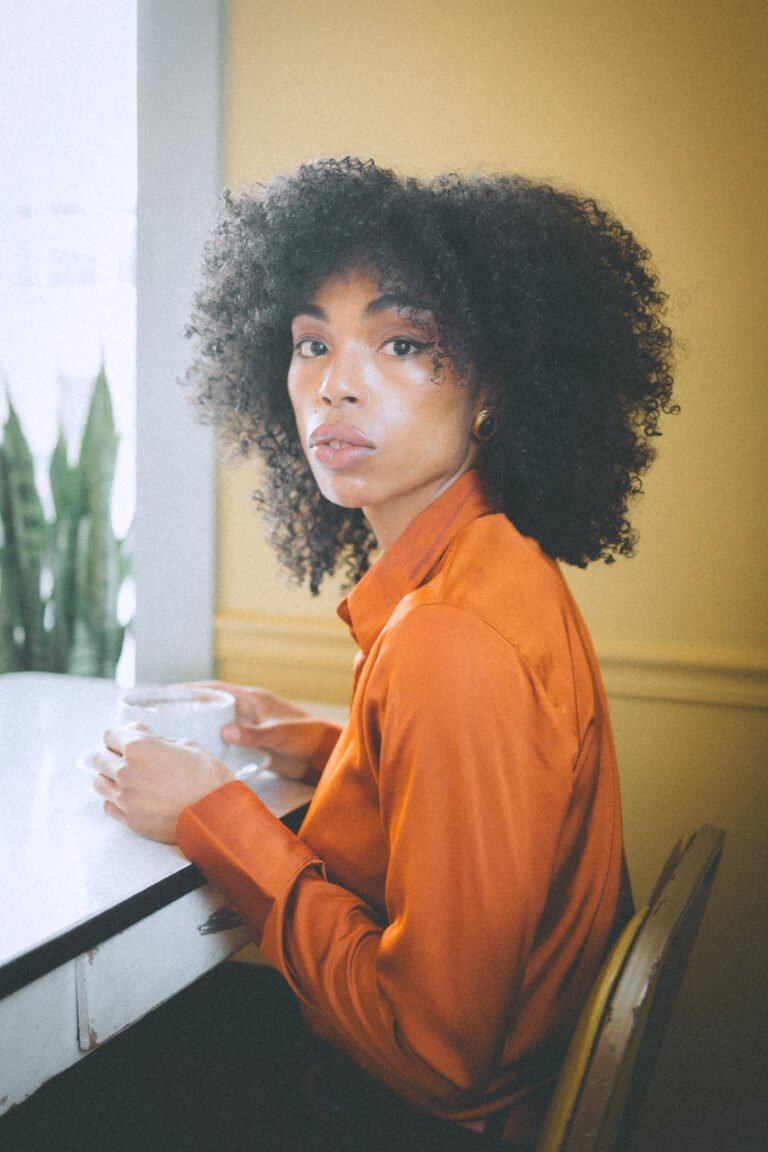
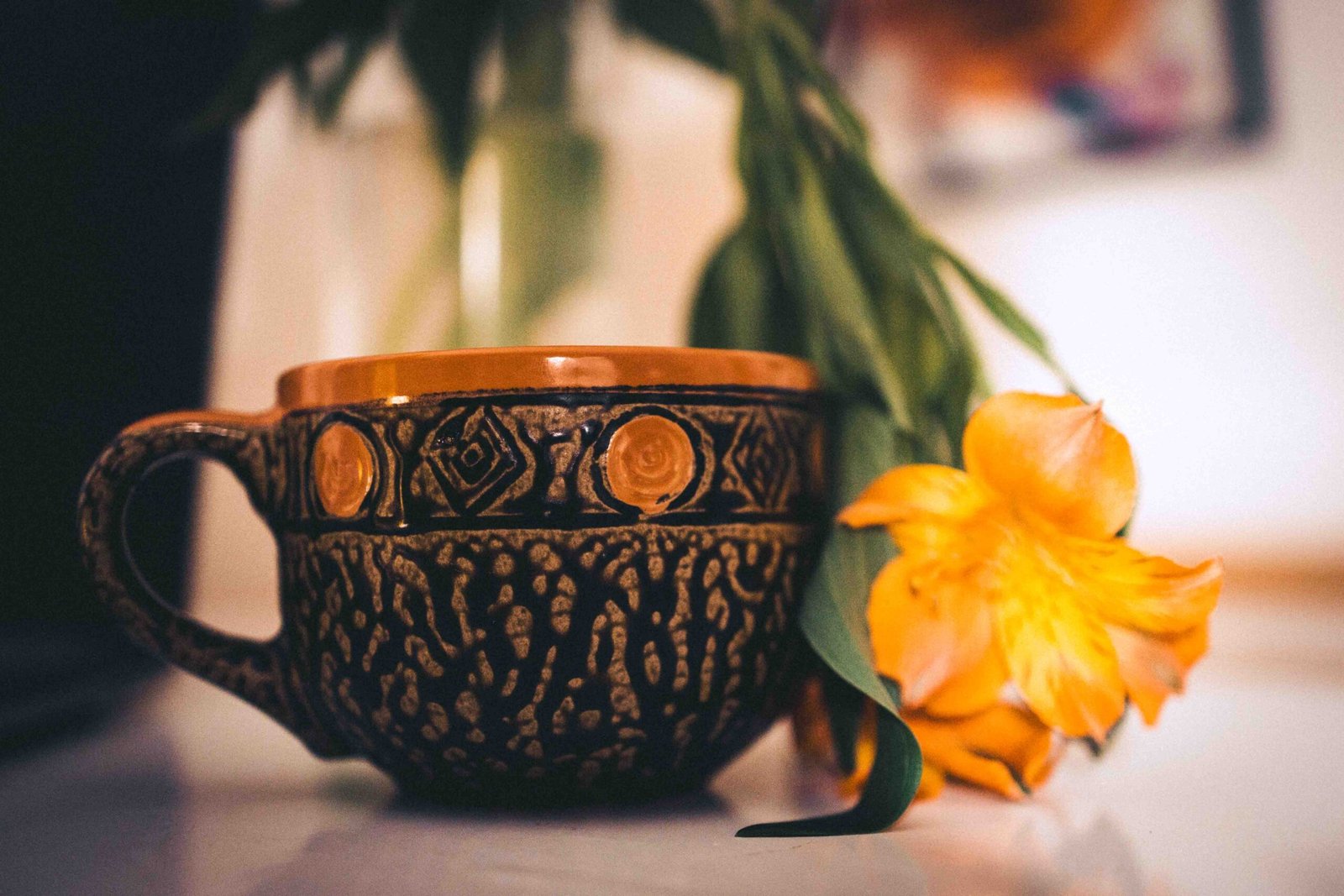
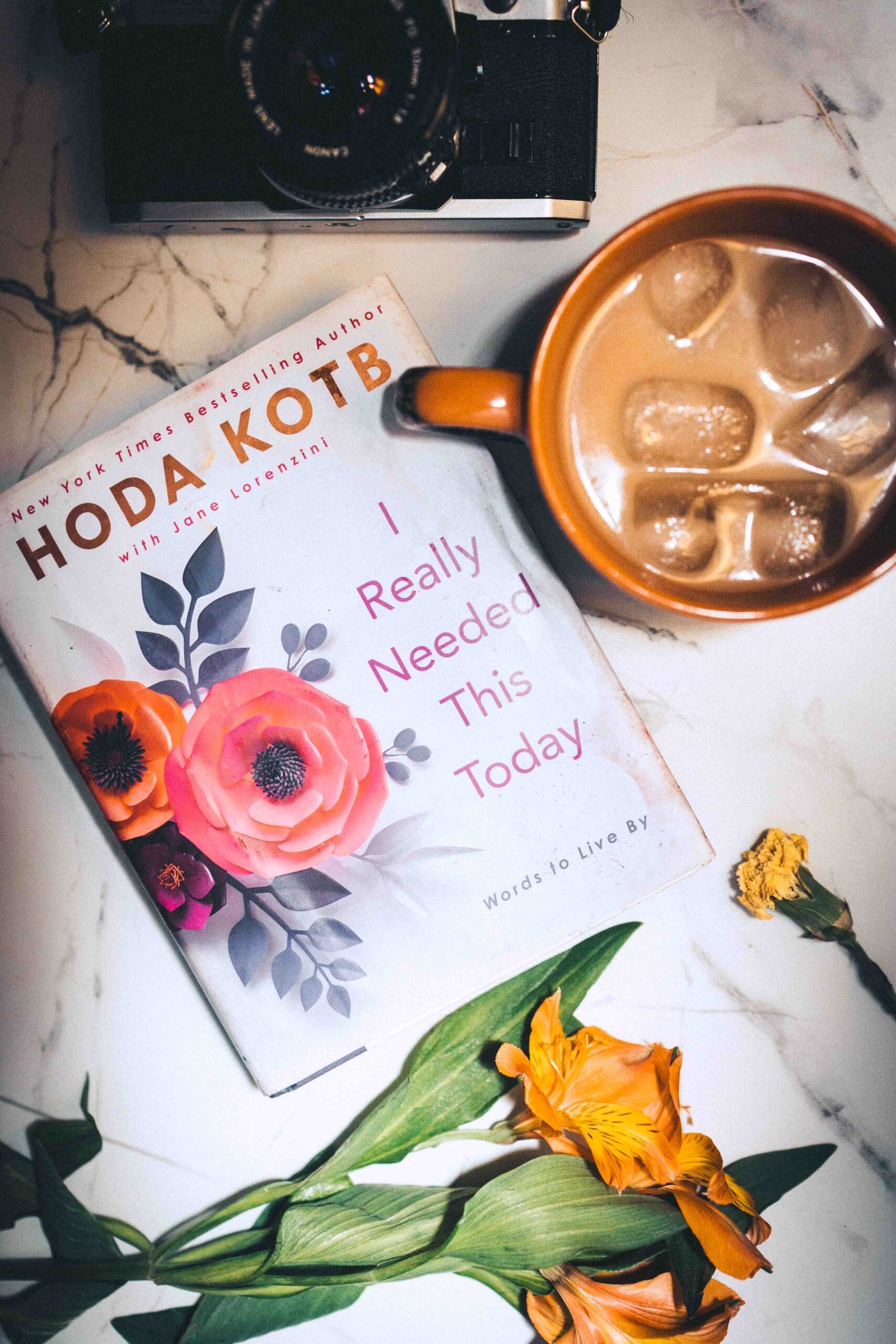
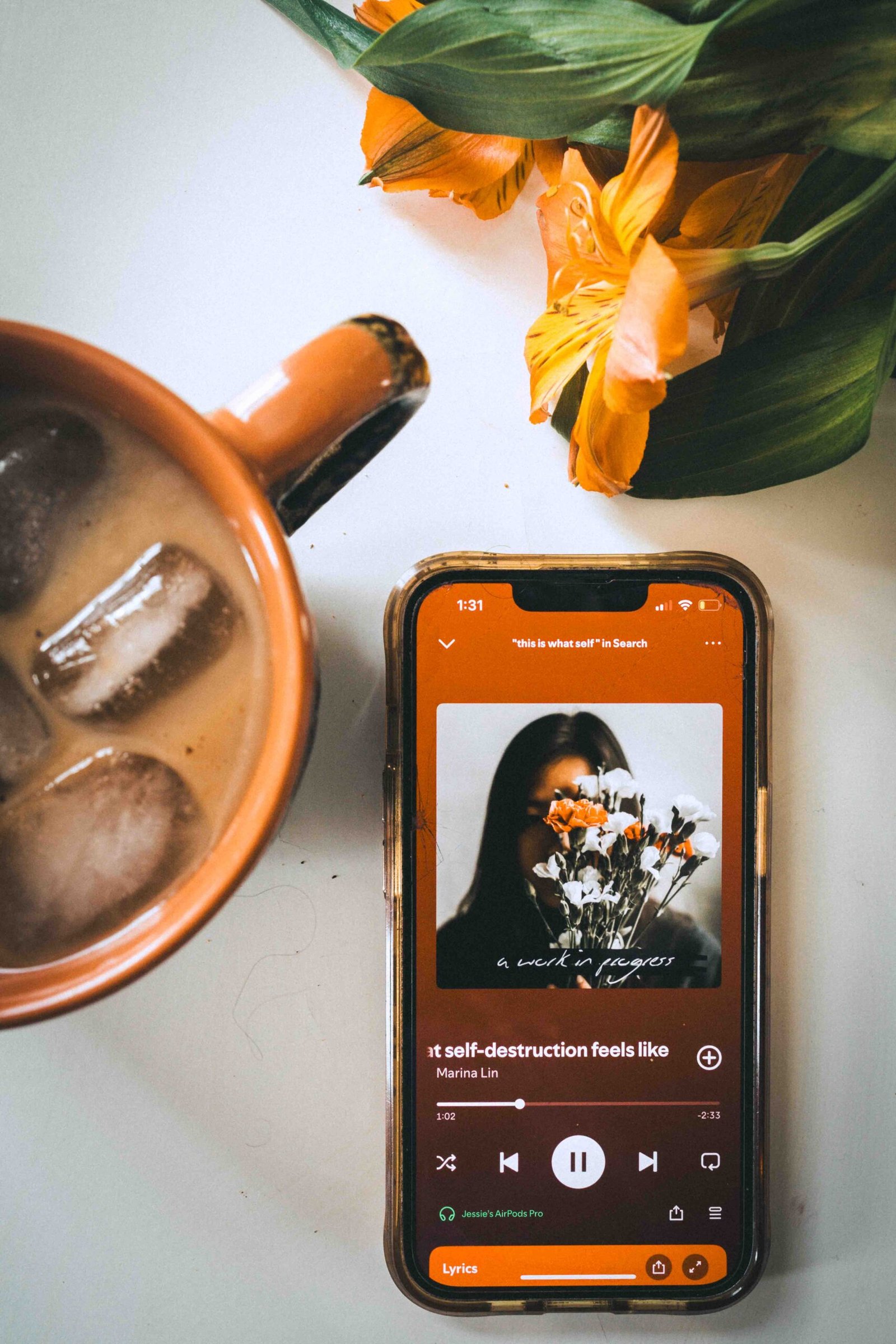
As an artist painting through depression and also trying to make a living, I need rituals to anchor myself so I don’t get overwhelmed. I make coffee and pour it into a mug I love. I buy myself flowers, place them nearby, and photograph them. These small acts ground me. I put on music that makes me dance or becomes a mirror to the pain I carry. These small self-care rituals tell my heart that this space is safe enough to feel, to drop the mask and play.
Takeaway: Beauty doesn’t distract from pain—it steadies it.
5. Let the Physical Act Do the Work
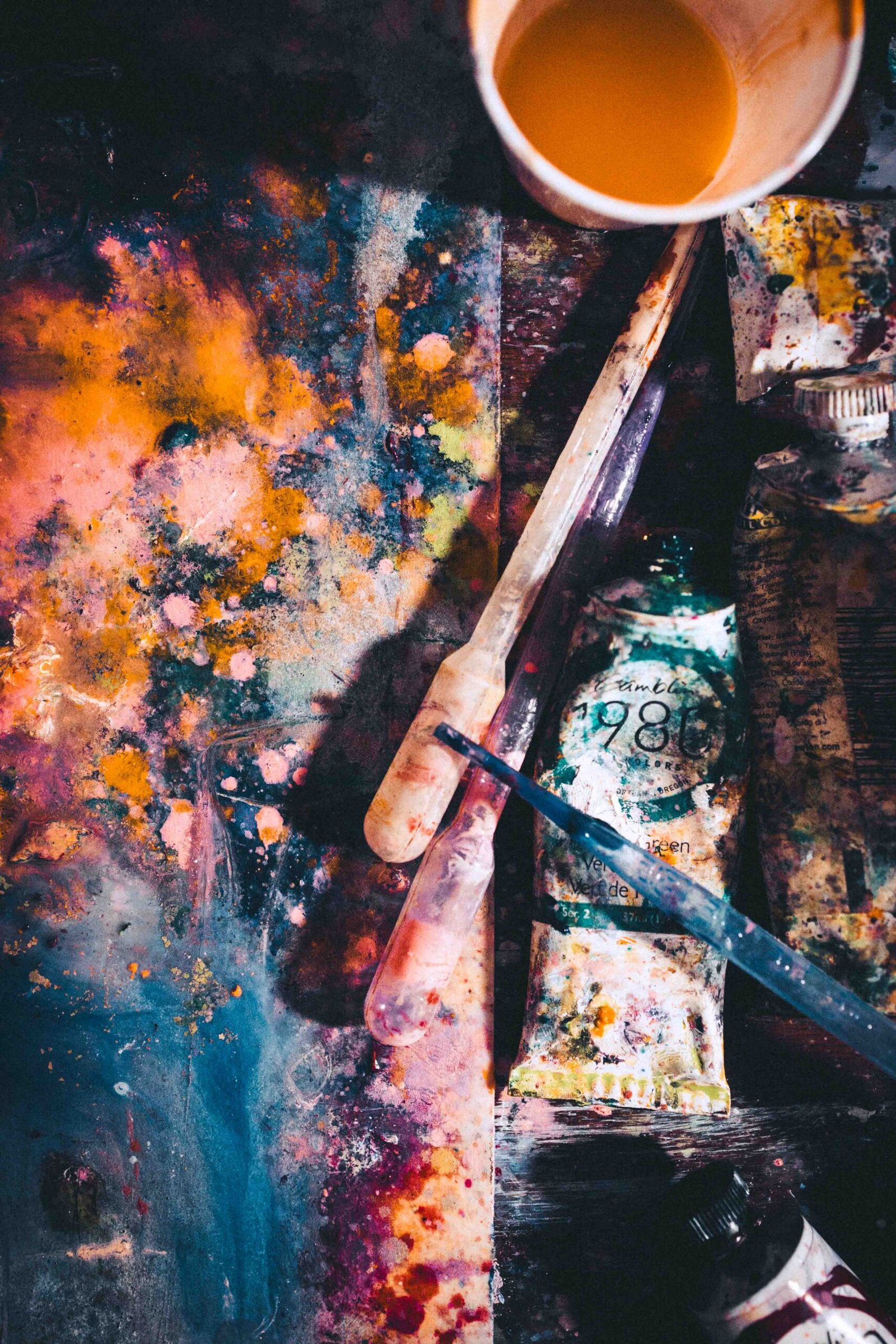
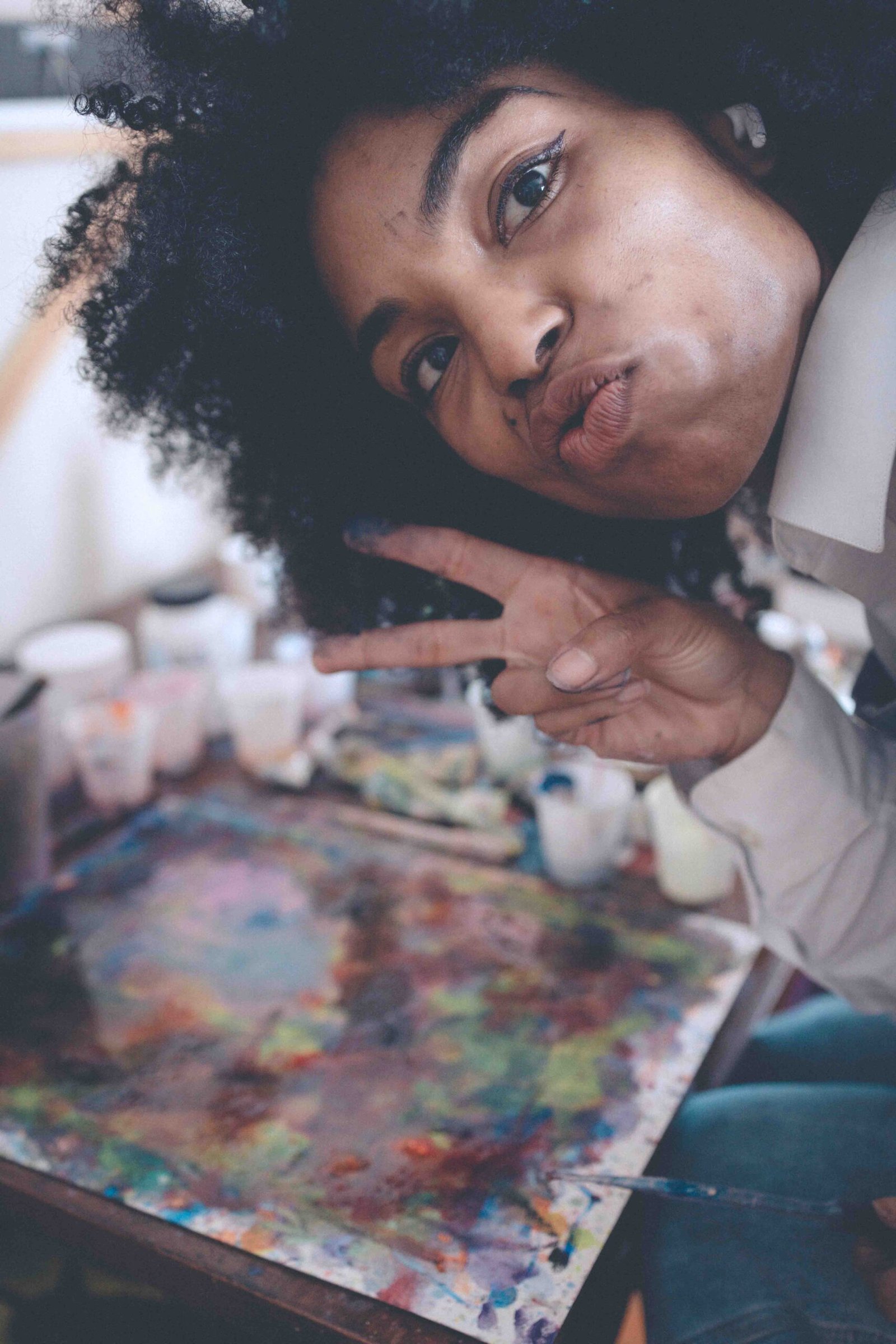
I thin my oil paint until it behaves like watercolor. I love the way the colors melt into each other, the sound of the brush moving through liquid pigment. It feels melodic, almost meditative.
When painting through depression and anxiety, I’ve learned that the physical sensations; the texture, movement, and sound feel just as grounding as the act of painting itself.
Takeaway: Be mindful and focus on the small moments. Let texture, movement, and sound carry what words can’t.
6. Move With the Music
I put on my headphones and listen to music that matches my mood—angsty, raw, unfiltered. I let my body move through the room as I work. Painting becomes physical, not performative.
This is especially powerful when painting to release anger and bitterness. The music validates what I’m feeling while my hands translate it into something tangible.
Takeaway: Match the emotion. Don’t correct it.
7. Try Not to Overthink the Outcome and Allow Yourself to Have Fun
I think as artists, we can get caught up in the outcome more than the process. Sometimes we get so hung up on whether a painting is going as planned versus listening to what it has to say. I don’t ask if the painting is good. I ask if I am having a good time. I don’t ask if it will be understood. I ask if it feels right to me. I try not to focus on how it will sell or who will buy it. I focus on staying present. I let go of control and focus on the process. I make one layer at a time and forget the rest.
Takeaway: The goal isn’t a masterpiece. It’s movement and having fun.
A Gentle Reminder for Creatives: Painting for Grief and Sadness
I’m still learning this myself, but here’s what I’ve come to believe:
You don’t need to earn relief or rest. You don’t need to create masterpieces to matter. Your paintings don’t have to be pretty to be significant or taken seriously. You don’t need to justify your emotions or moralize them. They’re neutral. Necessary. You don’t need to heal beautifully, perfectly, or on anyone else’s timetable.
And if you’re sad, or carrying something heavy, you don’t need to power through it like it’s a race. Sometimes the bravest thing you can do is sit down, open yourself up, and let the color spill out.
If you’re looking for creative ways to express difficult emotions, painting as therapy offers a path forward when traditional methods fall short. Whether you’re painting through depression and anxiety, working through grief, or simply need art for emotional healing, remember: you don’t need permission to feel, and you don’t need expertise to begin.
Just begin.