How to Get Your Creative Spark Back (An Artist Diary)
Your creative spark isn’t gone—you’ve just been away from it. Here’s how I came back.
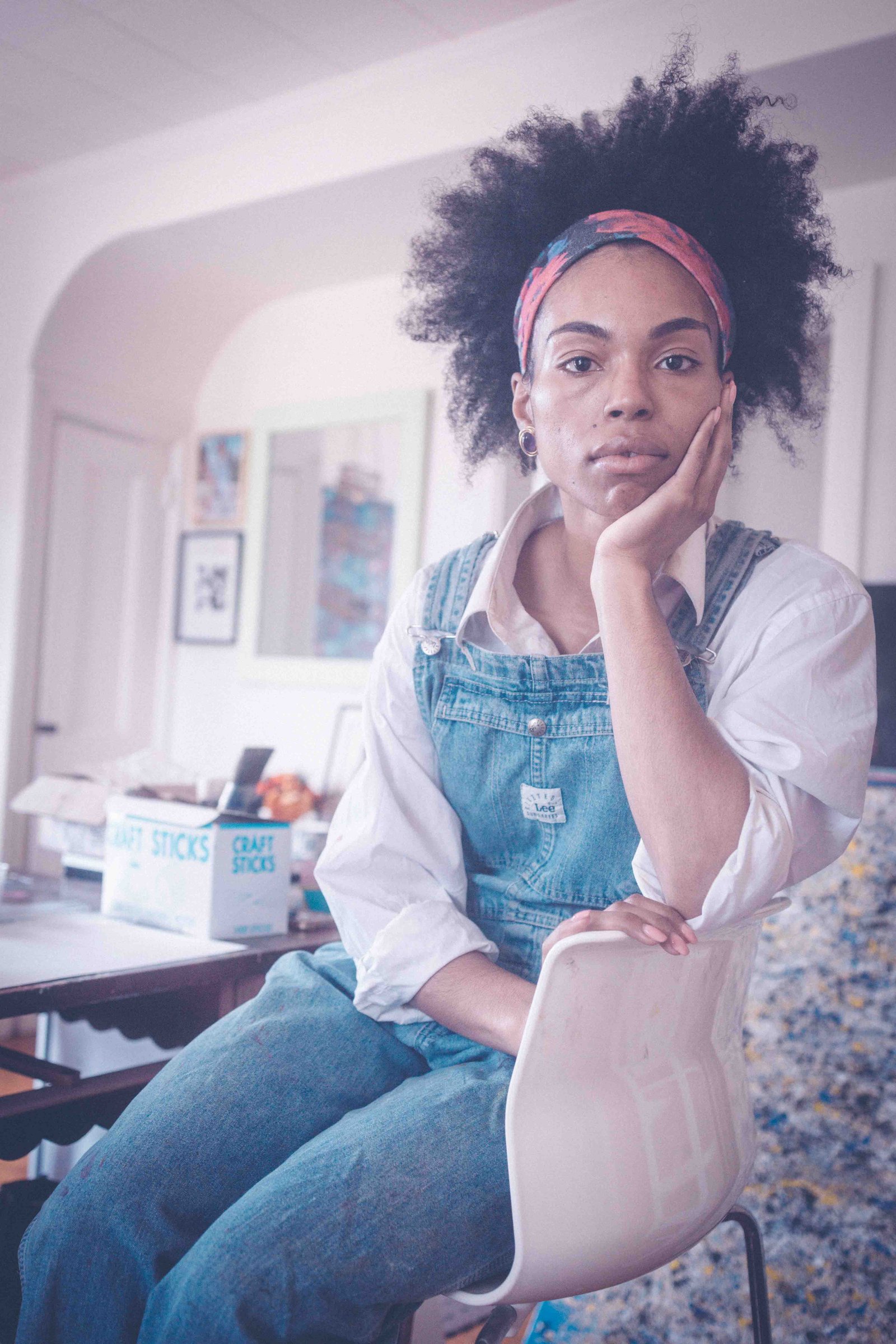
As an artist, no one really prepares you for the inevitable moments when creativity dries up. When weeks slip by, life takes over, and your creative practice quietly recedes into the background.
No one prepares you for the fear that rises in your chest at the thought of losing your creative spark, gone like a blown-out candle. And its return? It feels uncertain, elusive—hovering just out of reach, like a memory you can’t quite return to.
The creative spark doesn’t always leave in grand gestures. Most of the time, it fades slowly, almost subtly. Paint supplies sit untouched. Family obligations take over. Work consumes your emotional bandwidth. In a world that moves quickly, it’s easy to slip into autopilot.
And then, one day, you realize it’s gone.
You don’t feel motivated to create anymore, even though the desire rarely fades. Instead, like a slow leak, creativity slips away through exhaustion, burnout, and avoidance—a kind of creative burnout that quietly disconnects you from the work you once loved.
You put your supplies away, telling yourself you’ll come back when you feel inspired again.
But that day never seems to come.
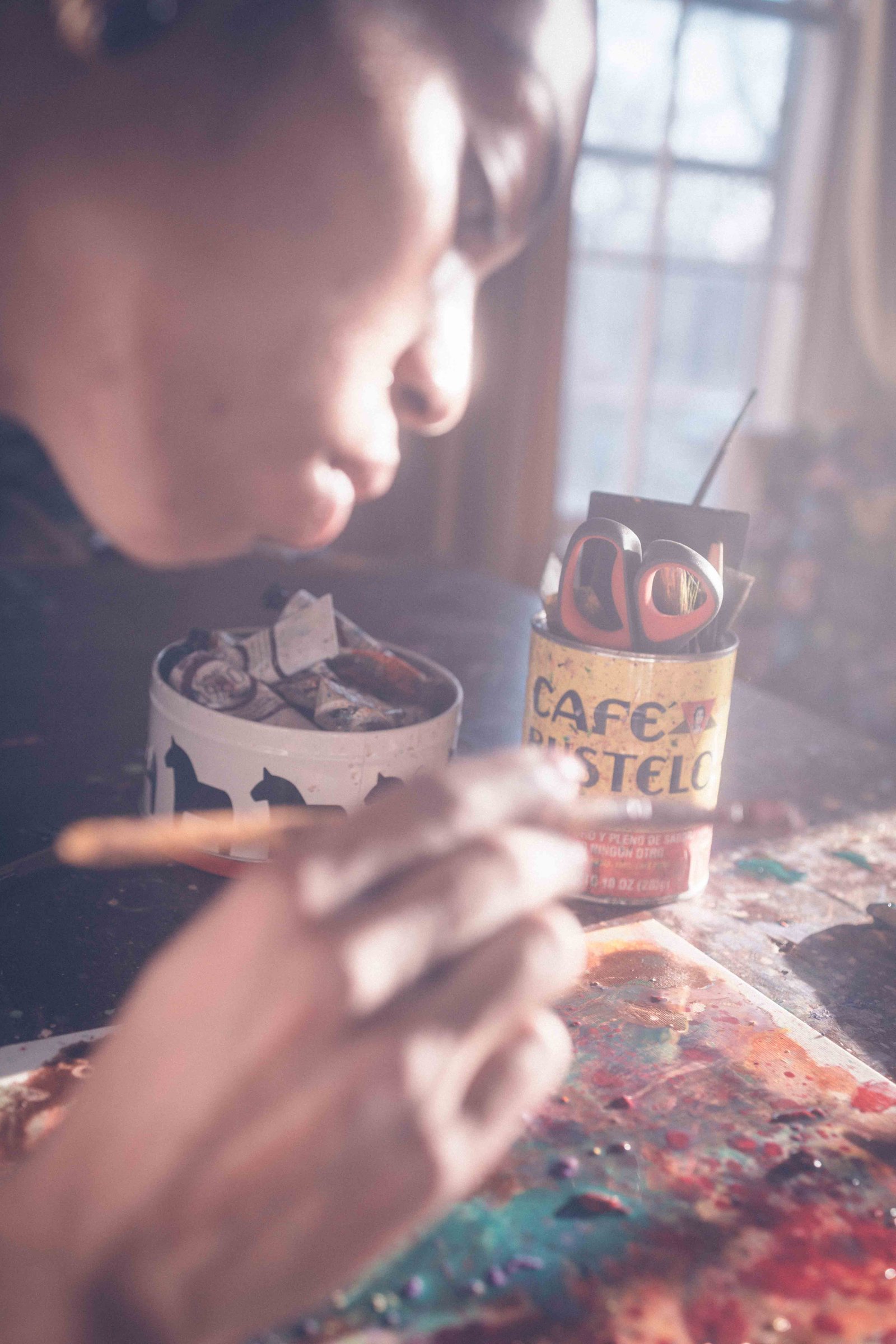
Before you realize it, months have passed, and your supplies have been packed away. You are antsy to start again. After all, you love to create but, this time, starting again feels harder than stopping ever did. You tell yourself you’ll get back to it, you just aren’t ready. But more time passes, and the inertia to begin fills you with both anxiety and dread.
Seasons change.
You start to wonder if your creative spark is gone for good or if it was ever really there at all. You wonder if the work you are proud of was a fluke all along. You wonder if your days of making art are better off behind you. You wonder if you’ll ever feel inspired again—not for Instagram, not for anyone else, but for yourself.
Because as artists, creating isn’t optional. It’s essential. Creativity is our fuel.
Throughout my journey as an artist, I’ve moved through many seasons of creative block, some more excruciating than others. When it hits, creativity feels as far away as a distant galaxy or a place I’ve been to before but can’t remember how to get to anymore. Even my abstract painting techniques becomes shaky and uncertain, as if I’ve been transported back to my beginner days. (You can read more about how I became a painter here.) And it doesn’t just affect my work on canvas. It seeps into everything—how I style outfits, how I take photos, how I move through my creative life as an art girl in New York.
Losing My Creative Spark
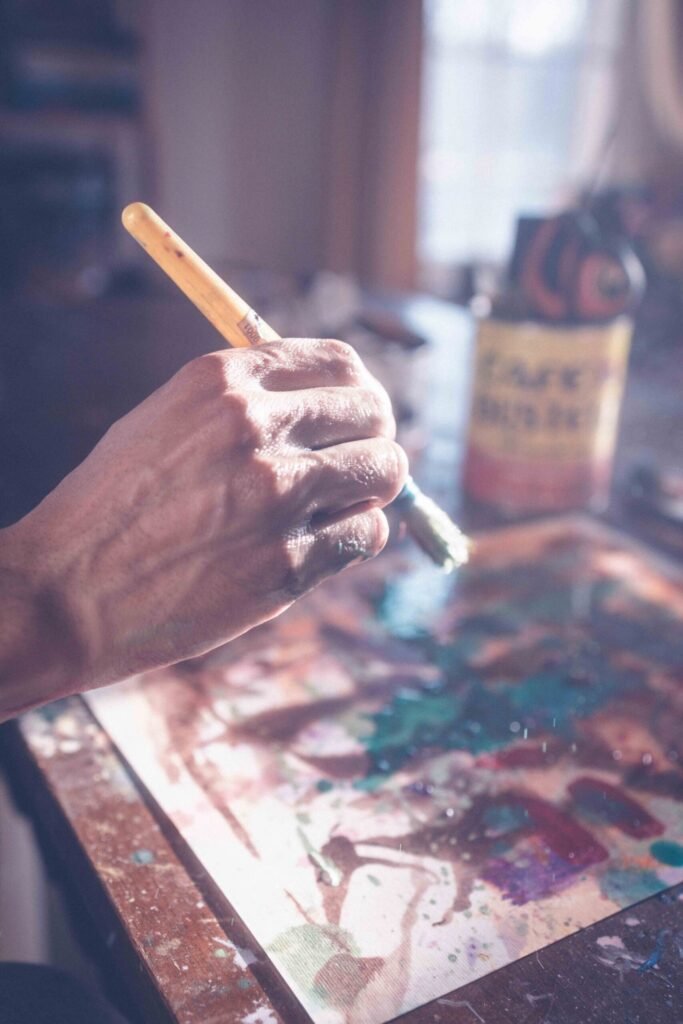
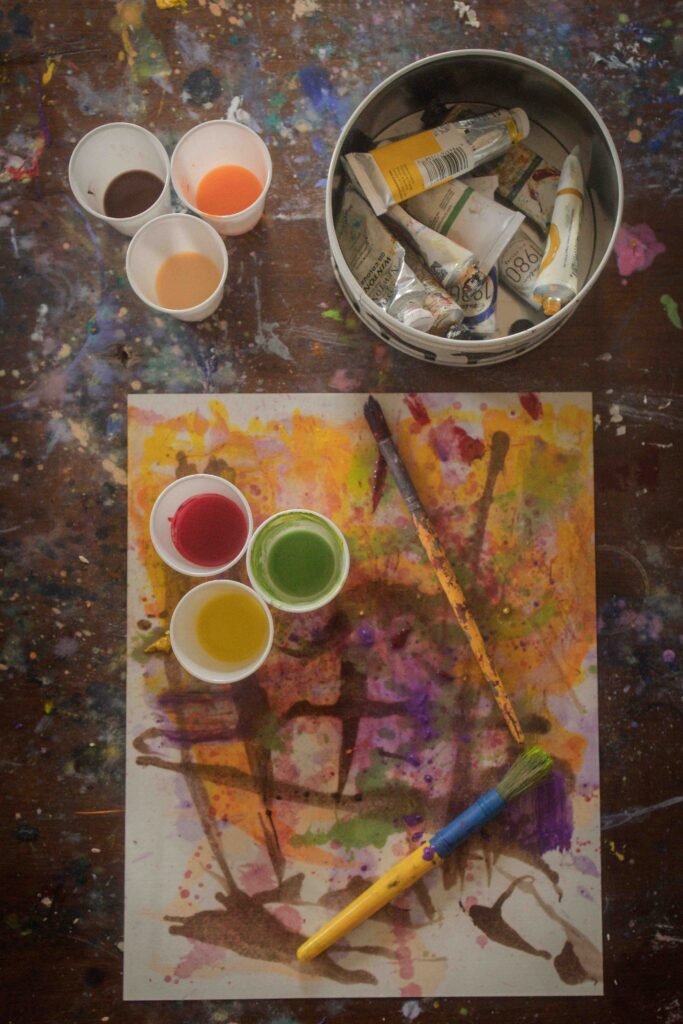
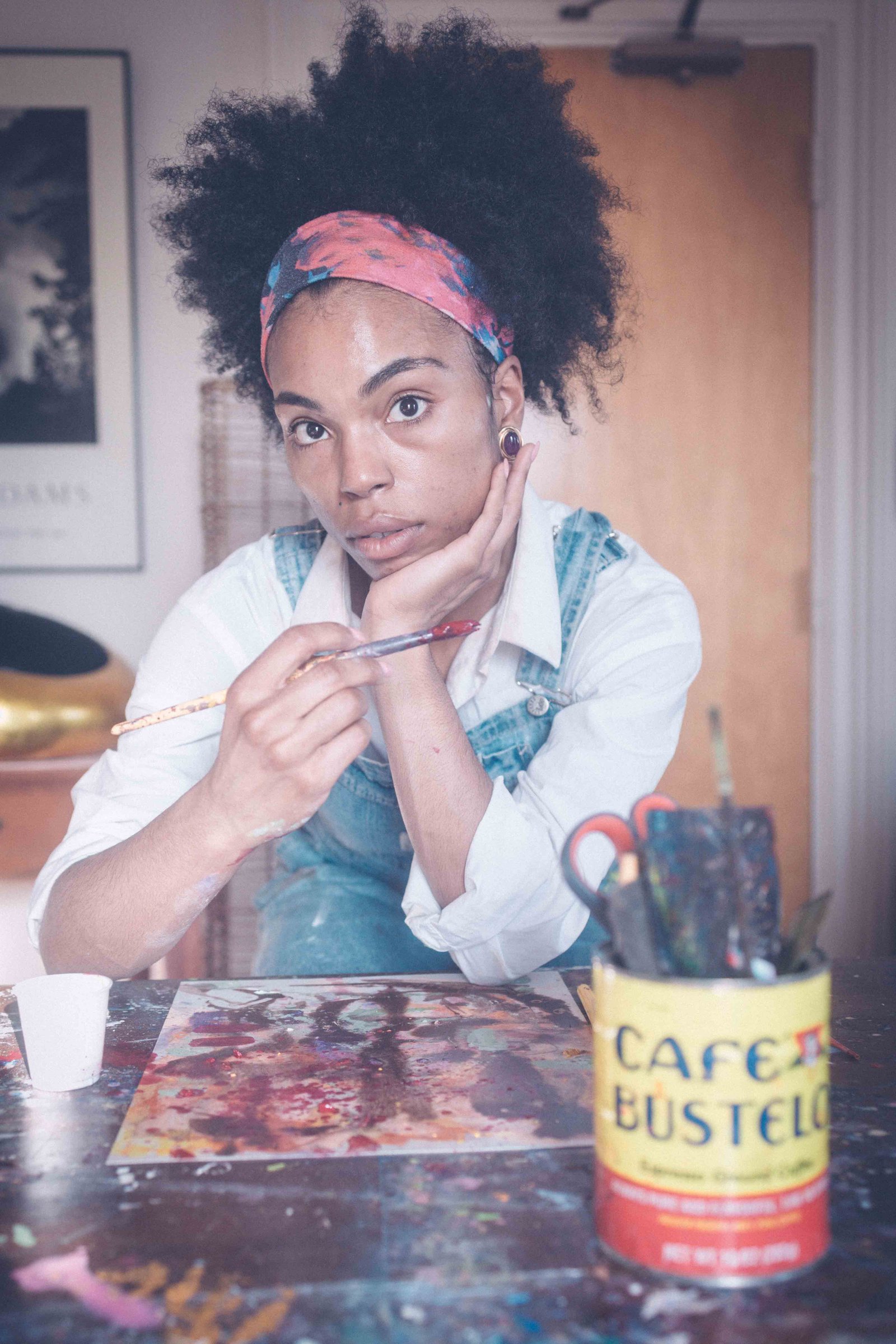
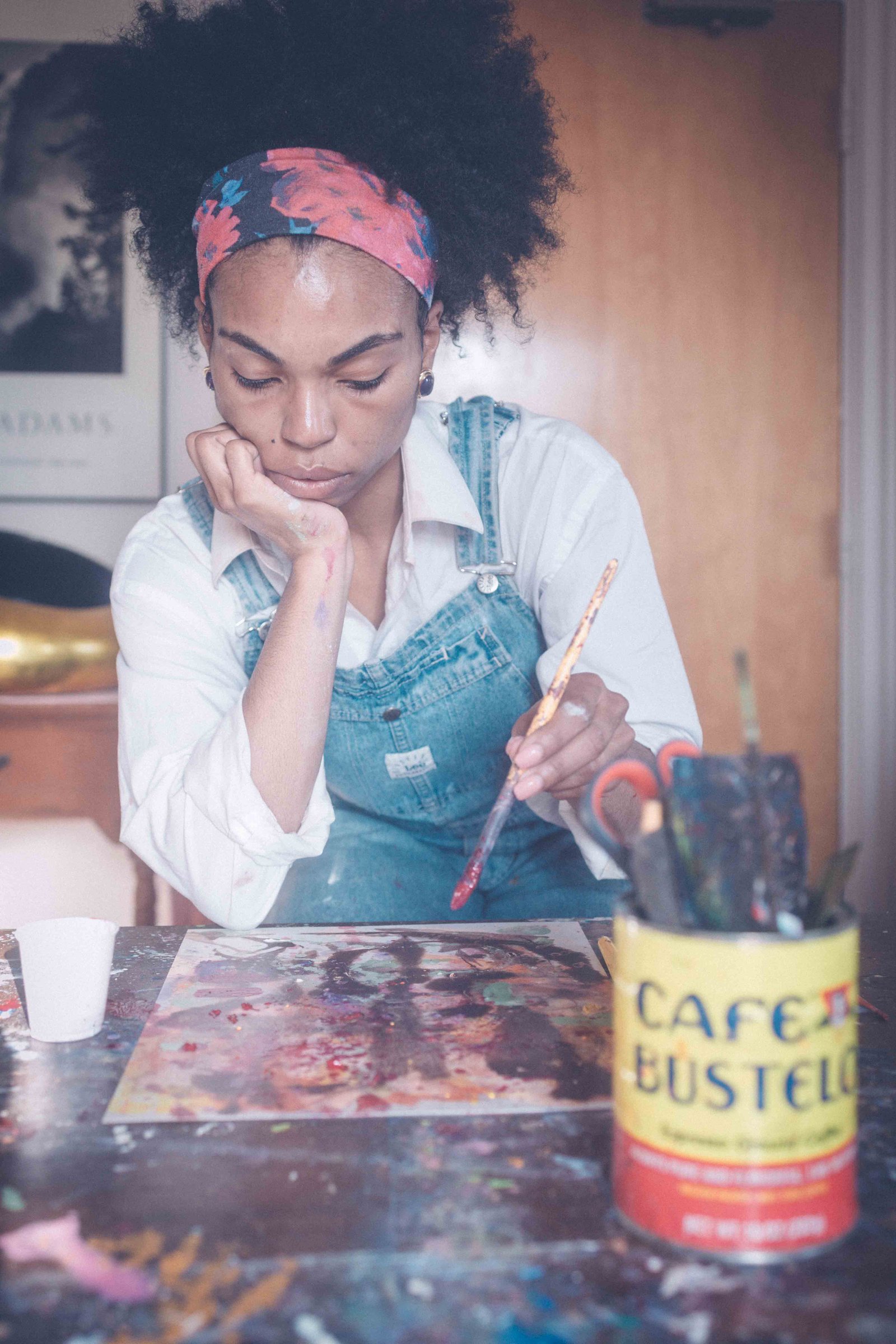
One day, after months of avoiding my painting practice, I finally sat at my art table. Dressed in my painting overalls with a stomach full of coffee and nerves, I forced myself to sit down and face the fresh sheet of paper laid out in front of me. Fresh paper terrifies me at times because it feels like a sacrificial lamb. Paintbrushes, worn tubes of paint, and small cups for mixing color were scattered around ready to be used.
I put on a favorite playlist to ease the nerves. Music is like gas; it gets my creative machine going.
I wasn’t there to make a masterpiece or be the next big thing. I was there to create—even if it was bad, even if it never will see an exhibition wall. I needed to feel my hands move and see the colors pool onto the page, coagulating together like clotted blood from a wound. I needed to feel the color as it moved like dripping honey; wiping my paint stained hands on the thigh of my overalls after I’m done.
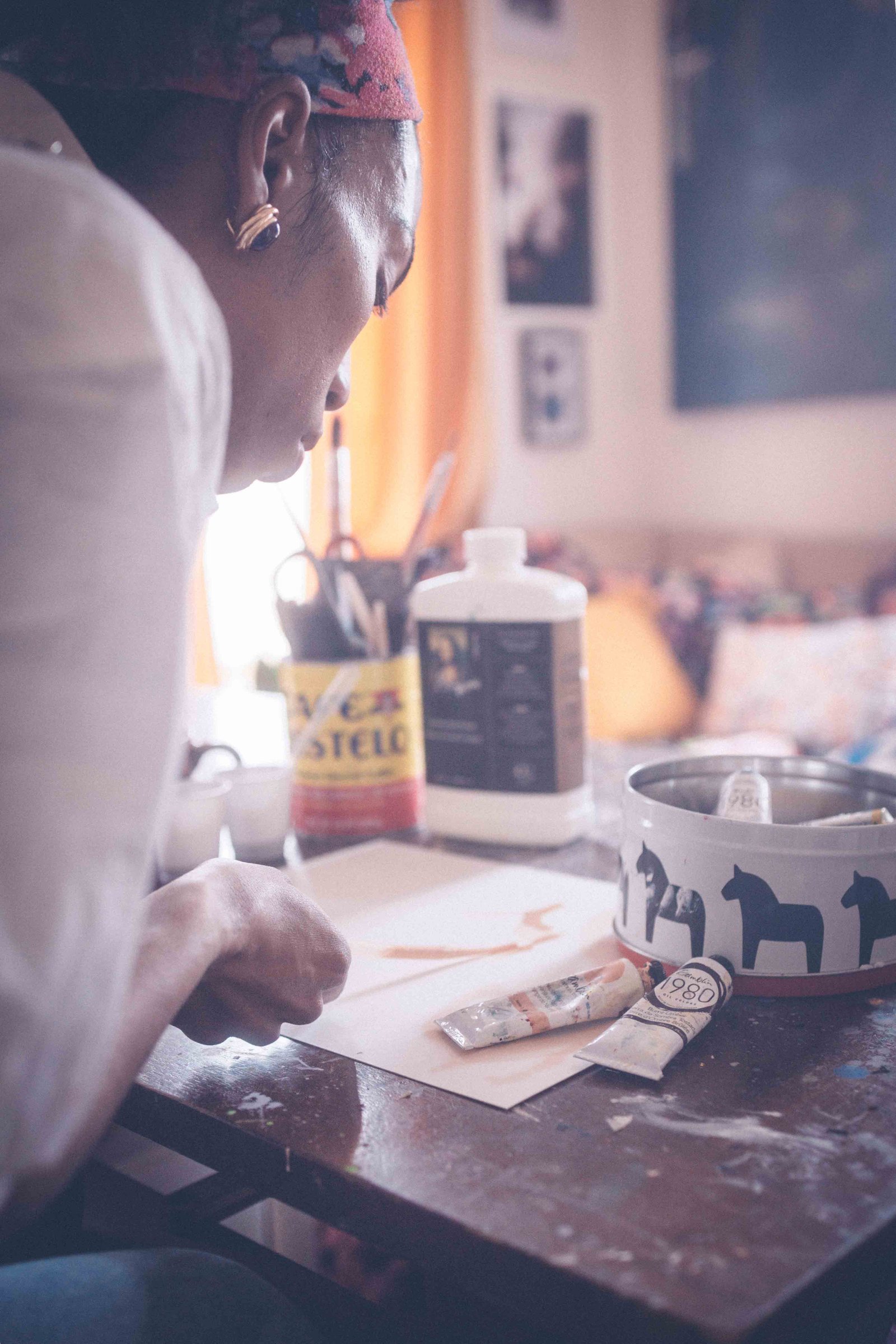
How to Get Your Creative Spark Back: Returning to Painting
And still, if you’re like me, the hardest part of a painting is always the beginning—the way ideas race through your mind before you have time to catch up to them. Before the first mark when fear wells in your chest, making your fingers go stiff. Before the canvas morphs into something entirely different and you have no control of the outcome.
I hesitate as I mix my first rounds of color, not sure which direction to go in. Do I go warm or cool? Do I choose red or blue?
The stark white paper blinks expectantly at me, waiting and wondering what I’ll do to it. Whether I’ll reach for blush or grey, or start with charcoal marks just to warm up my hands.
I try not to obsess about it too much.
If I do, I won’t start. I’ll walk away, put on YouTube, and forget all about it.
So I pick up the brush and put something down anyway.
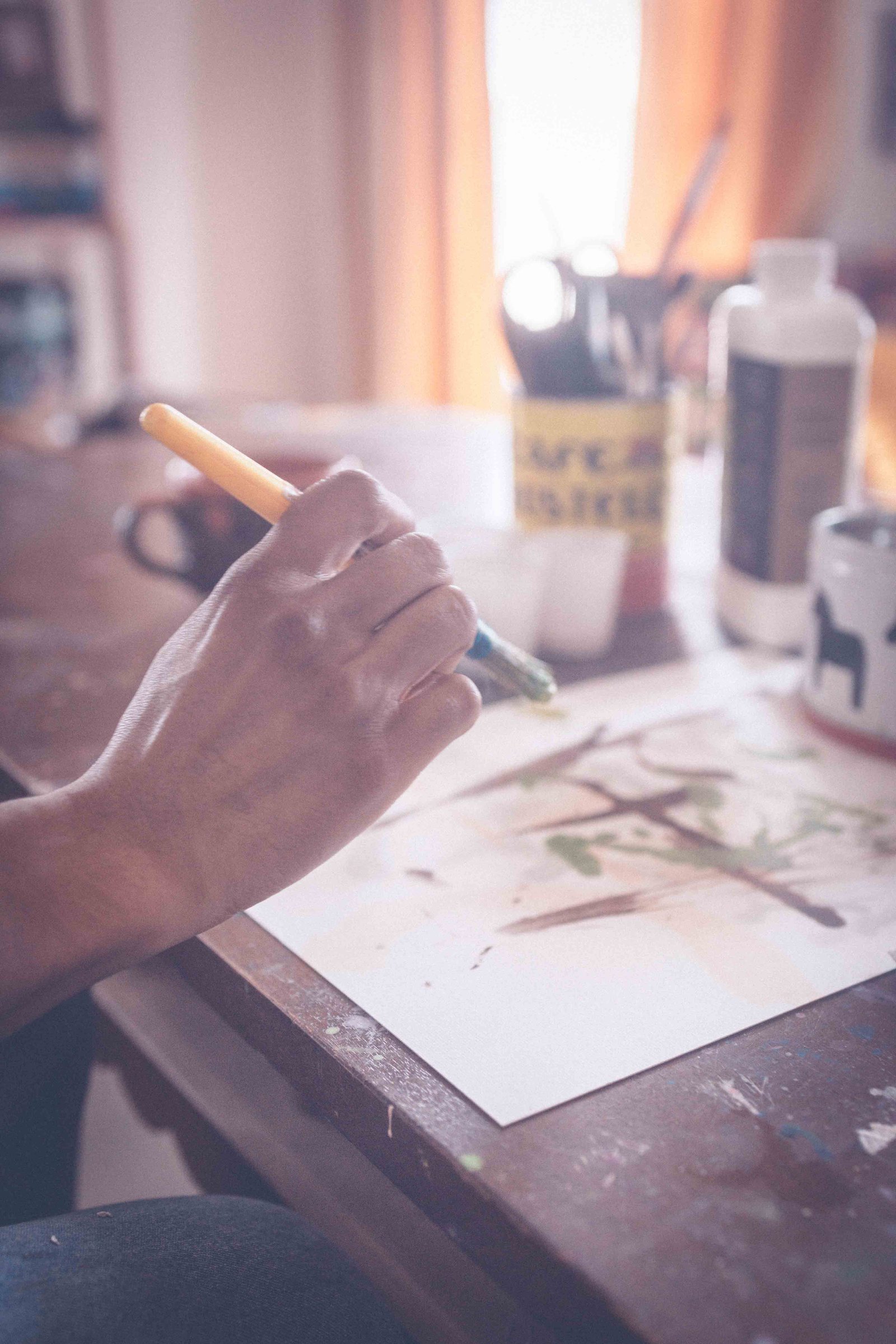
During my painting session, the colors I chose were a blush that bloomed like the first fruits of spring. A grey that reminded me of morning mist that curl around the trunk of the trees in my front yard as I look out the window with a fresh cup of coffee before the day begins. I also chose burnt umber, the color of branches reaching down, offering flowers as the season finally changes.
I put down color with a rhythm that resembled tuning an off key guitar. I tried to think quick on my feet. I told myself it doesn’t need to be good or make sense. I just needed something to break the stillness. Something to make the white paper feel less intimidating.
The Messy Middle
At first, it felt unfamiliar.
Not in a dramatic way—just slightly offkey. Like learning to play an instrument again, counting beats in your head, remembering the notes as you go. Beginning again is like returning to something your body remembers, but your mind has lost touch with.
I didn’t think about whether the painting would be sellable. Or if anyone would see it. Or if it would be any good at all.
The composition has yet to reveal itself. And honestly? the colors are beautiful but I’m afraid they’ll be decorative instead of declarative. I catch myself wanting to control it and force it into submission.
But, I have to remind myself that I paint because I love it and I’m not here to make something great.
I’m here to practice.
This is where perfectionism always takes over. It loathes to practice and demands masterpieces every single time. It has a penchant for zooming in on the flaws while ignoring the bigger picture. Whenever I pour washes of color, it takes over until my hands hesitate and my brushstrokes feel wobbly and unconfident. Sometimes, it tries to convince me to abandon the piece all together before it’s even finished.
But I continue anyway.
I let my painting remain unclear. I let the composition wrestle with me. I let the colors sit next to each other without forcing them to make sense. I let it be ugly and awkward.
My painting currently sits in the messy middle, and I’m not rushing to figure it out.
I’m reminding myself that this isn’t a performance. That perfection isn’t required. That this is part of the process of making art. Messy middles are always a part of the process whether we like it or not.
And starting again doesn’t mean art suddenly feels easy again. There isn’t always a sign in the sky or a lighting bolt of inspiration. No eureka moment.
Just courage and facing the blank page.
I didn’t fall into some effortless flow. I didn’t lose track of time in a way that feels magical or cinematic.
I was unsure and adjusting.
I was afraid to make a mistake but I kept going.
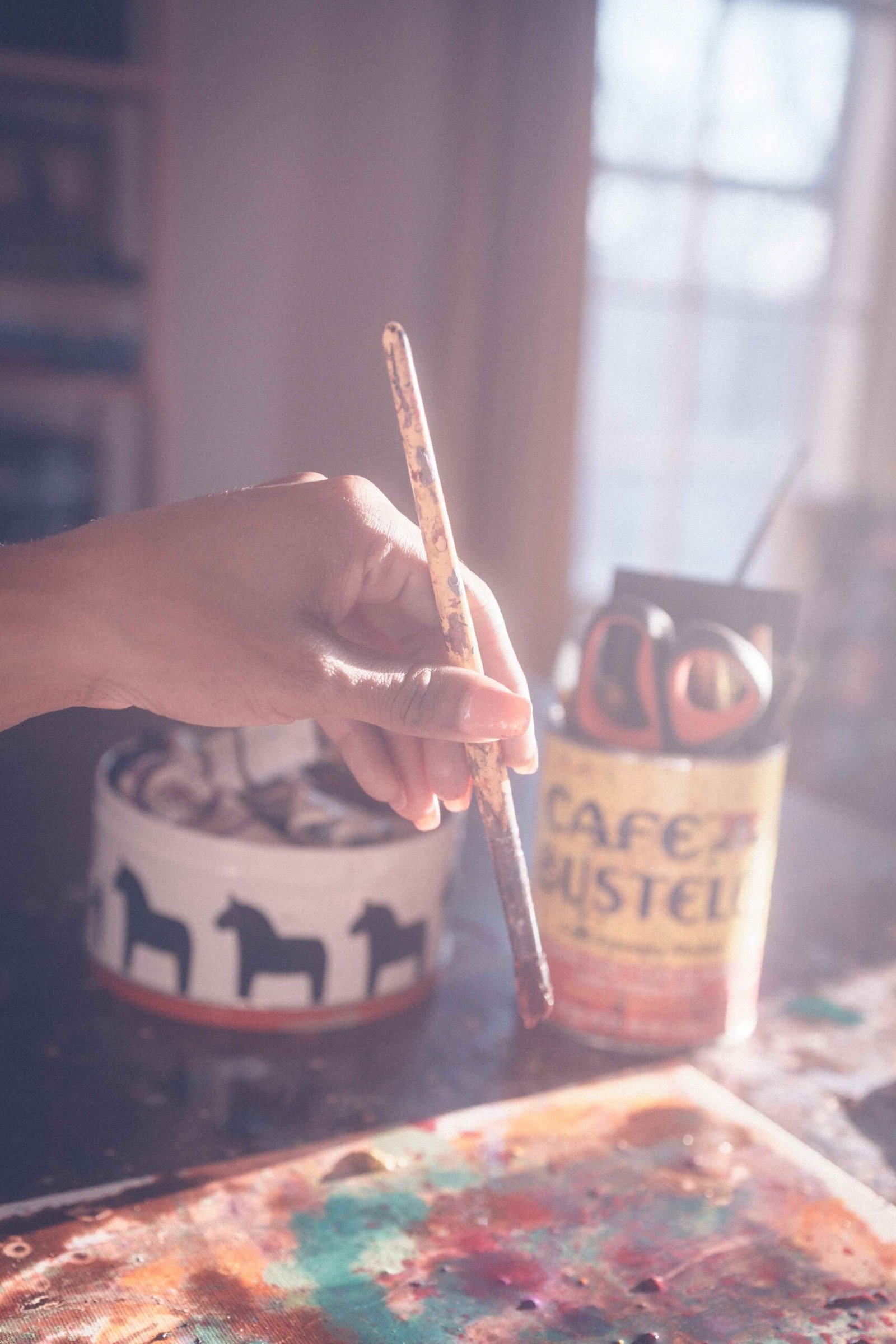
Because maybe this is what returning actually looks like.
Not a spark. Not a surge of inspiration. Not a perfect, confident beginning.
Just this.
Showing up.
Working through the resistance.
Letting it be imperfect.
What I’m Learning About Creativity and How to Get Your Spark Back
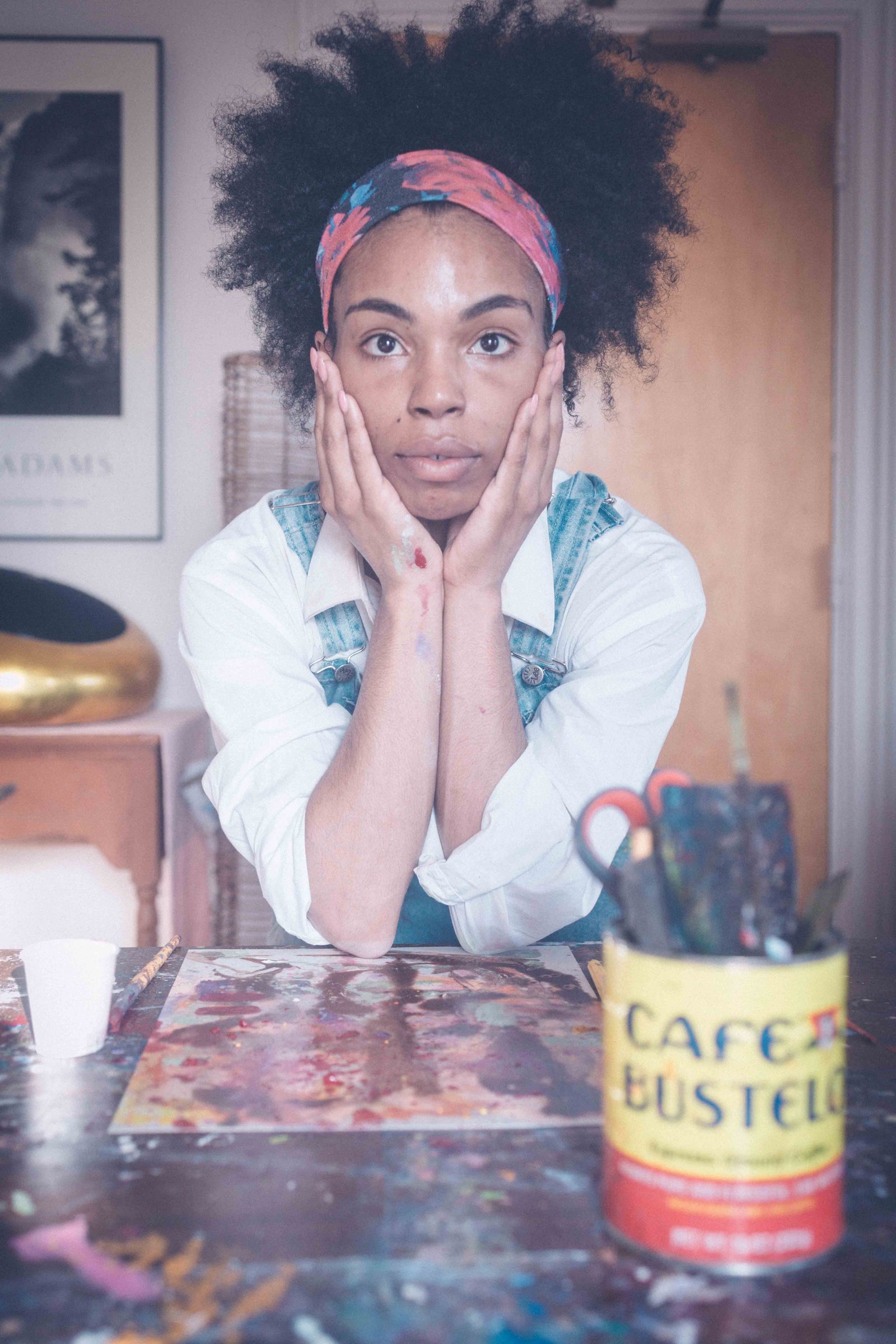
What I’m starting to realize is that losing your creative spark doesn’t mean it’s gone permanently, even if it feels like it.
It just means you’ve been away from it for a while.
I used to think creativity was something that came to me as I passively waited for inspiration to strike. I also believed it was something I either had or didn’t. Something that showed up only when I felt inspired, rested, ready.
But sitting here now, I can see that it works differently than that.
Creativity doesn’t always arrive first.
Sometimes, it follows.
It follows the decision to sit down at the table.
To take out your supplies.
To begin, even when you don’t feel connected to it yet.
What I’m learning is that practice is what brings the creative spark back. The solution is to make art even when its bad and to create something with your hands for creating’s sake instead of an audience or applause or a certain outcome.
My advice? Don’t put pressure on yourself or expectations. Stop trying to prove anything.
Just practice.
Not every painting will be good and that’s a good thing. Making bad art is necessary in the artistic journey.
Not every session will feel fulfilling. Not every moment will feel like a return.
But something is happening underneath all of it.
A rhythm. A familiarity. A relationship with the work.
If you’ve been wondering how to get your creative spark back, I’m realizing it doesn’t come from waiting. As cliche as it sounds, it comes from starting.
And maybe the creative spark isn’t a sudden burst of inspiration, but something more like kindling a fire. You gather the materials. You strike the match. At first, it’s slow and quiet—then steady.
All you have to do is keep feeding it.
🌿 Stay awhile. Join Slow Notes, my monthly letter from The Bohemian Bungalow — a quiet, creative space for art, style, and soul.