The New Bohemian Is Tailored
Five fall looks, one evolving idea of bohemian style—and a wardrobe built through instinct, inheritance, and pieces collected over time.
Bohemian style has been put into a very small box.
It is often reduced to a familiar costume: flowing dresses, flower crowns, thrifted fur, and enough fringe to announce your arrival before you enter the room.
I like all of those things, but I have never believed they possess a monopoly on freedom.
What draws me to bohemian style is not a particular silhouette, decade, or collection of recognizable objects. It isn’t about looking like I stumbled out of a Fleetwood Mac concert or walked off the page of a Free People ad. It is the permission to be original—to wear what I like regardless of the rules, even when the aesthetics appear to clash.
This fall, that freedom looks like bohemian romance sharpened by dark-academia severity. I’m mixing softness with structure and pairing pieces that were never supposed to belong together.
I am not the only one craving contradiction. The Fall 2026 runways were full of clothes that seemed to remember where they came from without feeling obliged to remain there. At Chloé, Victorian blouses, faded checks, and wandering florals gave folk romance a little more weight. Marc Jacobs returned to the plaid skirt suits and frilled blouses of his own past, but distorted their familiar proportions until nostalgia became something stranger. At McQueen, floral wallpaper prints and lace were pulled out of the domestic interior and carried into the world.
These collections did not give me a shopping list. They gave me permission to look at my own clothes differently. I have written before about treating my wardrobe as an archive: a record of former selves, private ambitions, and pieces gathered slowly rather than purchased all at once. For this feature, I returned to that archive with five Fall 2026 fashion trends in mind—modern tailoring, dark romance, power suiting, plaid, and unexpected layering—and asked what they could become in my hands.
The result is not a report on what to wear before the season changes its mind. It is an experiment in translation: five looks assembled from clothes I already owned and pieces found secondhand, each shaped by the runway but unwilling to obey it completely. Because the more useful question is not whether something is trending. It is whether you can make it belong to you.
A New York Kind of Black
New York has always understood that black is not the absence of an idea. It is an entire vocabulary.
It can be anonymous or confrontational, practical or impossibly elegant. On the right woman, it can say everything without appearing to ask for attention. The minimalists of the 1990s understood this particularly well. Their black was clean and unsentimental: long coats, narrow skirts, good knitwear, and silhouettes whose authority came from line rather than ornament. The woman wearing the clothes remained more interesting than the clothes themselves.
For Fall 2026, that severity has returned with its proportions disturbed. Coats have grown longer, shoulders broader, and skirts shorter. The restraint remains, but something stranger and more dramatic has entered the silhouette. It feels less like recreating the ’90s than remembering them incorrectly—and producing something more interesting in the process.
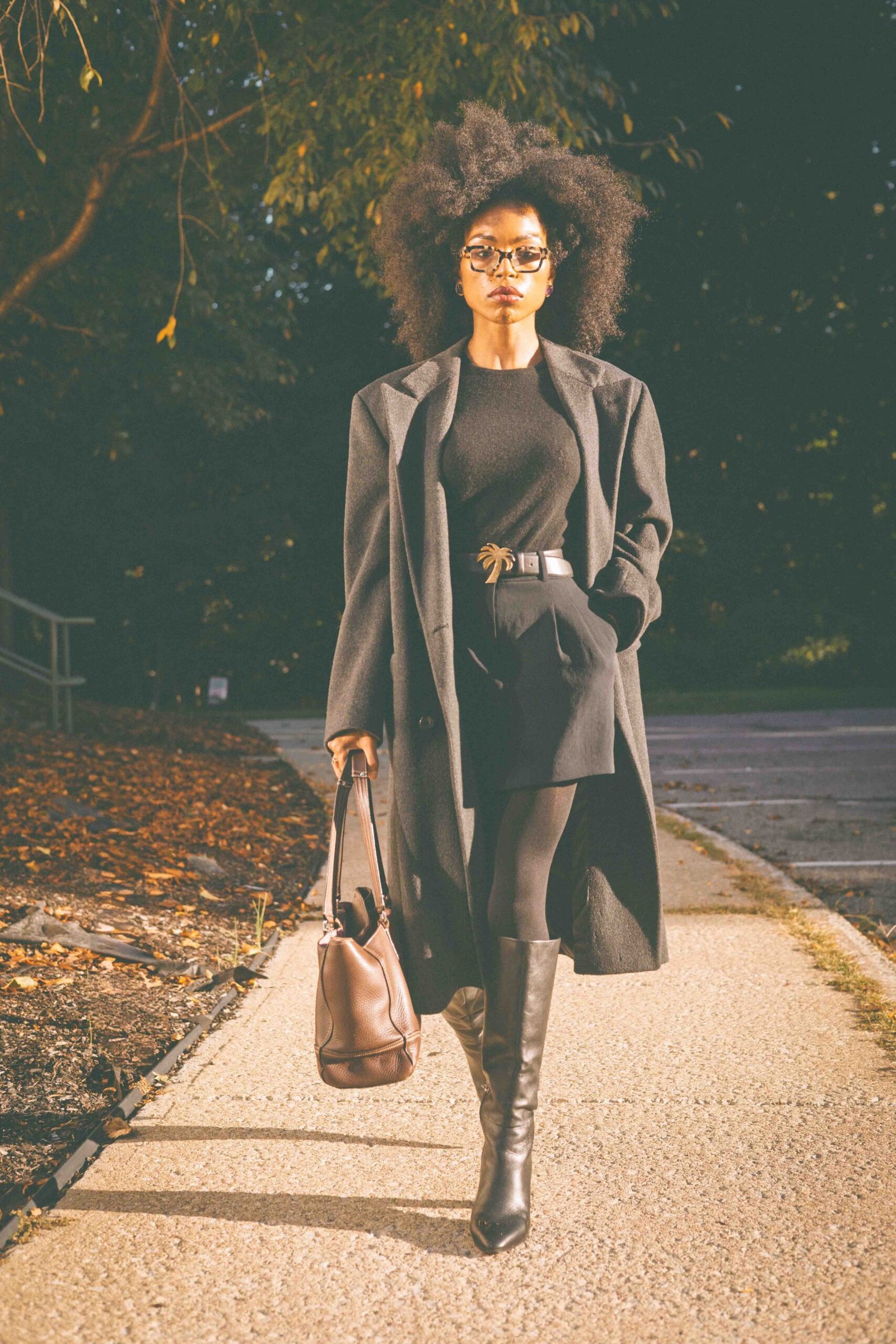
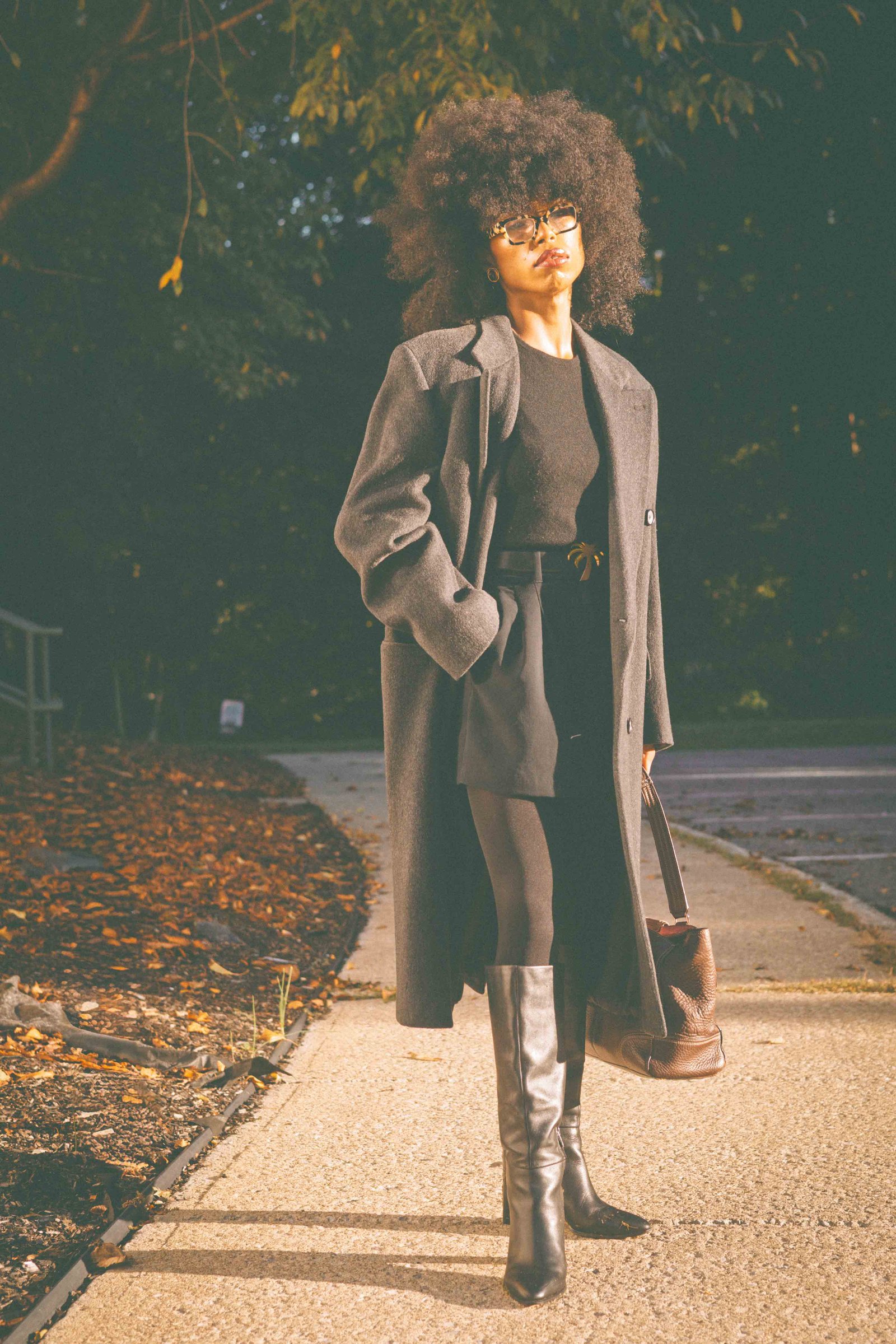
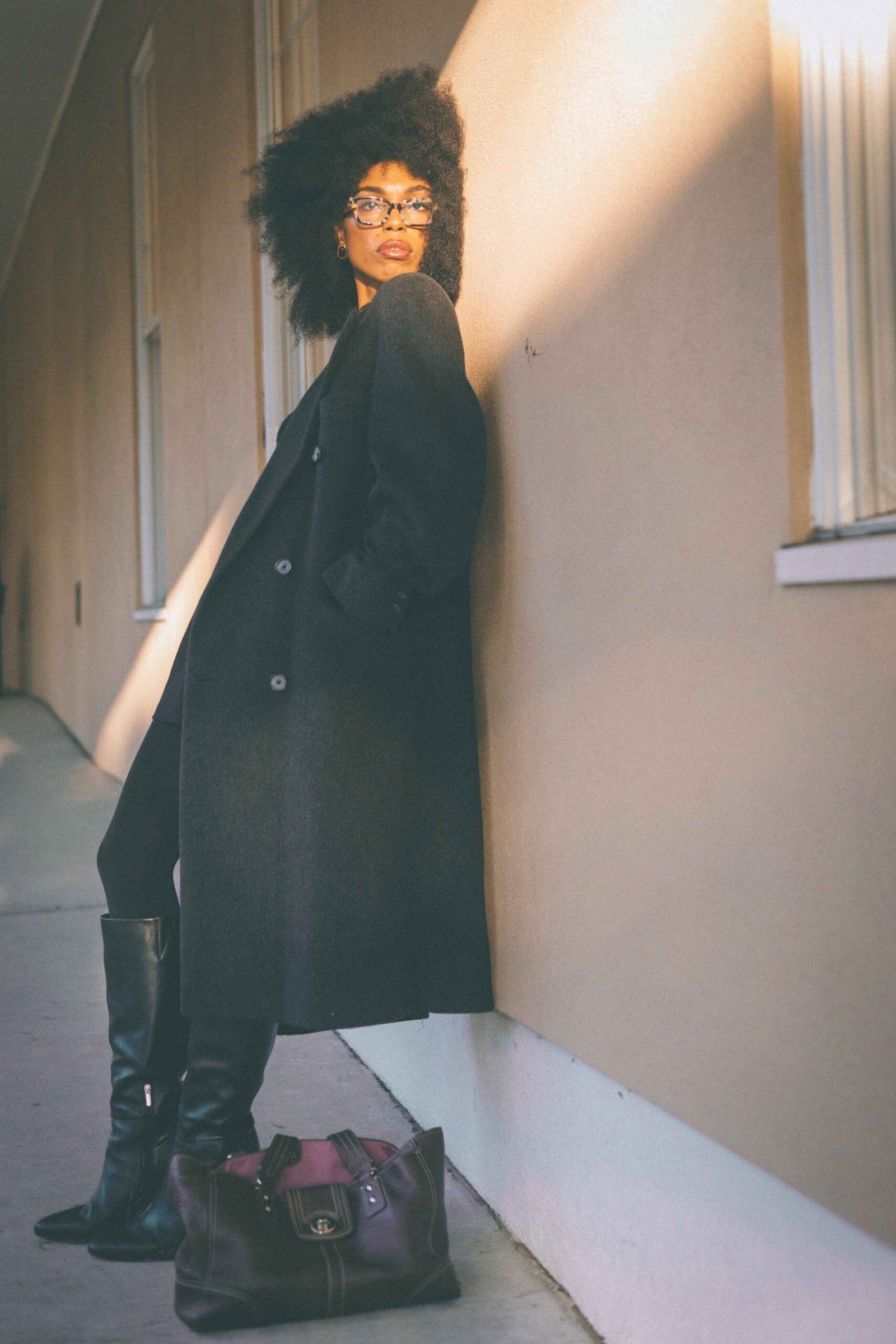
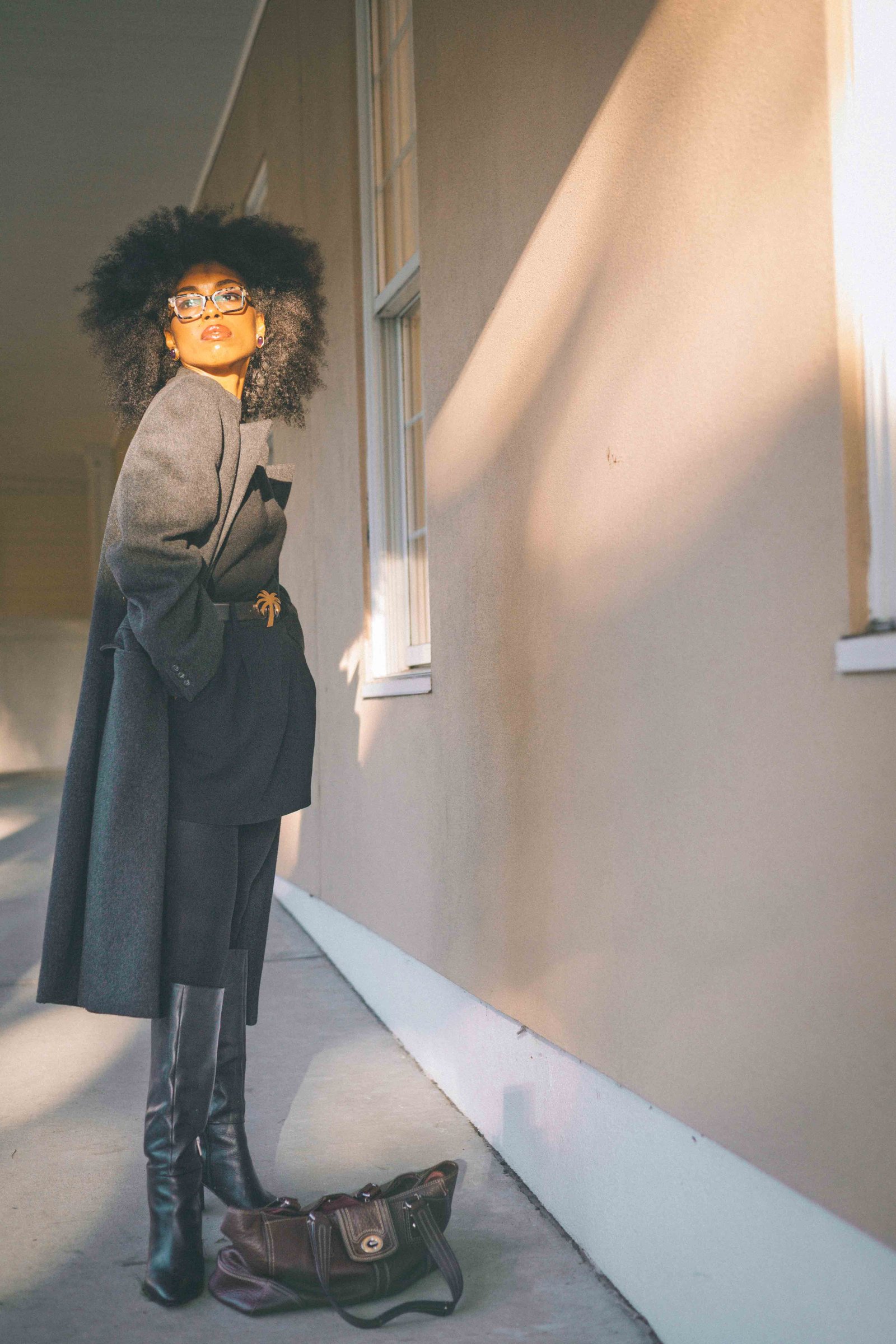
I imagine wearing this on the first morning cold enough to require a real coat. Fall dressing is the only season in which a cashmere sweater, a miniskirt, opaque tights, and a nearly ankle-length coat can all feel necessary within the same day. The outfit anticipates cold weather without surrendering entirely to it. There is still a little leg, still the memory of summer beneath all that wool.
This outfit is perfect for a Saturday spent wandering the city. I would take the train into the city, walk several blocks farther than necessary, get lost in the crowds of people, maybe disappear into a museum or bookstore. The coat would remain open while the sun was out, then close around me when the buildings began to cast long shadows and the temperature fell.
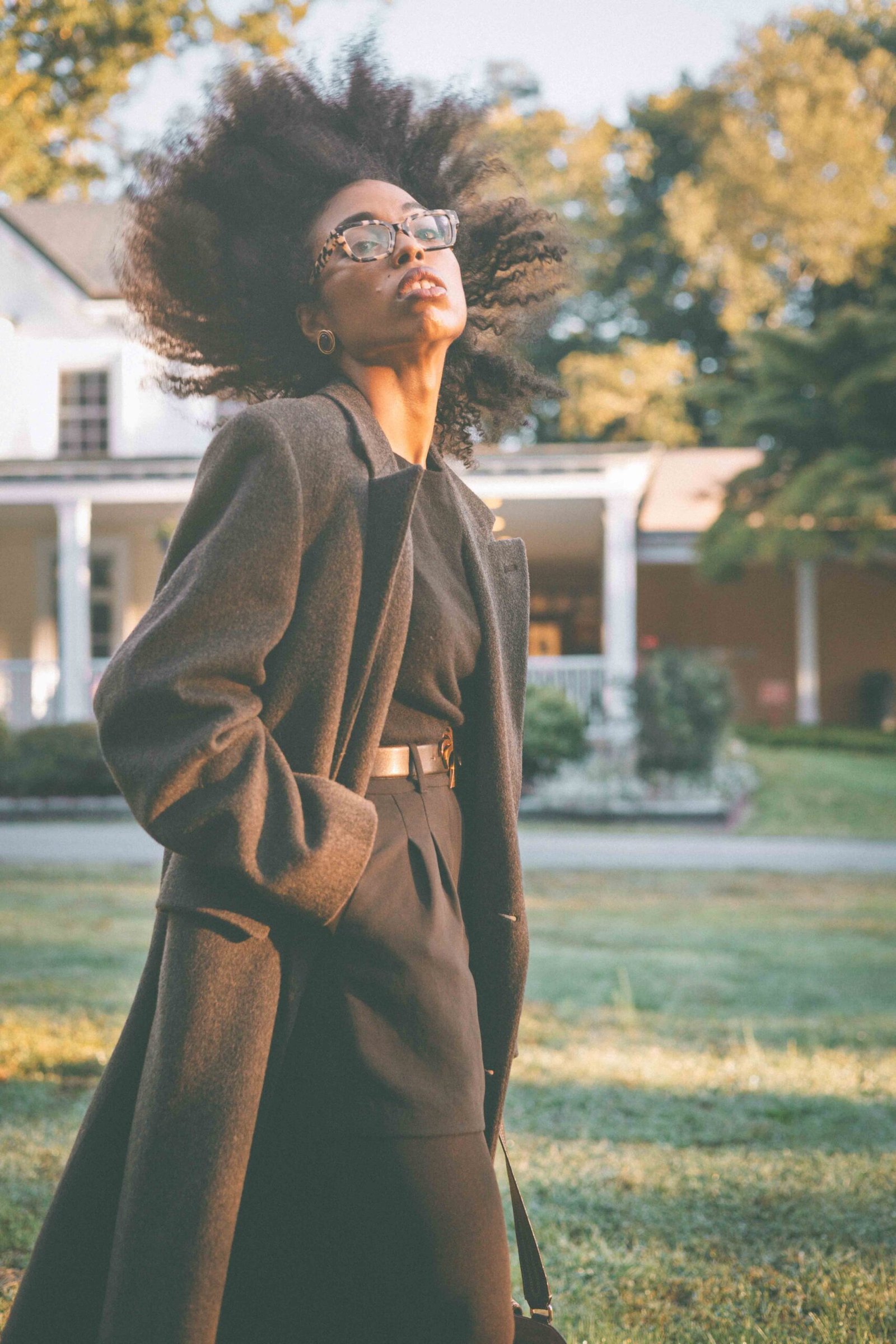
The foundation of this look is a vintage charcoal-grey wool coat, thrifted from the men’s section. Beneath it, I wore a black cashmere crewneck with an Aritzia mini skirt, opaque tights, and Calvin Klein leather boots. The Palm Angels belt interrupts the simplicity just enough. Nothing is especially complicated, but the difference in scale—the enormous coat against the short skirt—makes black feel less like a safe choice and more like a point of view.
I was thinking about Marc Jacobs’s Fall 2026 collection, where enormous coats and almost square miniskirts distorted the body rather than politely flattering it. My version is less extreme, but I borrowed the contradiction: something very short enclosed within something very long, a woman’s mini skirt beneath the weight of a man’s old coat.
It is an easy idea to carry into your own closet. When wearing one color, allow the proportions and textures to tell the story. Pair a short hem with a sweeping coat, soft cashmere with worn leather, or a fitted base with something borrowed from a larger frame. The pieces do not need to match perfectly. They only need a reason to remain in conversation.
To me, this outfit symbolizes the beginning of fall: the pleasure of becoming slightly mysterious again, of carrying a coat after months of leaving the house with nothing to hide inside. It is made for solitary museum afternoons, quiet dates, early Mass, used bookstores, and train platforms after dark.
Freedom does not always arrive in fringe. Sometimes it steps into October wearing black cashmere and a coat with shoulders broad enough to take up space.
Going Somewhere North
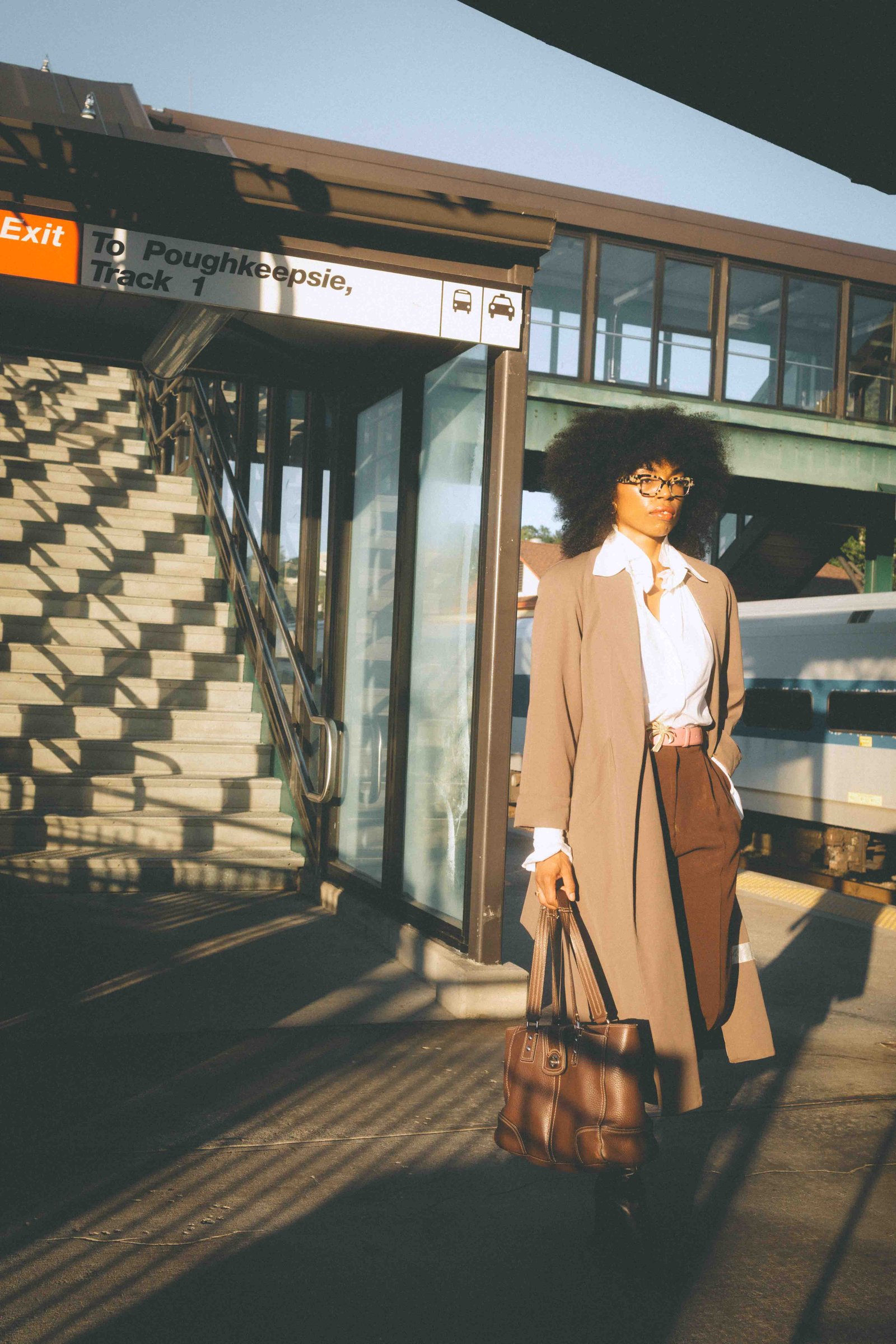
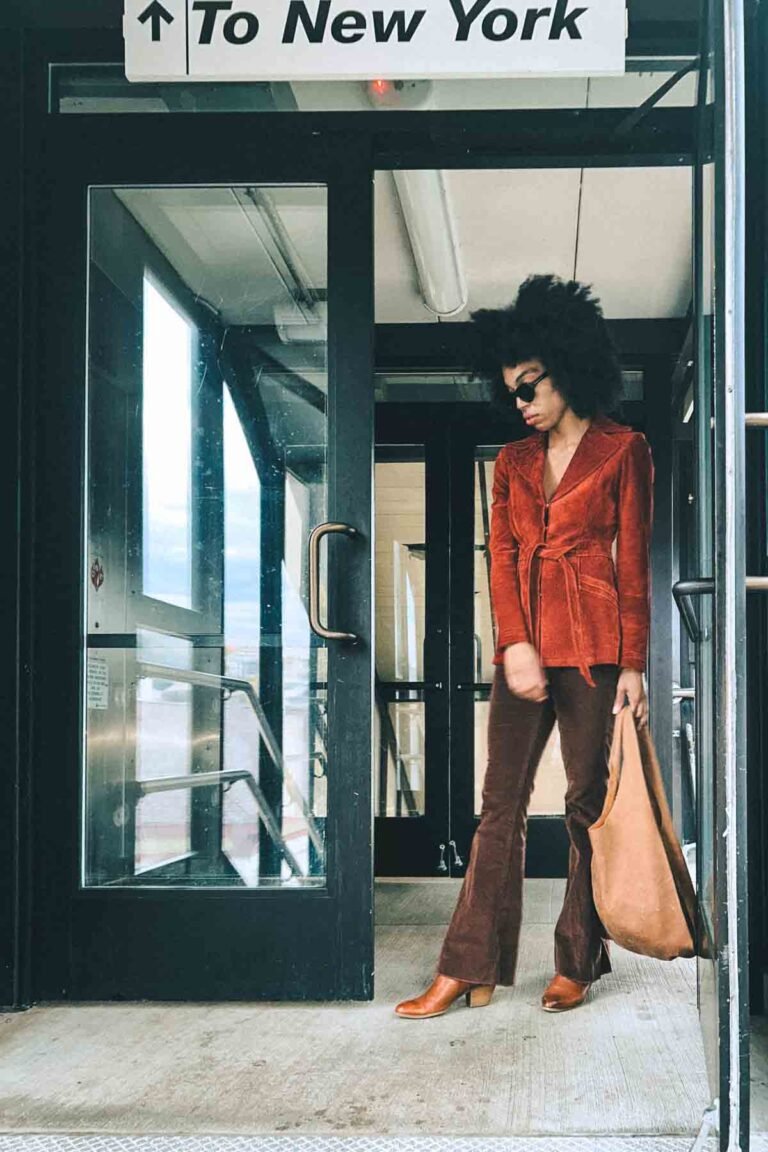
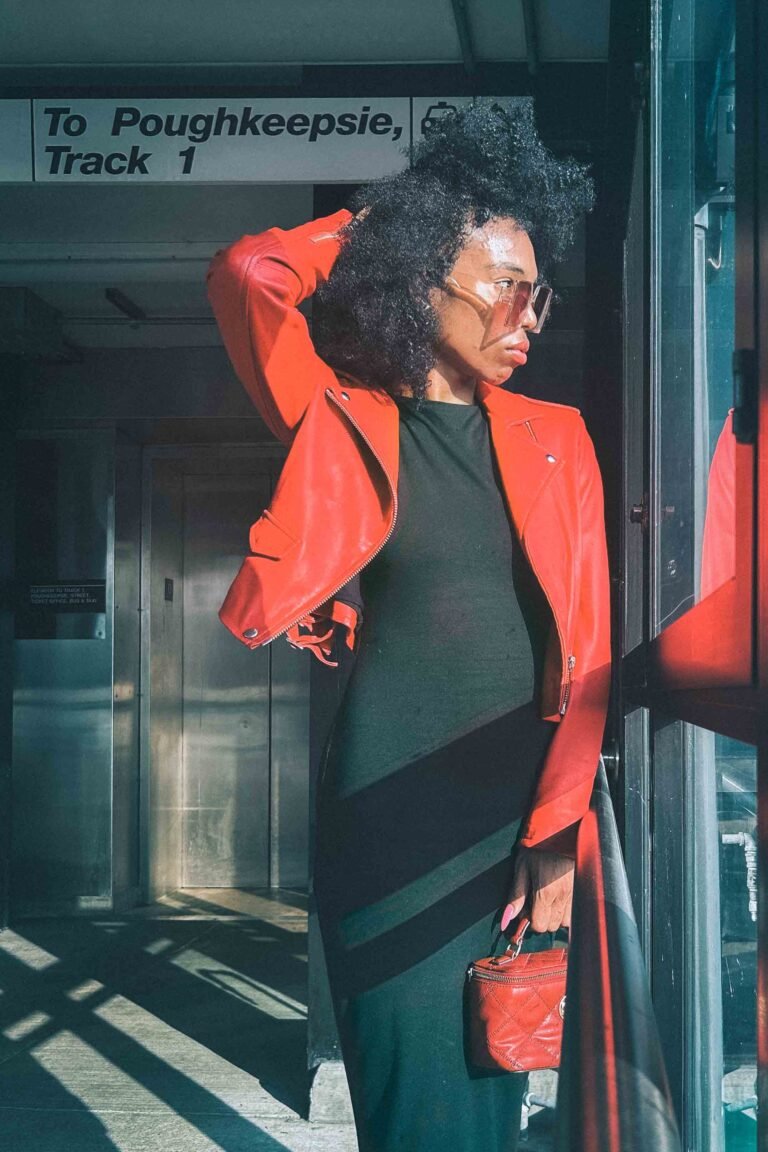
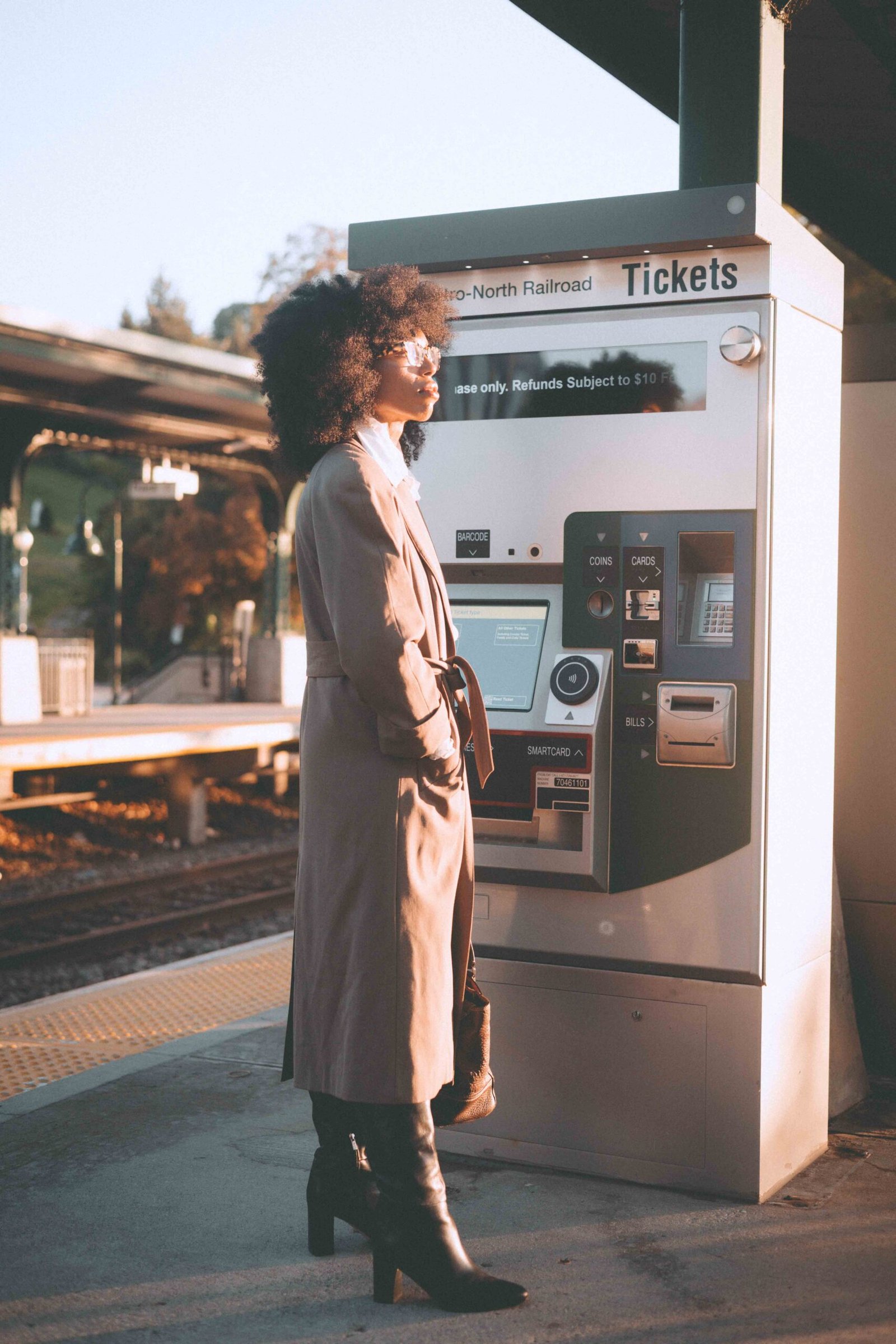
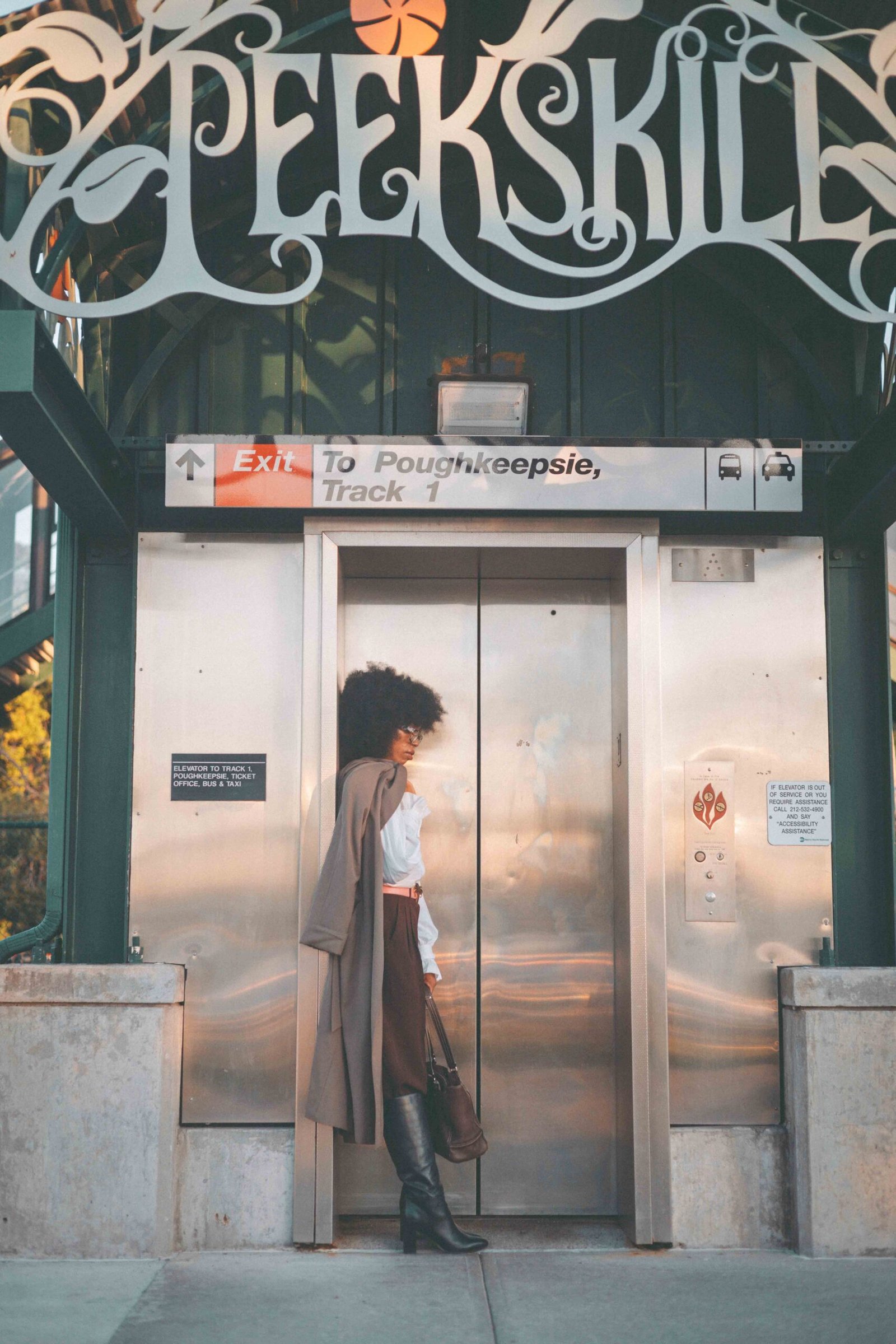
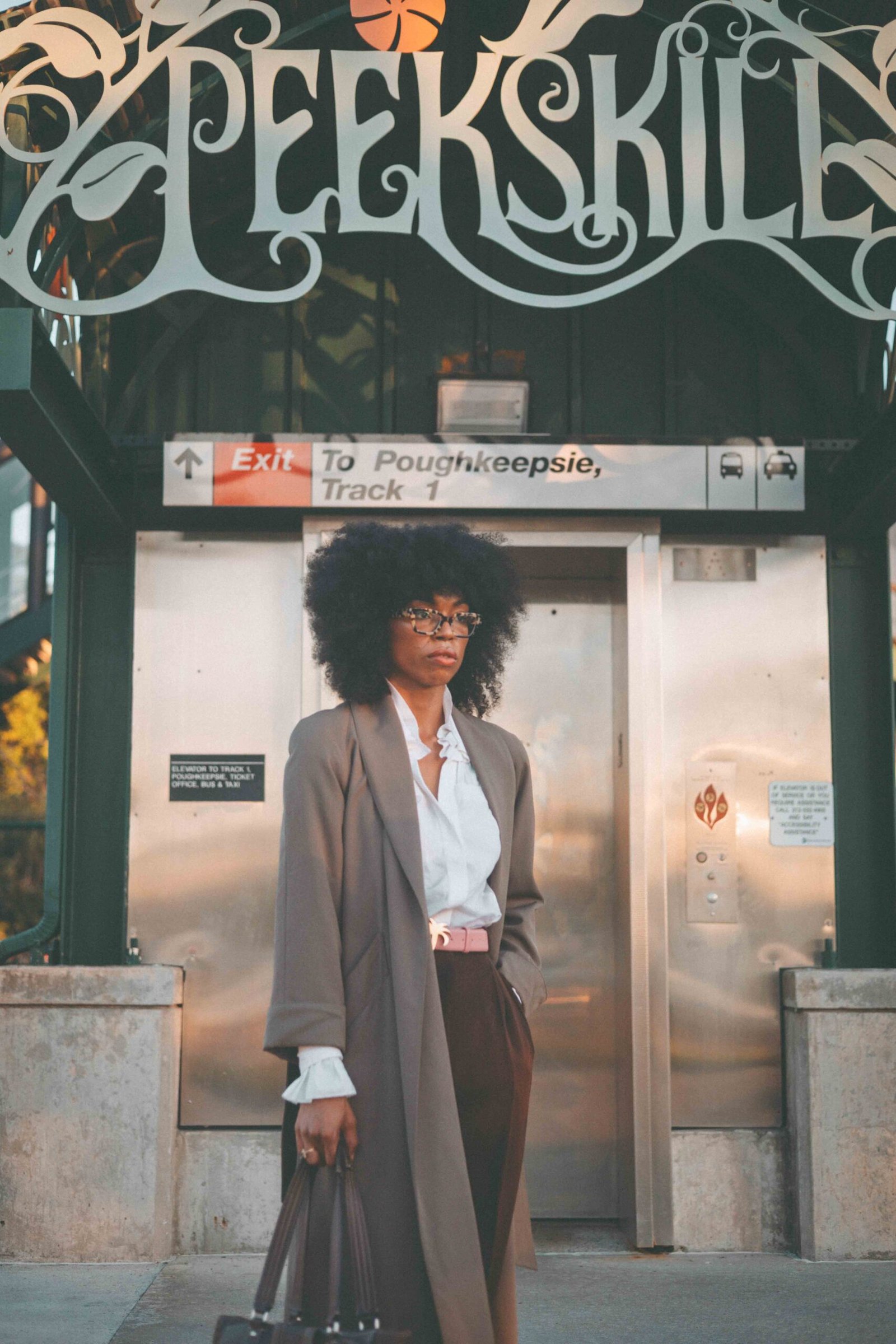
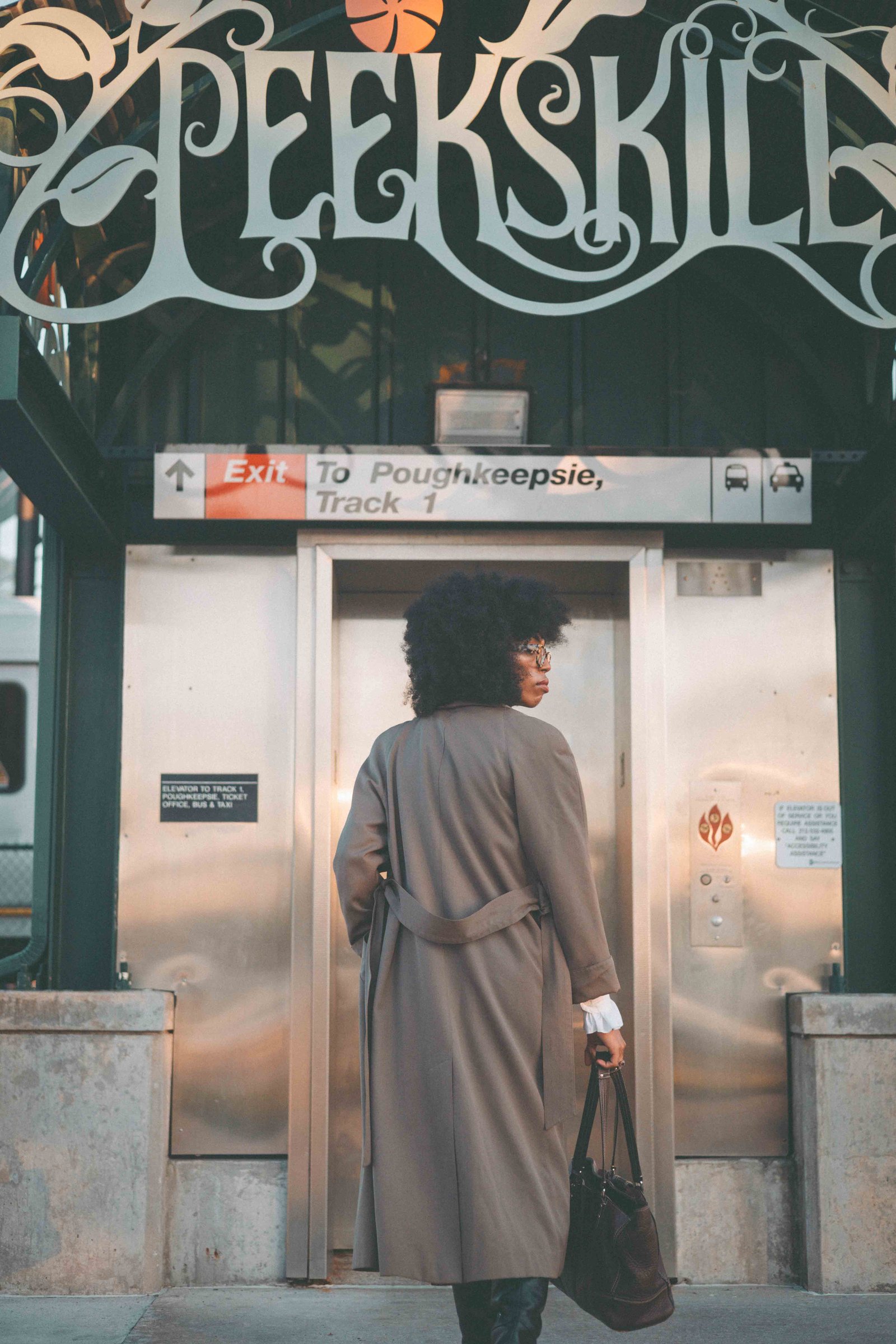
The sign above me pointed toward Poughkeepsie, and the outfit already seemed to know where it was going.
I imagined wearing it on a train north as the view outside the window changed from concrete to trees: an afternoon spent wandering through a small town, carrying a book I might read over coffee, watching the light disappear earlier than expected. The long trench could be drawn closed on the platform after sunset, the leather bag made heavy with whatever I collected along the way.
Fall has always felt like a season of departure. Summer asks us to stay where the light can find us; autumn makes leaving feel romantic. Trains, old books, leather boots, wool trousers—the ordinary rituals of getting somewhere begin to resemble scenes from a film.
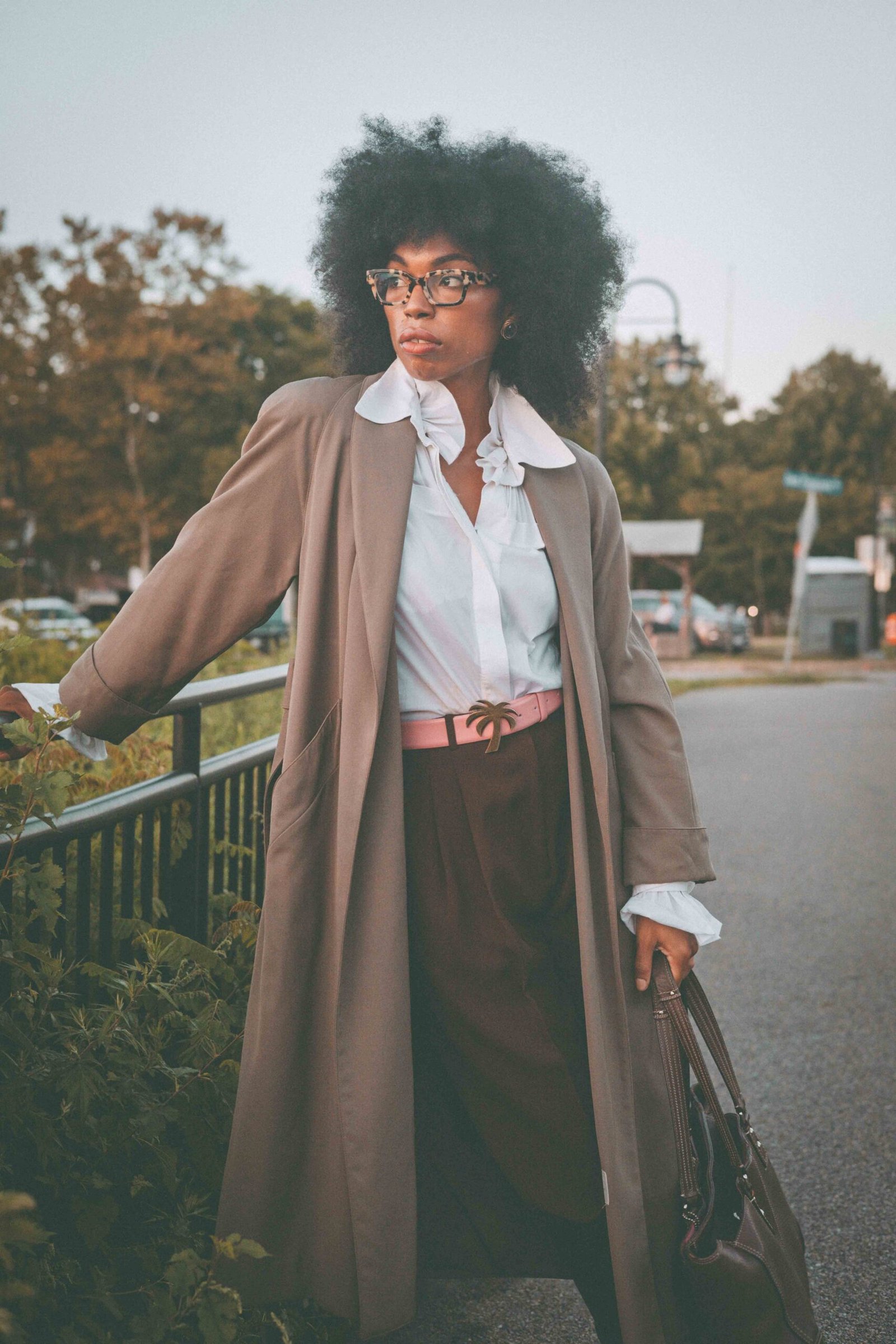
This look was inspired by the world of Ralph Lauren, where clothing rarely exists without an imagined life around it. His Fall 2026 collection mixed rugged and refined pieces as if dressing a woman for a country weekend: tactile wool, riding boots, cinched tailoring, and clothes that moved easily between indoors and out. I borrowed that language through a vintage Jones New York trench and chocolate Jennifer Moore trousers, both found secondhand. The same Calvin Klein boots from the first look appear again, this time less severe and more equestrian beneath the wide trouser legs.
The white poet blouse from Moda International, a now-defunct brand associated with Victoria’s Secret, is featured multiple times and quickly became one of the most useful pieces in this entire story. In the previous outfit, black cashmere made the coat feel stark and modern. Here, the blouse’s open collar and escaping ruffled cuffs soften the tailoring, giving the browns a little air. A pink Palm Angels belt fastened with a gold palm tree interrupts the seriousness. It is the one detail Ralph Lauren might not have chosen—which is why I did.
I’ve learned through many years of thrifting and acquiring clothes that a great wardrobe does not prove its value through its size alone, but through the number of lives its pieces can lead. The same boots can belong to a monochrome city look one day and an imaginary country escape the next. A romantic blouse can slip beneath a trench, a leather jacket, or a dress and become almost unrecognizable each time. Repetition does not make personal style less creative. It gives it a handwriting.
To recreate the feeling, begin with a family of warm neutrals rather than pieces that match exactly: tobacco, taupe, cream, and chocolate. Combine something tailored with something romantic, then add one detail that seems to have wandered in from another story.
You do not need an enormous wardrobe—or even a ticket to a sleepy Hudson Valley town you wouldn’t find on a map. Sometimes dressing for departure is enough to remind you that you are still capable of going somewhere.
The Bohemian Three-Piece Suit
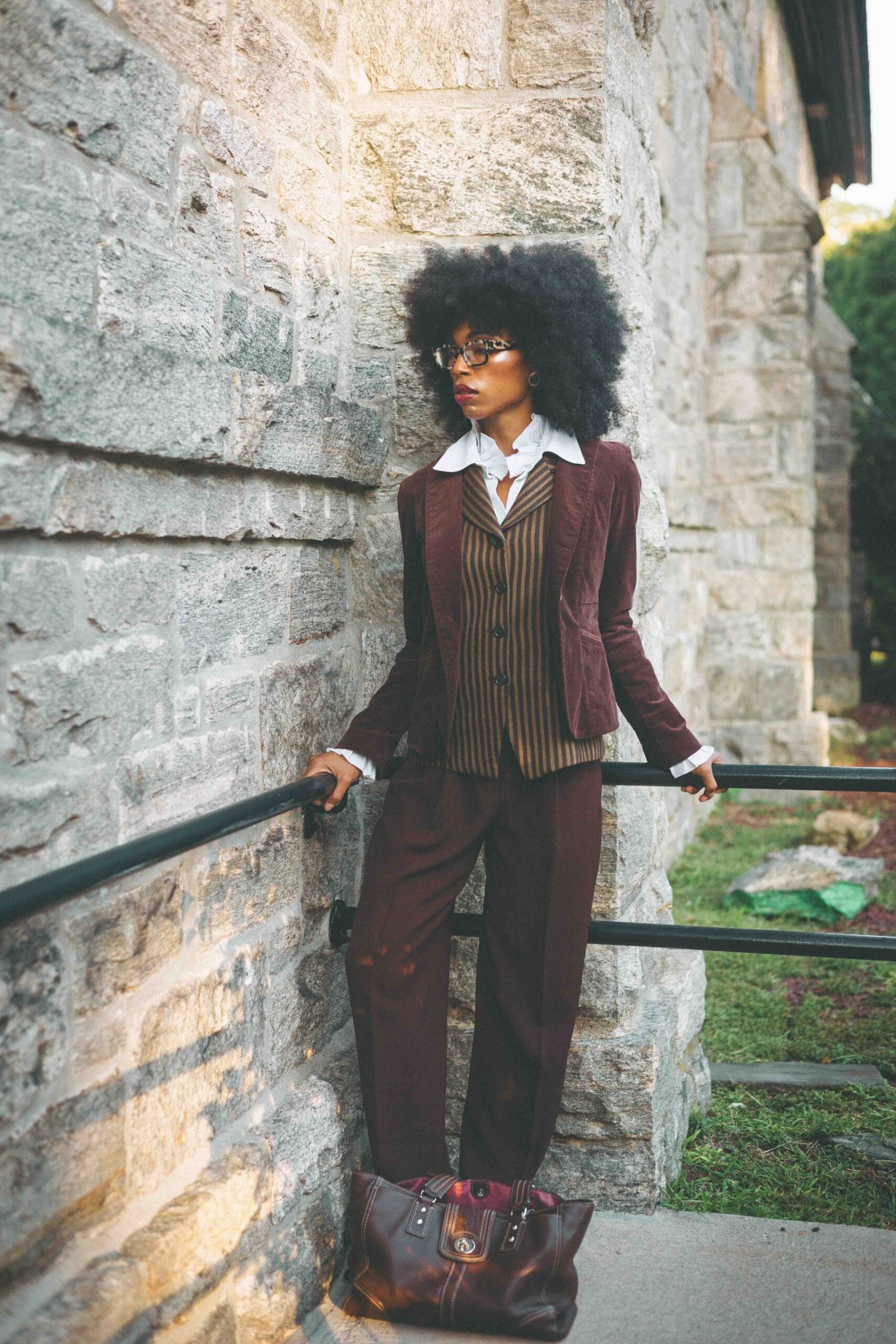
This is what I would wear to an author’s reading in an old library, lingering afterward among the shelves until the building began to empty.
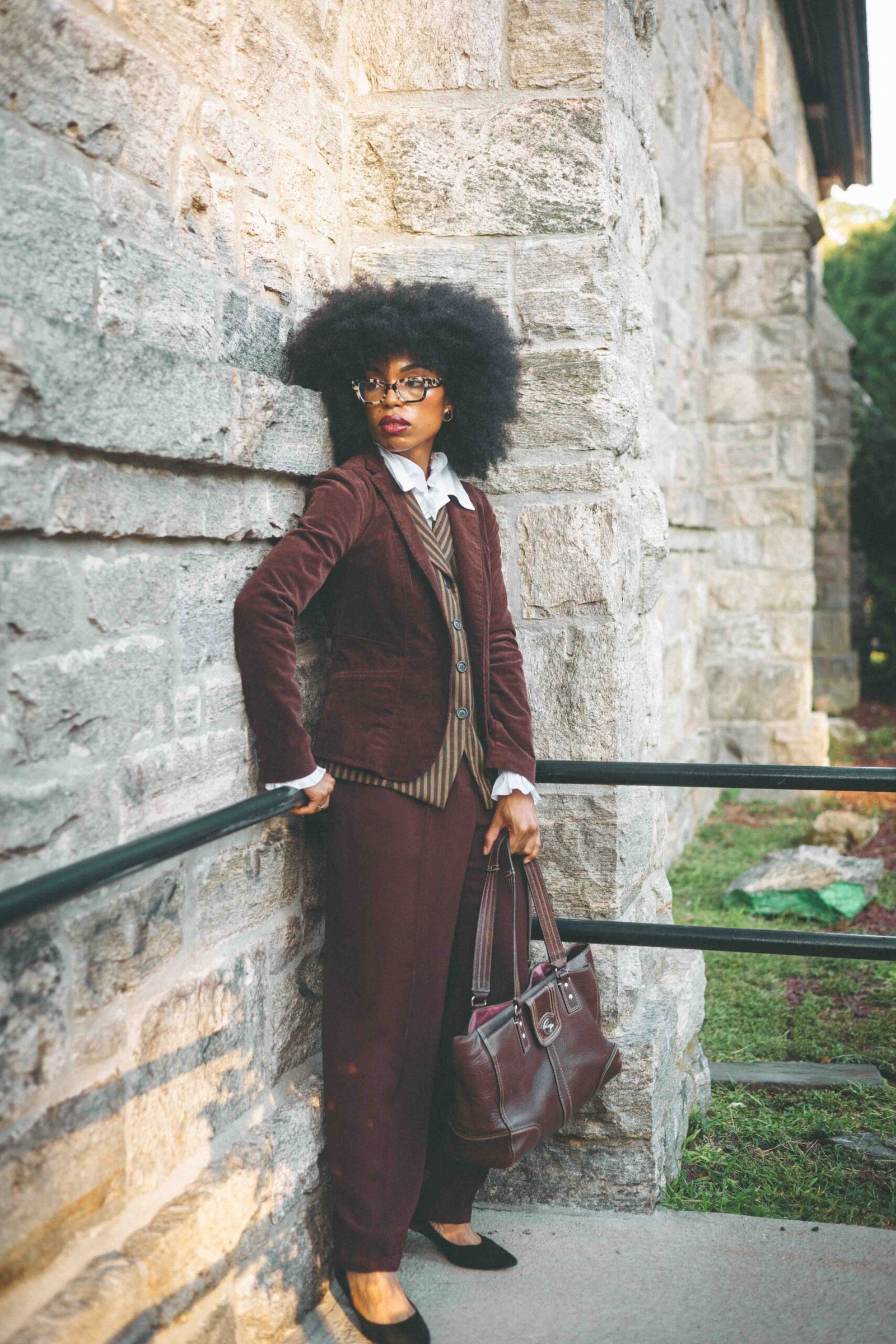
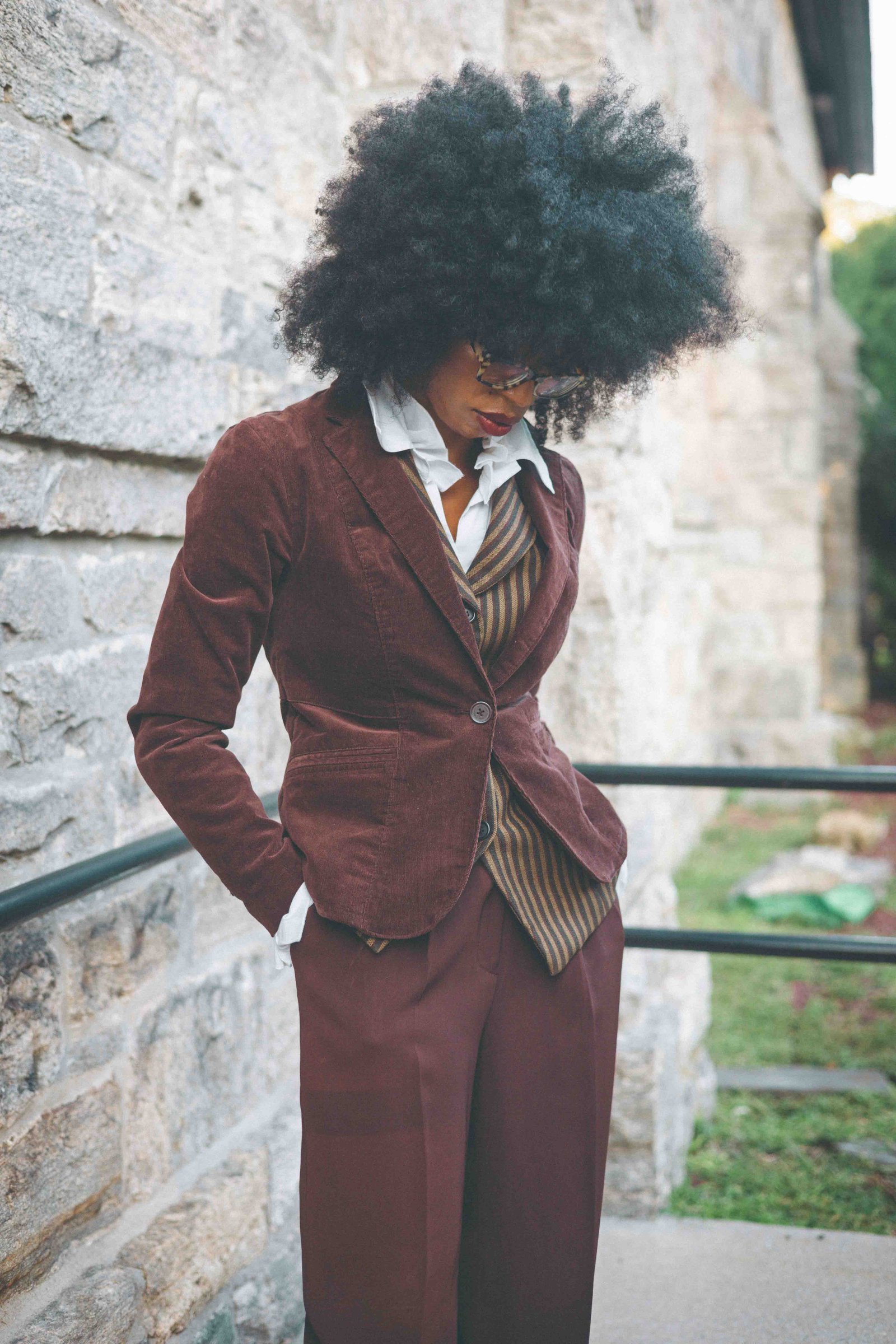
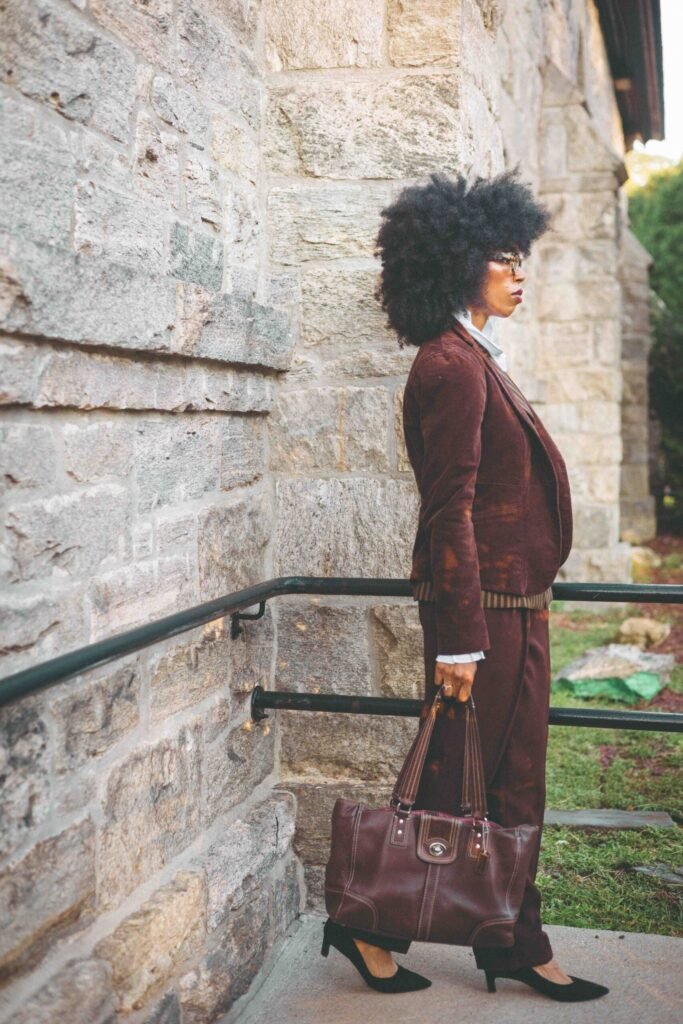
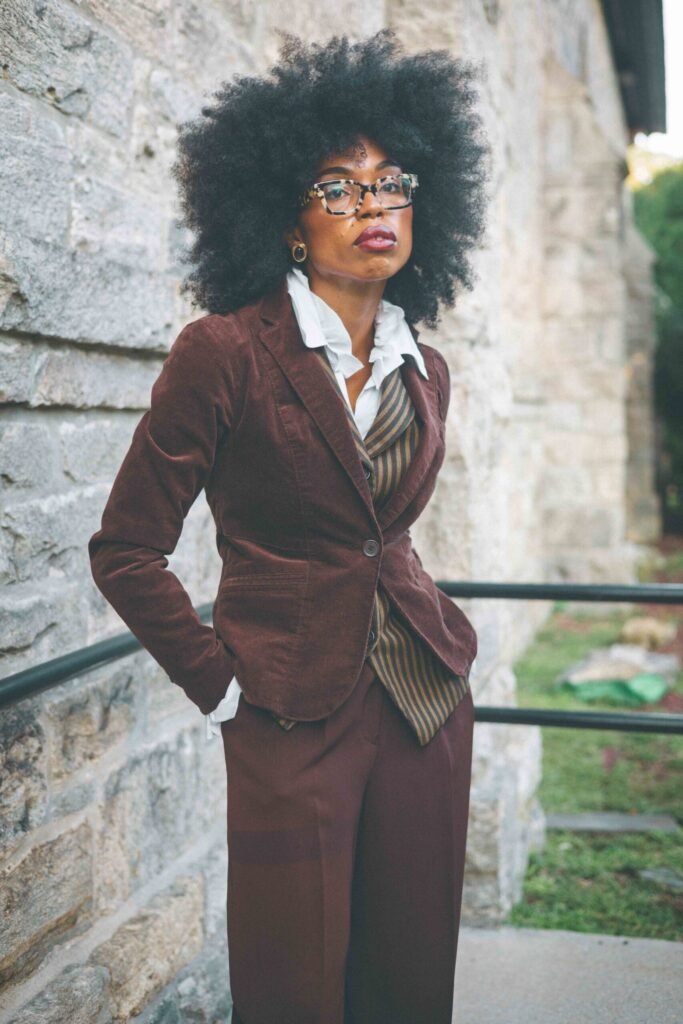
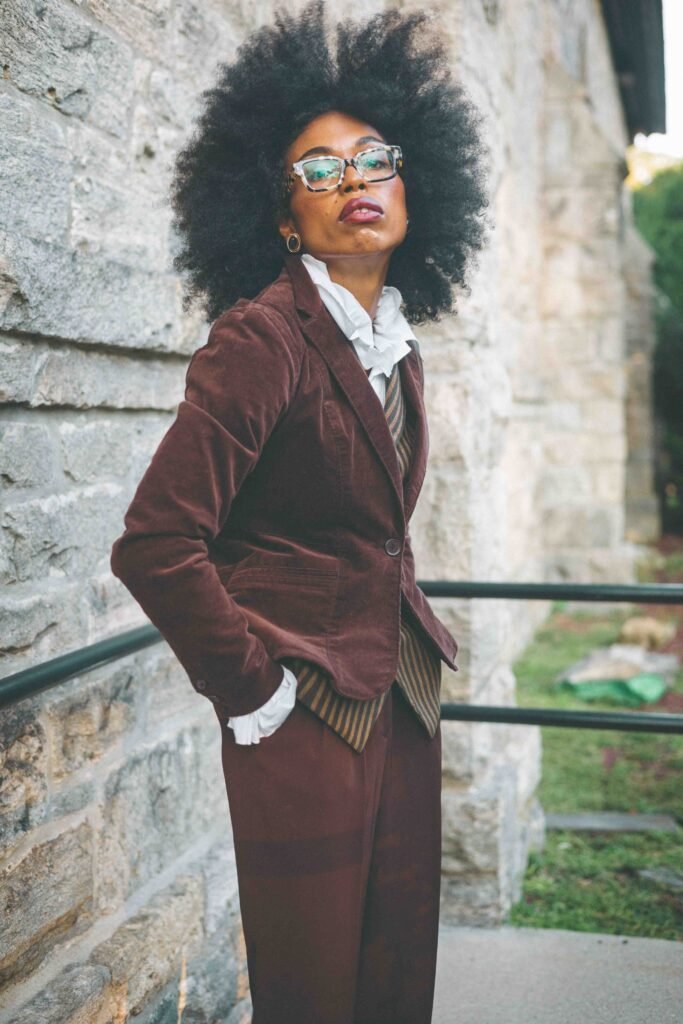
The outfit appears to be a three-piece suit from a distance: brown trousers, a striped wool waistcoat, and a fitted corduroy jacket glowing warmly in the late-afternoon light. Up close, the illusion begins to unravel. None of the pieces were designed for one another. They were made by different brands, in different decades, and found at different moments in my life.
The jacket is vintage Calvin Klein Jeans, cut from fine-wale corduroy and made from 100% cotton. Its texture is what makes it feel like fall. Corduroy absorbs light in one direction and reflects it in another, shifting between chocolate, tobacco, and rust-brown as the body moves. Beneath it, a vintage waistcoat—made from striped wool in the United States—introduces still more shades of brown. The chocolate brown trousers return from the previous look, along with the white poet blouse.
Matching sets are all the rage today and they are appealing because they offer instant certainty. Everything agrees: the colors are identical, and the difficult decisions have already been made. But the outfits I remember most are assembled slowly from pieces that recognize something in one another without matching perfectly.
That is also what makes this version of Fall 2026’s modern tailoring feel personal. The season’s suits were softened, distorted, and separated into pieces that could live beyond the office. My “suit” is held together by repetition rather than uniformity: brown moves through the corduroy jacket, striped waistcoat, trousers, and leather bag; the narrow stripes echo the ridges of the corduroy; the white collar and ruffled cuffs break through the layers before the tonal palette becomes too solemn.
You can build the same illusion without buying a set. Begin with two pieces in the same color family, then add a waistcoat or jacket in a pattern that contains related shades. The colors should speak to one another without becoming identical. Pay attention to what repeats—a stripe, a lapel, a flash of white at the collar—and allow those small echoes to create cohesion.
A ready-made set can make you look polished. A collected outfit can make you look as though you have lived an interesting life.
These clothes carry traces of what came before me: other wardrobes, vanished labels, and a time when more garments were made in American factories rather than produced overseas. The world that made them had already changed by the time they found me. Worn together against an old stone wall, they feel less like nostalgia than inheritance—separate histories briefly becoming one.
Garden After Dark
Some flowers belong to the dark.
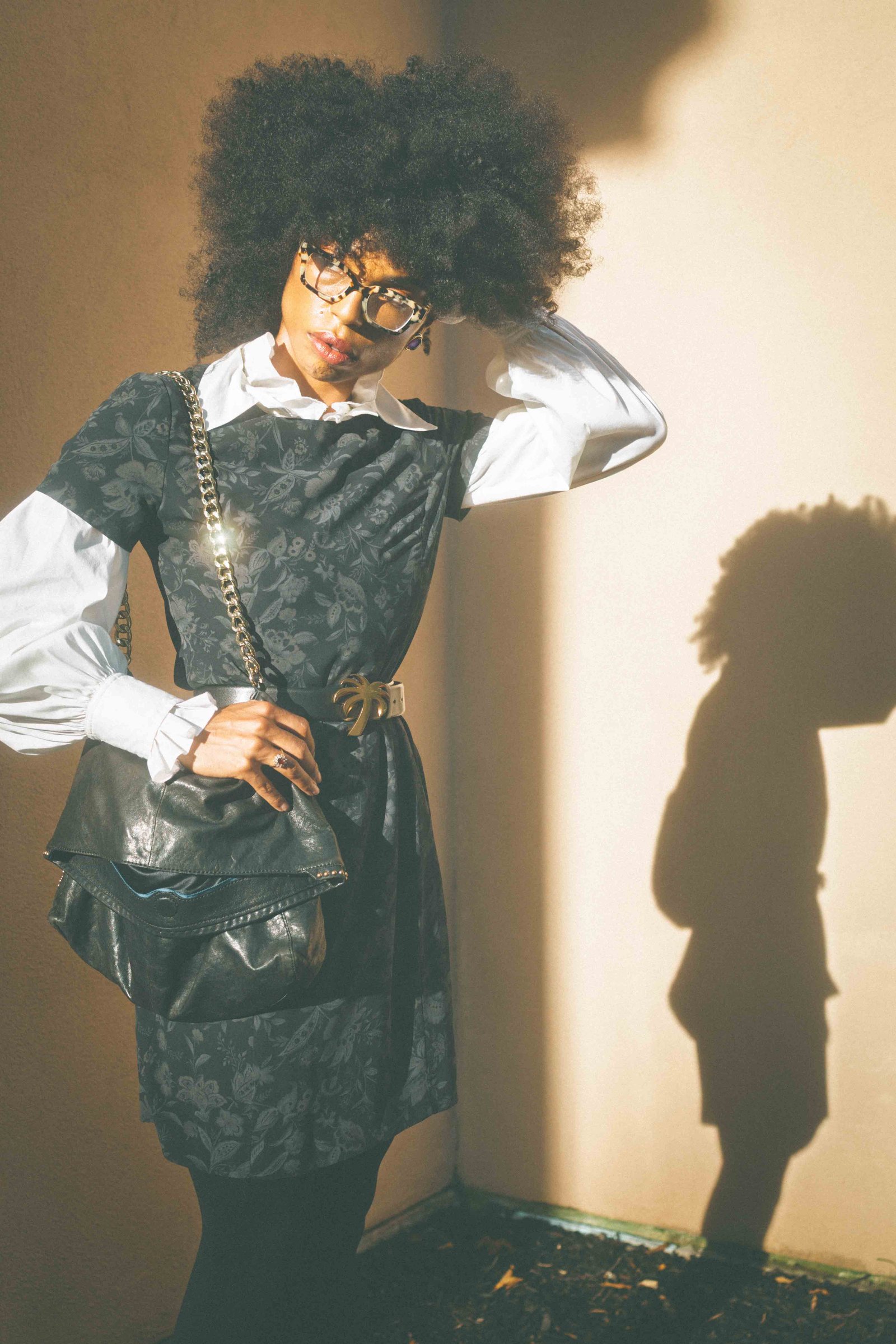
By early fall, the garden has begun to lose its sweetness. Petals curl inward, leaves deepen at the edges, and the afternoon sun throws longer shadows across the walls. The flowers have not disappeared; they have simply become moodier. That is the kind of romance I wanted from this look.
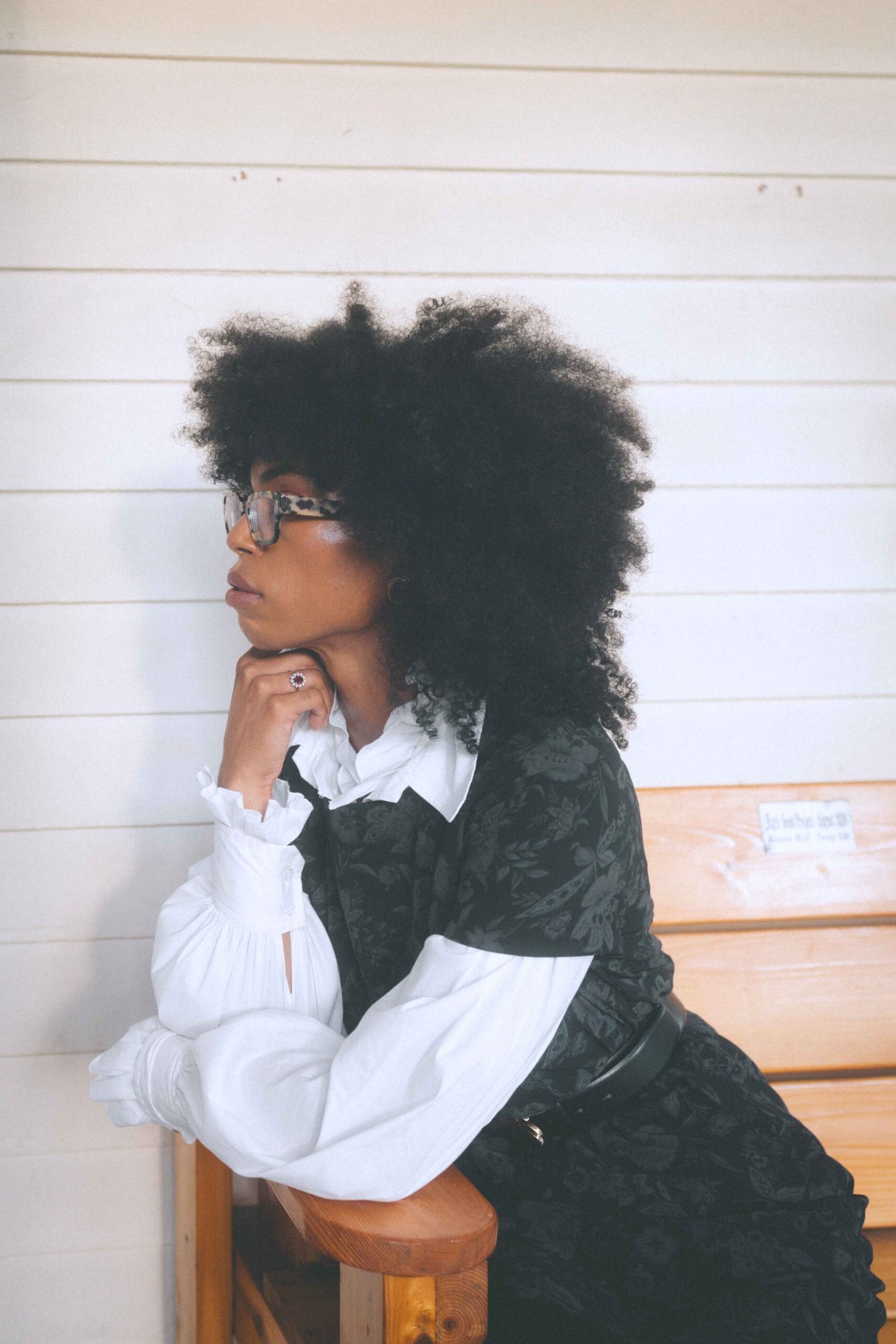
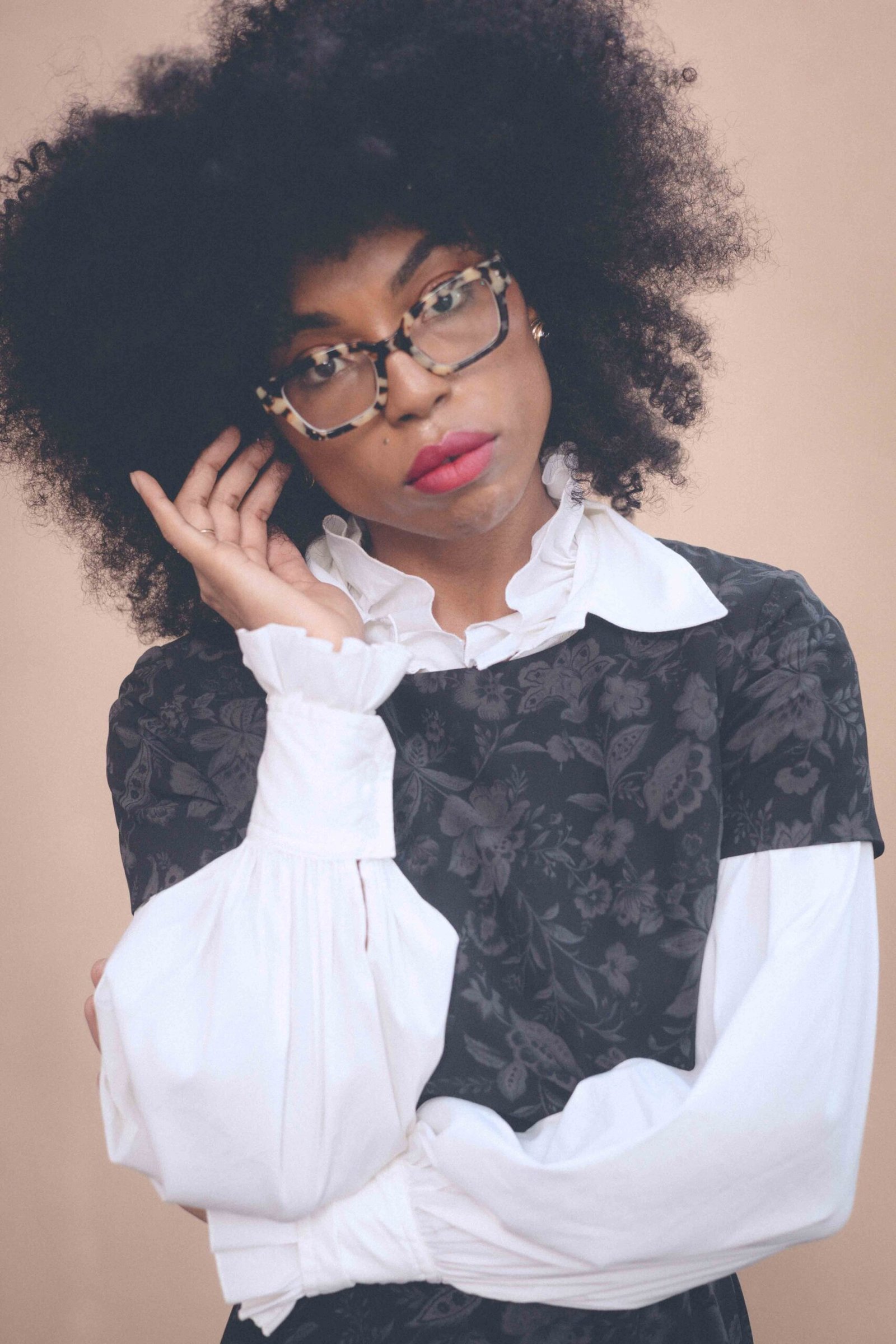
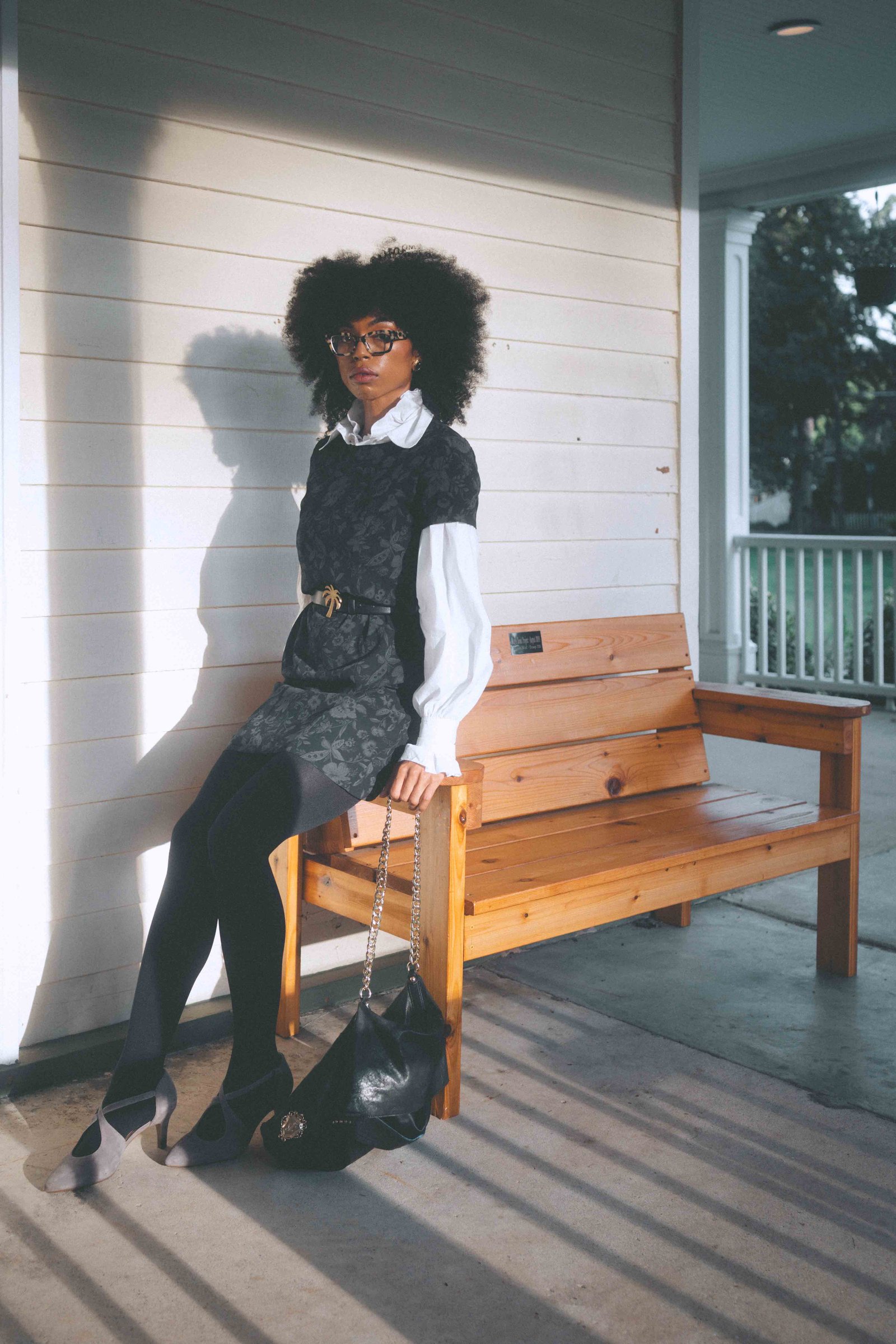
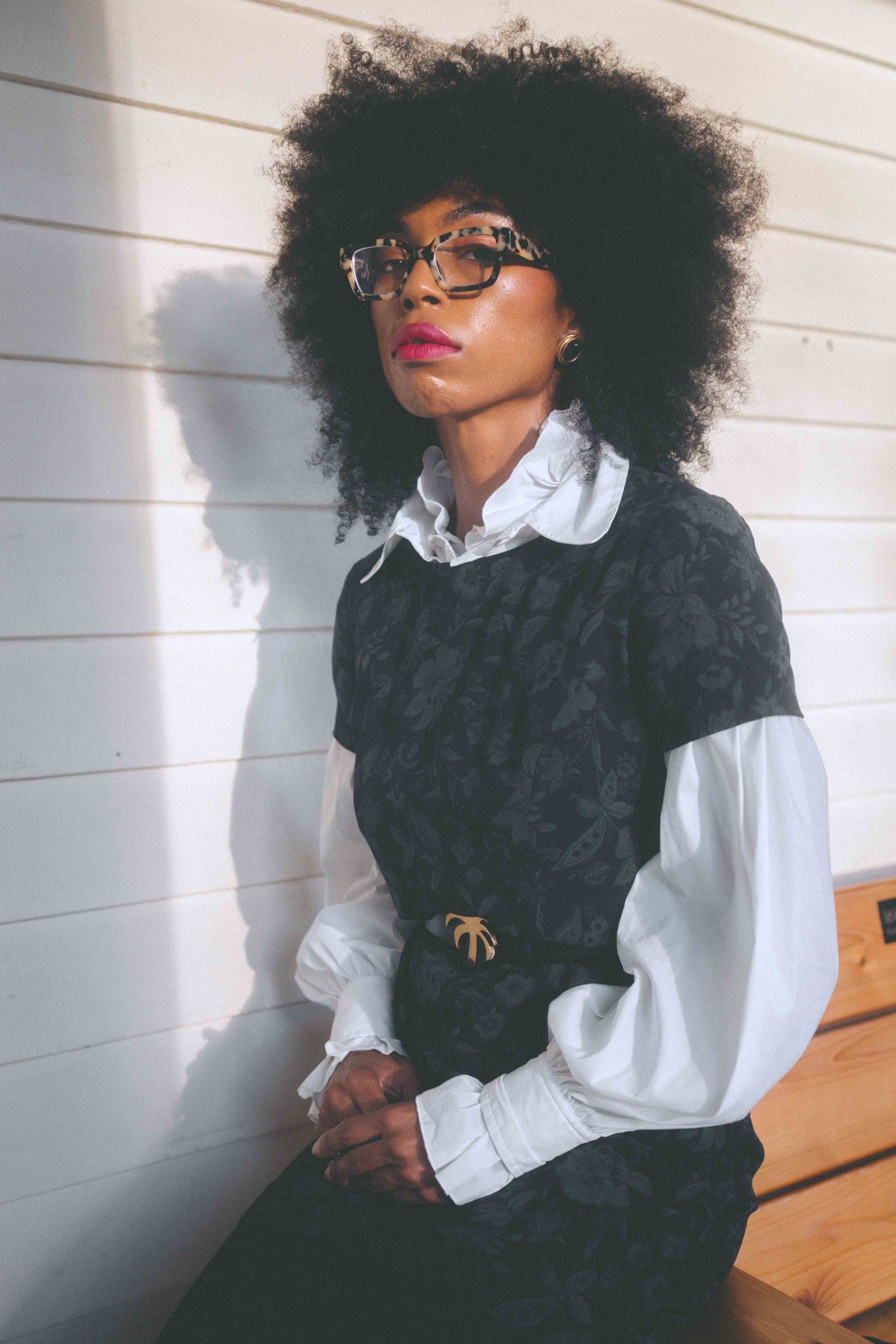
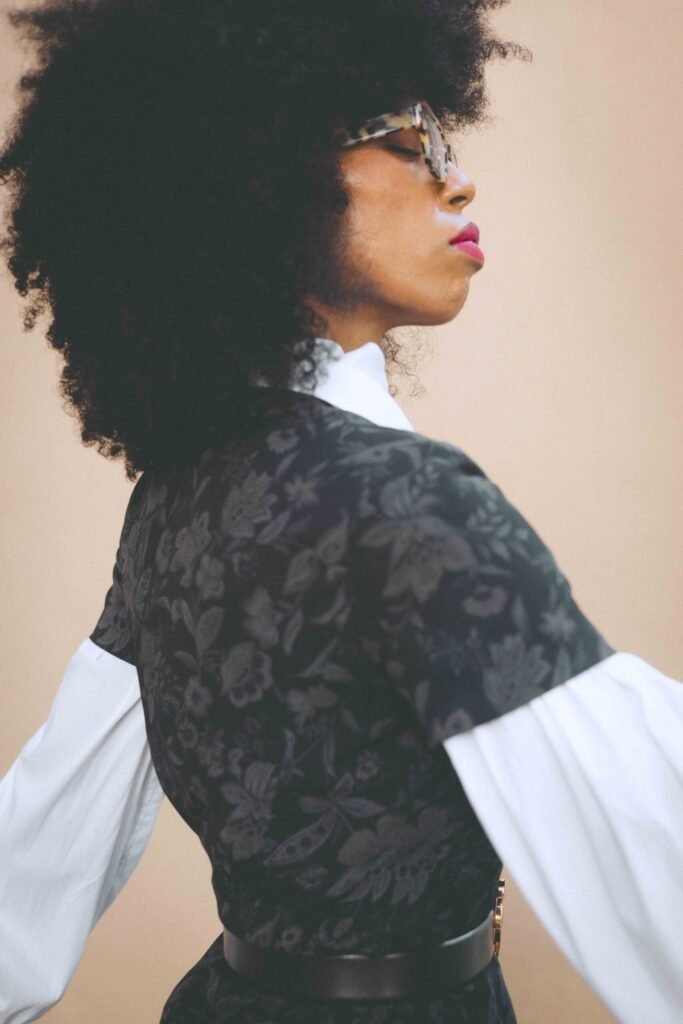
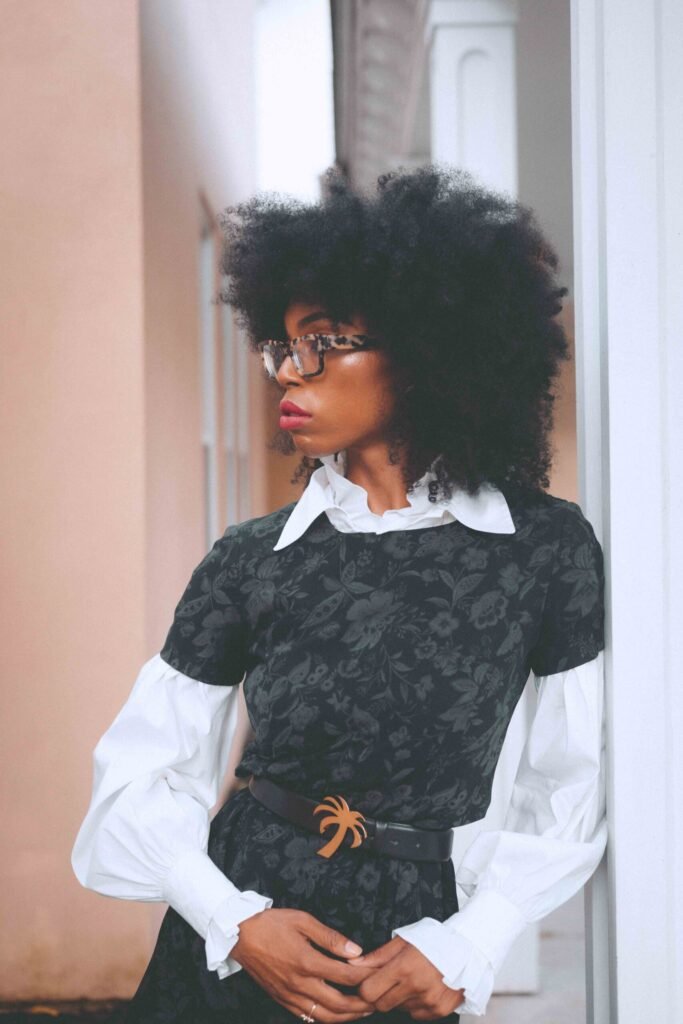
The dress is vintage Ann Taylor, covered in a floral pattern so dark that the leaves and blossoms reveal themselves slowly. Worn alone, its short sleeves and simple shape might make it feel like a dress for warmer weather. Layered over the white Moda International poet blouse, it becomes something else entirely. The ruffled collar rises from the neckline while the exaggerated sleeves escape below the hem, turning a quiet floral dress into something theatrical. This is the third appearance of the same white blouse, but it does not feel repeated.
This is what I would wear to wander through a historic house on a cold afternoon, to browse an antique shop just before closing, or to sit near a window with a book while the light shifted across the room. It feels romantic without asking for an occasion grand enough to deserve it.
That tension appeared throughout the Fall 2026 collections. At Chloé, Victorian blouses, faded checks, and micro-florals evoked the free-spirited women of another era. McQueen took floral wallpaper prints and lace and made familiar ideas of femininity feel stranger and powerful. My version lives somewhere between the two: bohemian in spirit, darkened by autumn, and disciplined by the starkness of a crisp white shirt.
The Palm Angels belt gives the layers a waist and introduces a small flash of gold. Its palm-tree buckle is almost humorous against such a solemn palette—a souvenir from a warmer place fastened around a garden after sunset. That slight mismatch keeps the outfit from becoming too literal.
The practical lesson is simple: before putting away a warm-weather dress, consider what could live beneath it. A romantic blouse can extend its life into fall while changing its character completely. Look for a dress with enough room through the shoulders and sleeves, then allow the collar and cuffs of the blouse to remain visible. Add a belt if the layers begin to obscure the body.
Perhaps that is what personal style really asks of a wardrobe: not endless novelty, but enough imagination to let one beloved thing become many different women.
A Wilder Kind of Prep
There is something about a September morning that makes the world feel newly possible.
The light is sharper, the air has lost its summer heaviness, and even an ordinary day carries the faint anticipation of a new semester. Long after we have stopped returning to classrooms, autumn still awakens the desire to begin again—to buy a fresh notebook, choose a more serious book, and dress like the person we intend to become.
This is what I would wear before the rest of the day has decided what it wants from me: walking beneath old trees, sitting through morning Mass, or taking myself somewhere quiet to write while the light is still pale and forgiving.
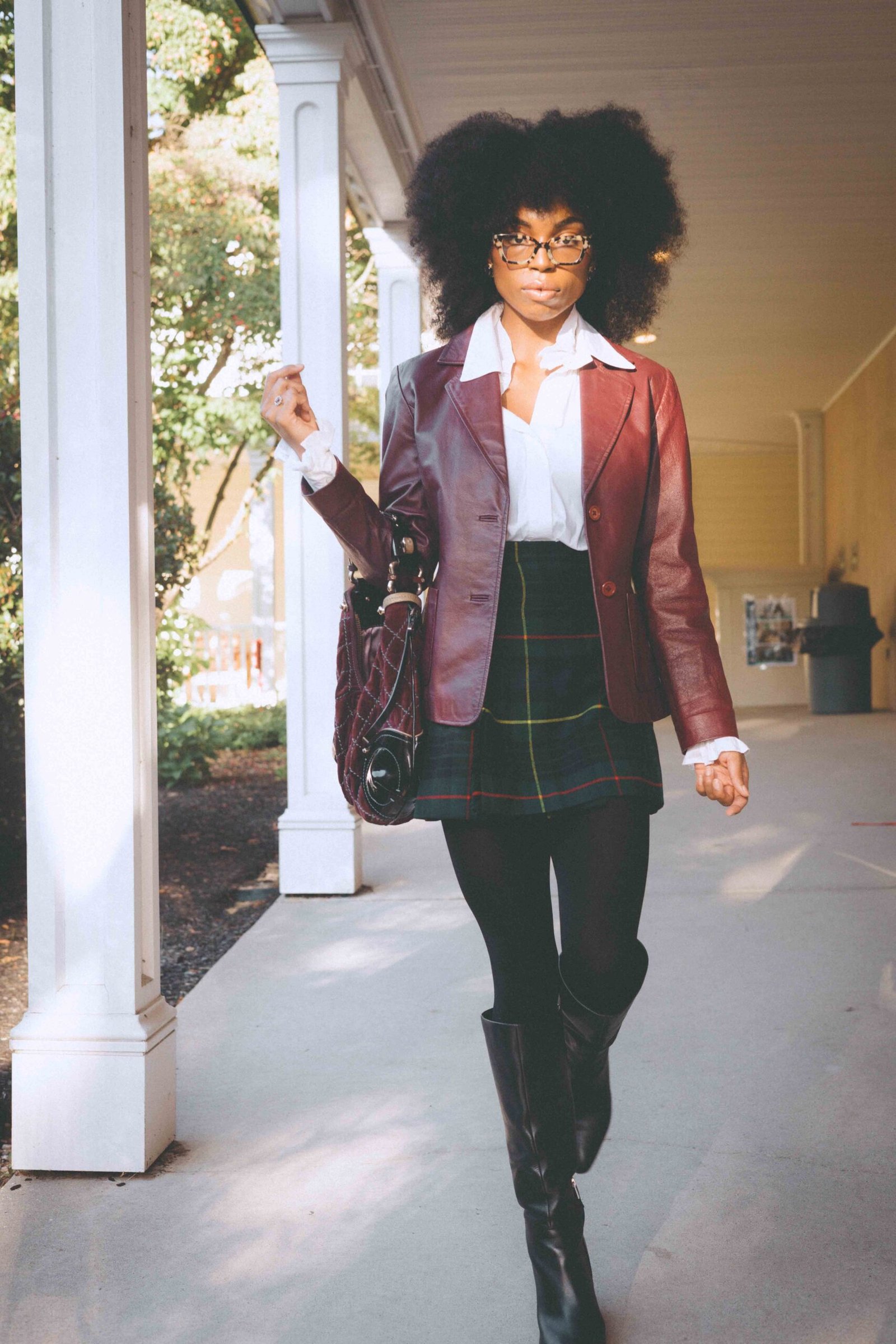
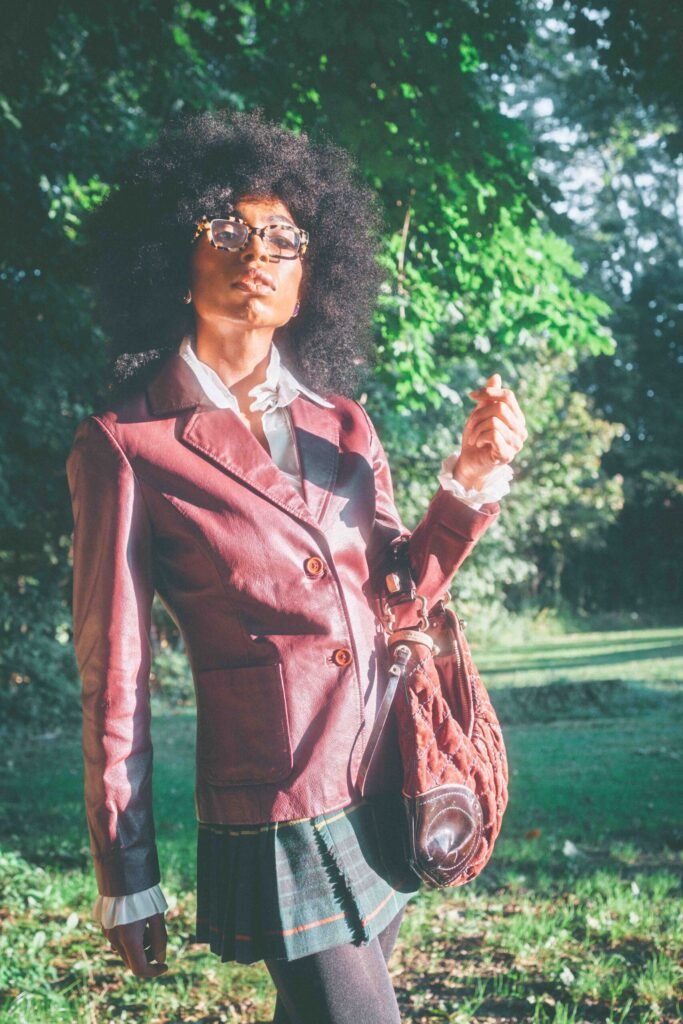
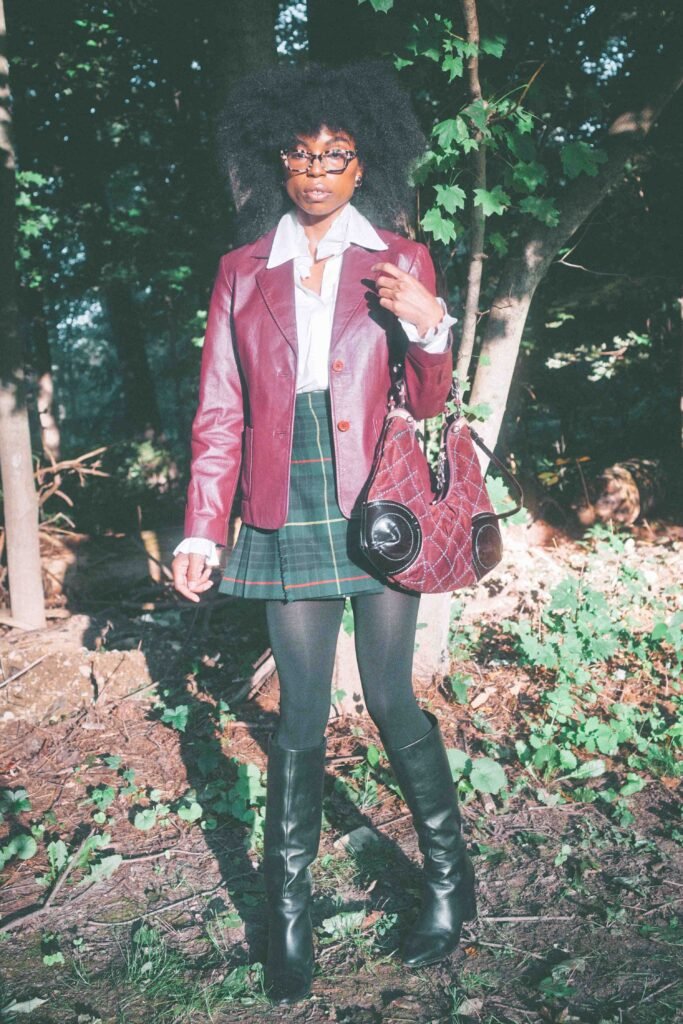
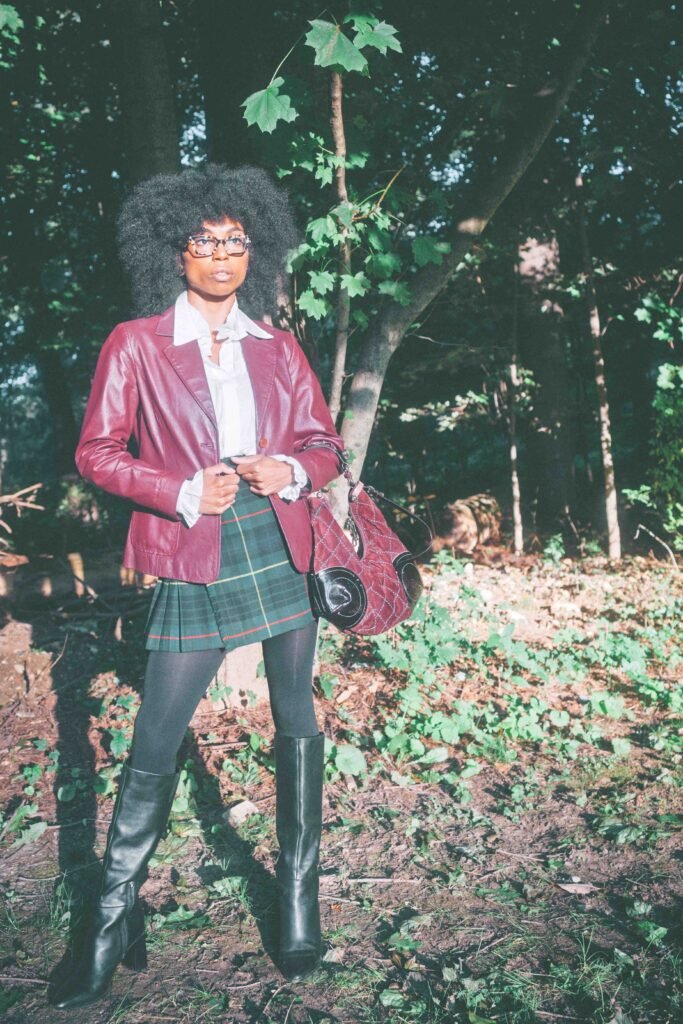
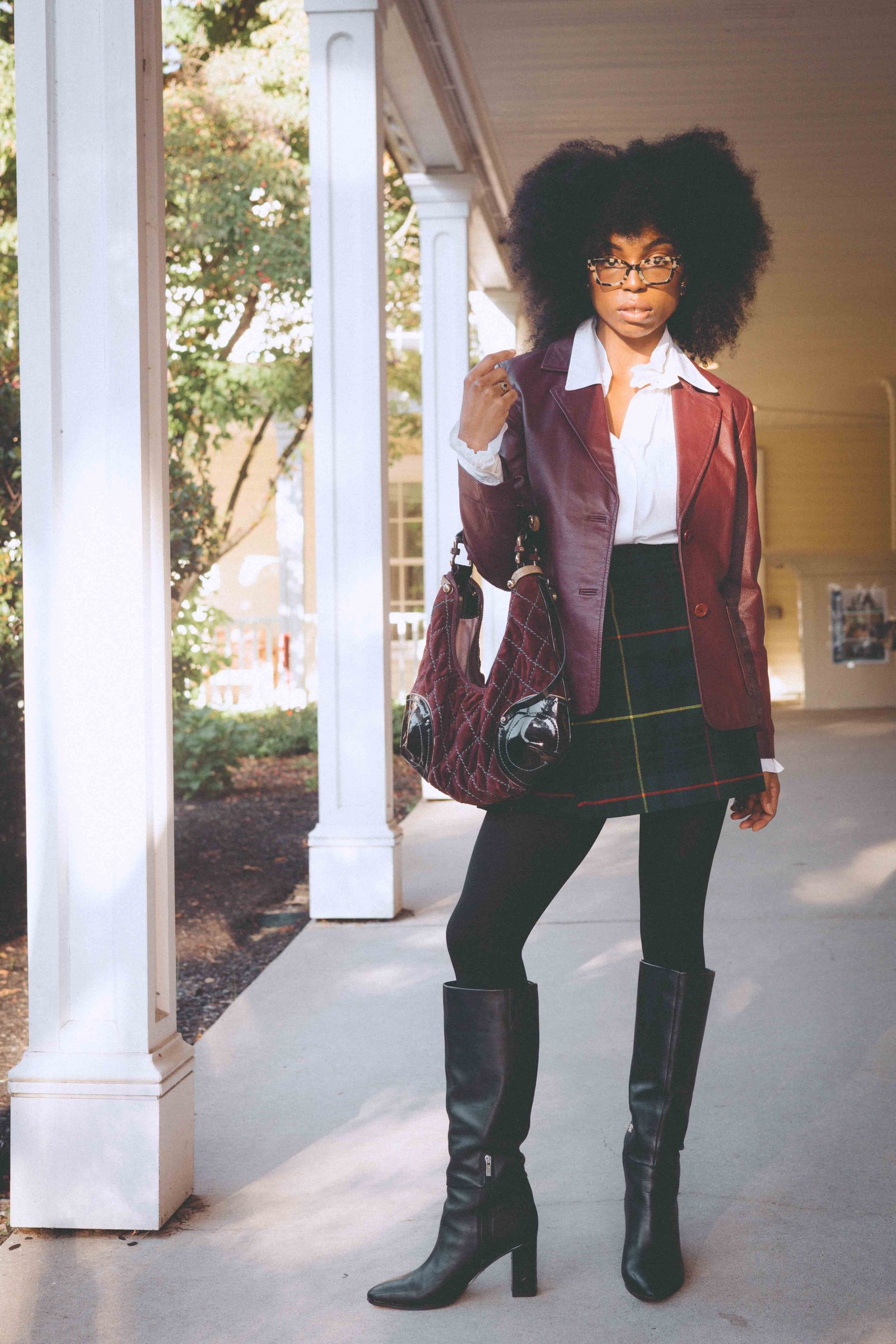
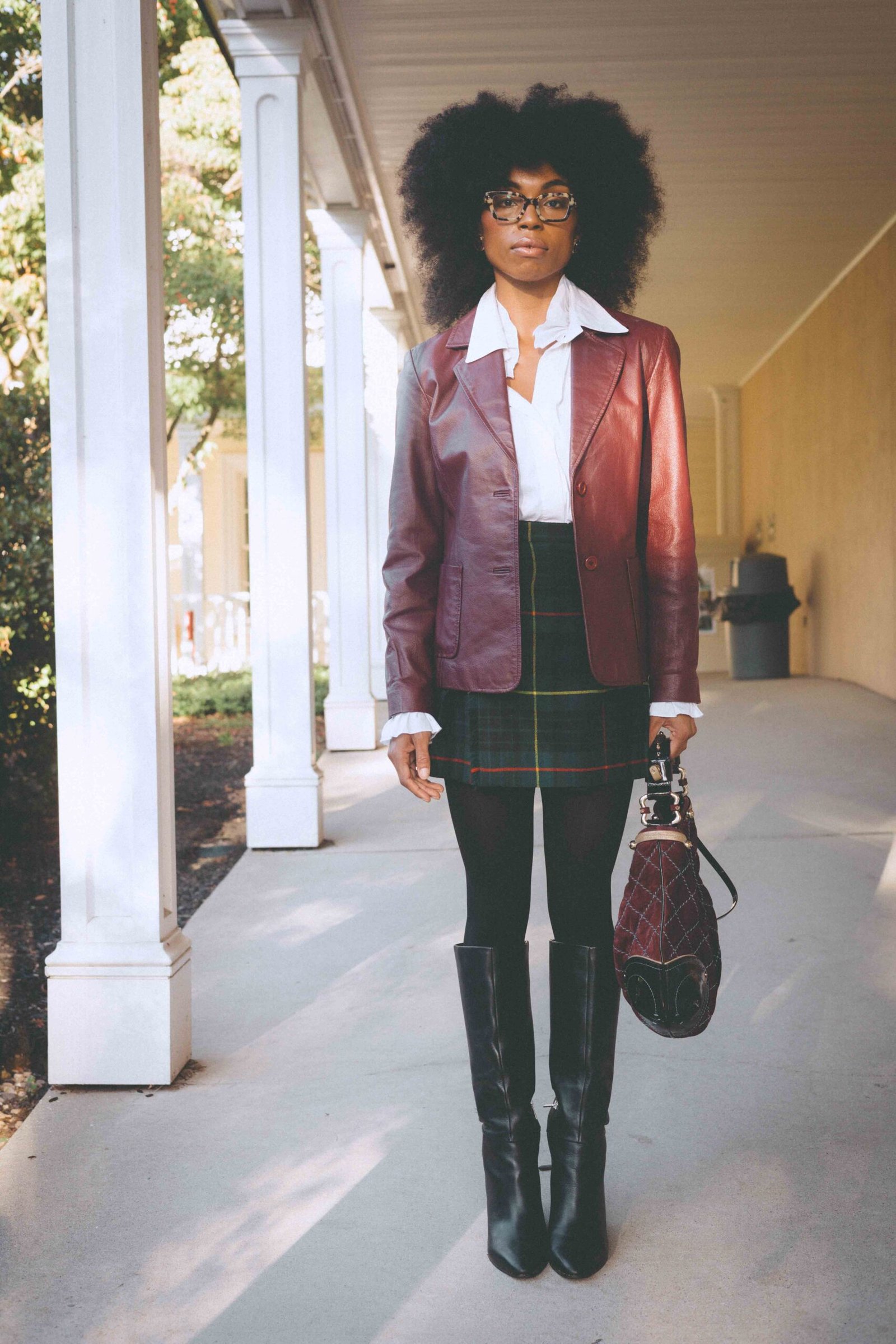
The outfit borrows from the familiar language of an autumn uniform—a tartan skirt, white blouse, opaque tights, and knee-high boots—but refuses to recite it perfectly. The skirt is 100% wool and made in Scotland, giving the plaid a history and substance that a seasonal imitation could never quite reproduce. Over it, I wore a thrifted vintage leather blazer in a deep, unequivocal burgundy: not brown, not oxblood, but the color of leaves just before they darken.
Plaid has returned throughout the Fall 2026 collections, including the exaggerated skirt suits and romantic blouses of Marc Jacobs’s Fall 2026 collection. But plaid never truly leaves. It belongs to school uniforms, Scottish tradition, punk rebellion, country estates, and the wardrobes of women who have made it mean something entirely their own. Its longevity makes it less of a trend than a language—and the interesting part is deciding how you want to speak it.
Here, the leather blazer interrupts the skirt’s good manners. The poet blouse, appearing once again, softens the leather without making it precious. The same Calvin Klein boots from the first and second look ground everything in black, while a vintage Juicy Couture bag introduces a trace of early-2000s glamour—proof that personal style becomes richer when different decades are allowed to meet.
The practical formula is simple: begin with something familiar, then add one piece that changes its character. A plaid skirt can become collegiate with a cardigan, punk with worn leather, romantic with a poet blouse, or severe with a long black coat. You do not need an entirely different wardrobe for every version of yourself. You need pieces capable of participating in more than one story.
Make It Yours
Trends are most useful when treated as invitations rather than instructions. The runway can give you a vocabulary, but it cannot write the sentence for you.
These five looks were not purchased as complete outfits. They were assembled from pieces collected over time: a blouse worn four different ways, boots that traveled from one story to the next, vintage garments from vanished labels, and newer pieces that earned their place beside them. Repetition did not make the wardrobe less interesting. It gave each piece a life beyond the outfit in which it first appeared.
To try this yourself, begin with something you already love and place it beside its opposite. Wear the romantic blouse with the severe blazer, the proper skirt with worn leather, or the oversized coat with something unexpectedly short. If an outfit feels too harmonious, interrupt it. If it feels like a costume, remove the most obvious piece. Keep adjusting until the references remain, but the person wearing them is unmistakably you.
Bohemian style lives in contradiction. It does not require rejecting tailoring, tradition, or even the idea of a uniform. It only asks that, when you inherit a set of rules, you leave behind enough evidence that you were there.
Fall 2026 may belong to romanticism, tailoring, plaid, and exaggerated proportions, but none of those ideas belong exclusively to this season. They are simply new reasons to look again at what we already own.
Taste is not something we purchase all at once. It is the record of what we notice, what we keep, and what we learn to make our own.
🌻 Stay awhile. Get The Bohemian Bungalow delivered to your inbox each month—a quiet, creative escape filled with art, personal style, seasonal recipes, music, and reflections on living beautifully.