Skincare After Depression: A Softer Way Back to Myself
A personal reflection on skincare after depression—how patience, simplicity, and daily ritual replaced perfection, helping me rebuild trust with my skin and myself.
There was a time last year when my skincare routine disappeared entirely. I was in the thick of depression—the kind that makes even waking up feel like a Herculean feat. The rituals that once anchored me—the quiet moments at the sink, the steady rhythm of care—slipped away. Skincare, the one thing that had always made me feel safe, the one thing I thought I would never abandon, slowly fell to the wayside.
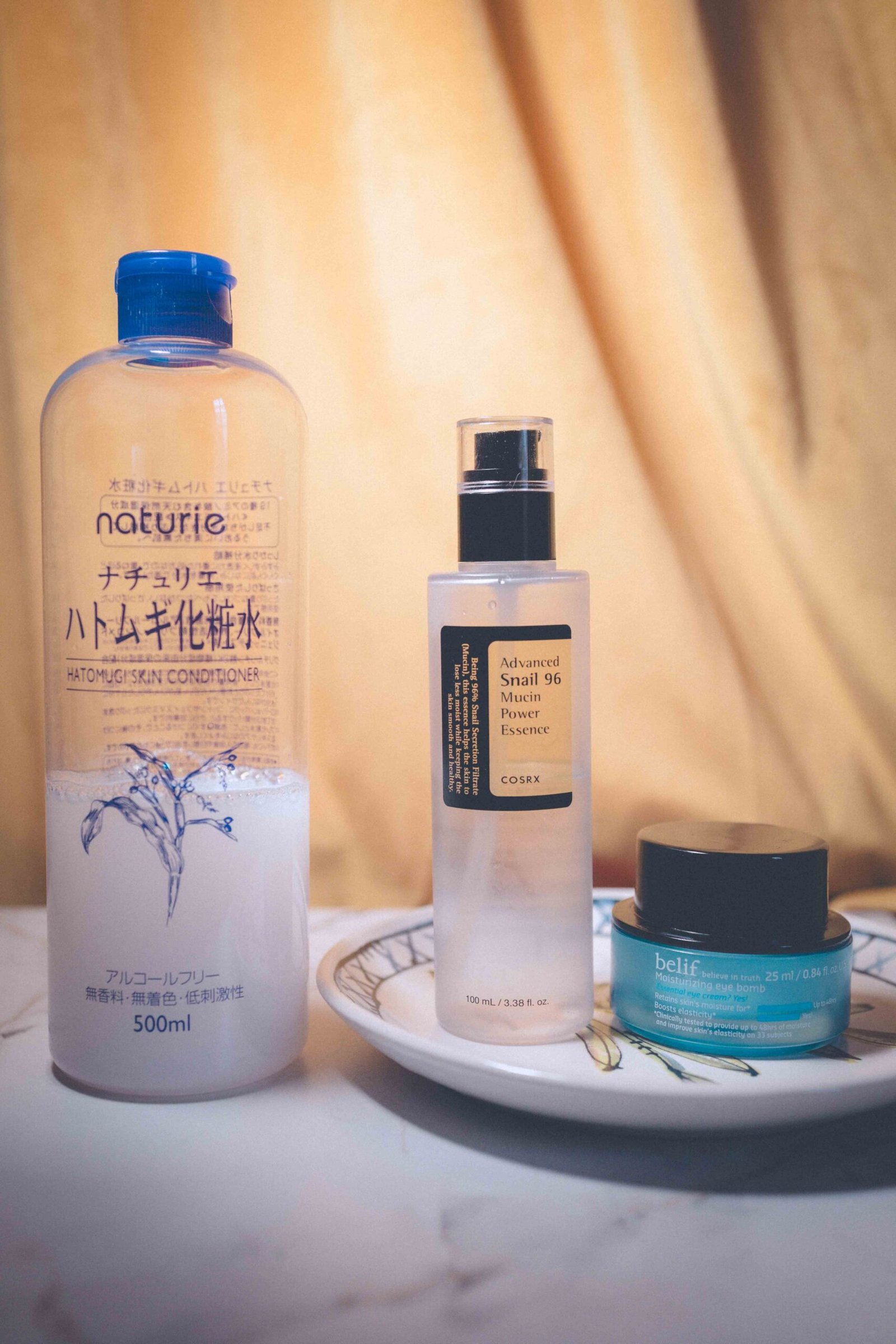
At first, the unraveling was subtle. I stopped using tretinoin after months of applying it religiously every other night. Then I stopped washing my face at night altogether, too exhausted to move through the ten-step Korean skincare routine I once believed was essential for perfect skin. Serums disappeared from my shelf. Mornings became rushed and bare—just sunscreen on unwashed skin, no moisturizer, sometimes not even water.
My skin grew dull and dry, mirroring the way my life had thinned out. I went from thriving to merely existing, quietly falling through the cracks with no one to catch me. For a long while, skincare became an afterthought instead of the nonnegotiable act of care it had once been.
I returned to my skincare routine in February 2025, at the same time I was trying to rebuild my life from the ground up. A new decade. A blank slate. I went back to the gym. I picked up my blog again. I found my way back to the sink.
At first, the results felt almost miraculous—my skin smoothed out, that unmistakable tretinoin glow returning like a familiar friend. But instead of letting progress unfold, I chased it. I overused actives. I layered ingredients without fully understanding how they interacted. My skin rebelled—reactive, flaky, inflamed. Hyperpigmentation bloomed along my jaw in deep violet patches, so severe I didn’t want to leave the house. I felt exposed, undone, like my skin was broadcasting every mistake I’d made.
That breaking point taught me something I hadn’t wanted to learn: healing doesn’t respond to force. What I needed wasn’t another miracle product or a more expensive serum. I needed patience. I needed restraint. I needed to relearn how to care for myself gently—without urgency, without punishment, without the need to fix everything at once.
Returning to skincare after depression became less about transformation and more about trust. About showing up consistently, even on quiet days. The routine I have now is simpler, softer, and infinitely kinder to my skin. These are the products I reach for not to chase perfection, but to create a small, daily sanctuary—one that reminds me that care doesn’t have to be complicated to be powerful.
This is my current skincare ritual after depression: not a prescription, not a promise, but a practice in returning to myself.
Skincare after Depression: Damage and the Lesson of Restraint
Last year, I went through a phase where I believed expensive meant better and got seduced by pretty packaging and lofty claims. I gravitated toward luxury creams and serums with impossible claims. I fawned over beautiful packaging that looked aesthetic and promised transformation—not just in my skin, but in my life. I wanted to believe that if I spent enough, I could bypass the waiting. That money could fast-track healing. That beauty had a price point, and if I reached it, I might finally feel whole again.
But my skin didn’t care how much I spent. It just wanted consistency and simplicity.
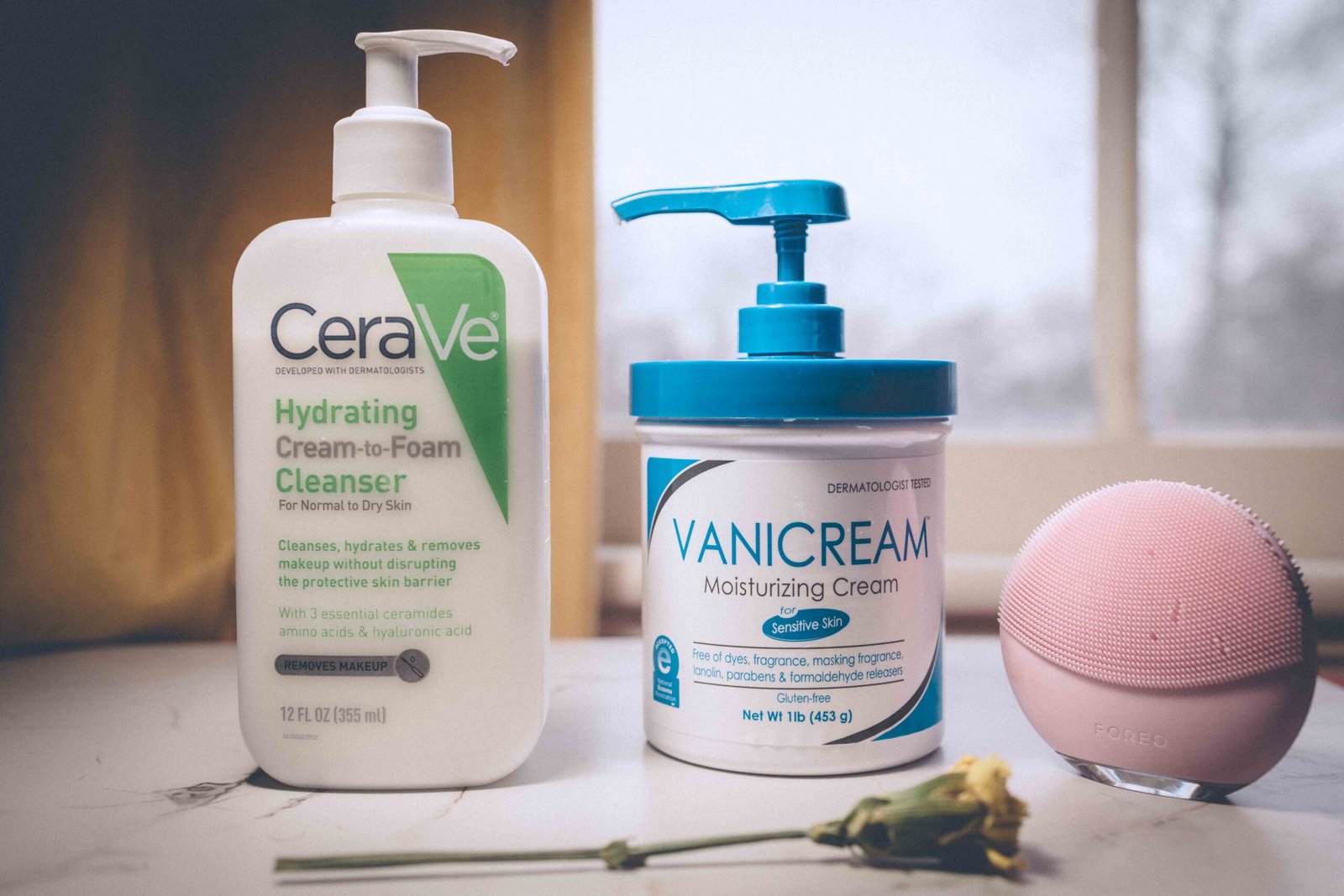
What actually worked were simple, well-formulated products—the kind you can buy without blowing your budget. The kind you find at Walmart or CVS. No Pinterest-worthy jars. No glass droppers designed to impress. No packaging that makes it onto Instagram or TikTok. Just gentle formulas that respected my skin when it felt fussy, reactive, and tired. Products that didn’t promise everything at once, but quietly repaired my skin barrier without draining my bank account.
Returning to simplicity isn’t always easy. We’re conditioned to believe effectiveness must be complicated—that effort equals multiple steps and luxury equals results. But simplicity, I learned, can be just as powerful. In the end, it felt like relief. Like exhaling. And for the first time in a long while, it was kind—to my skin and to my wallet.
Simplicity Over Excess
Last year, I went through a phase where I believed expensive meant better. Luxury creams. Serums with impossible claims. Beautiful packaging that promised transformation—not just in my skin, but in my life. I wanted to believe that if I spent enough, I could bypass the waiting. That money could fast-track healing. That beauty had a price point, and if I reached it, I might finally feel whole again.
But my skin didn’t care how much I spent.
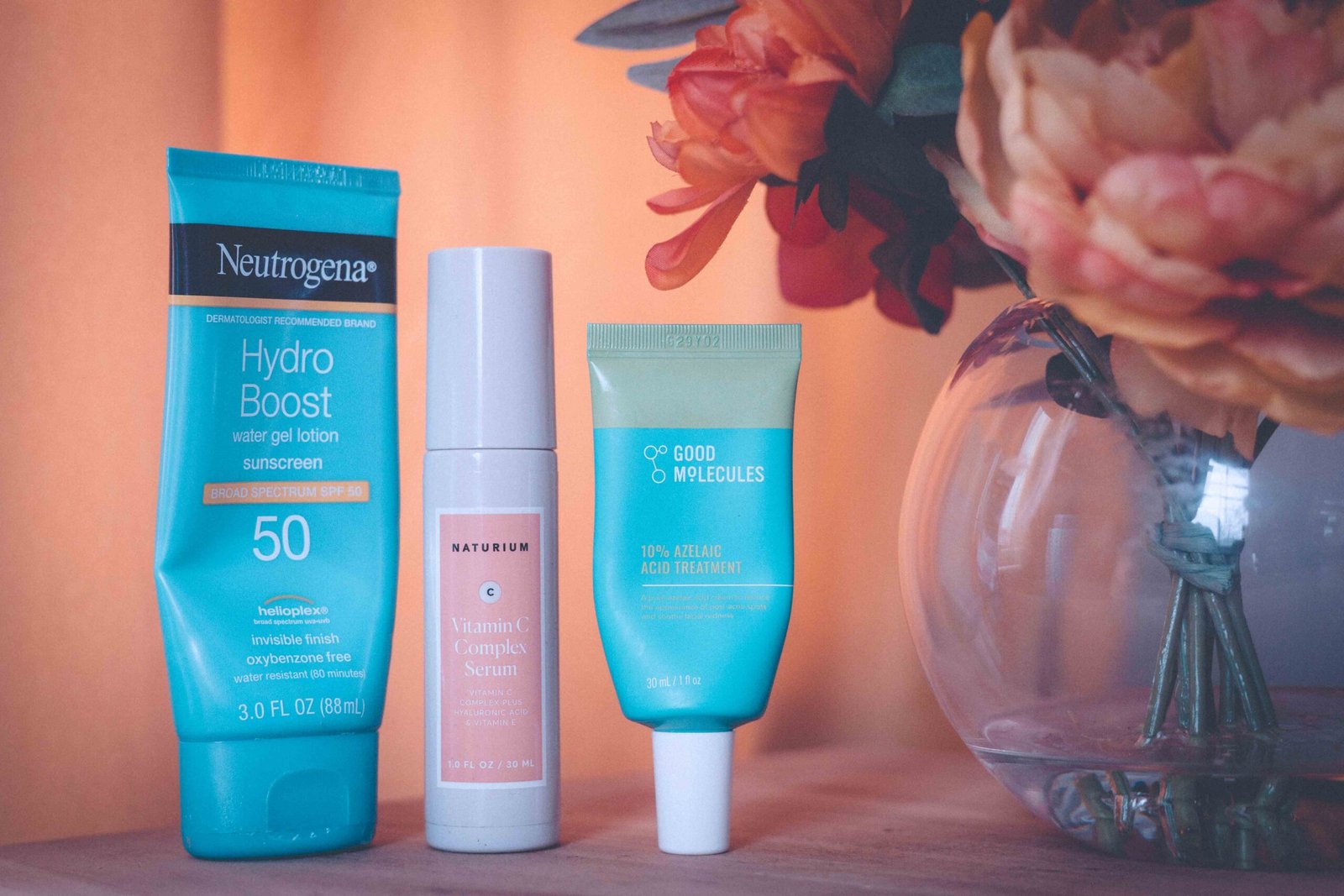
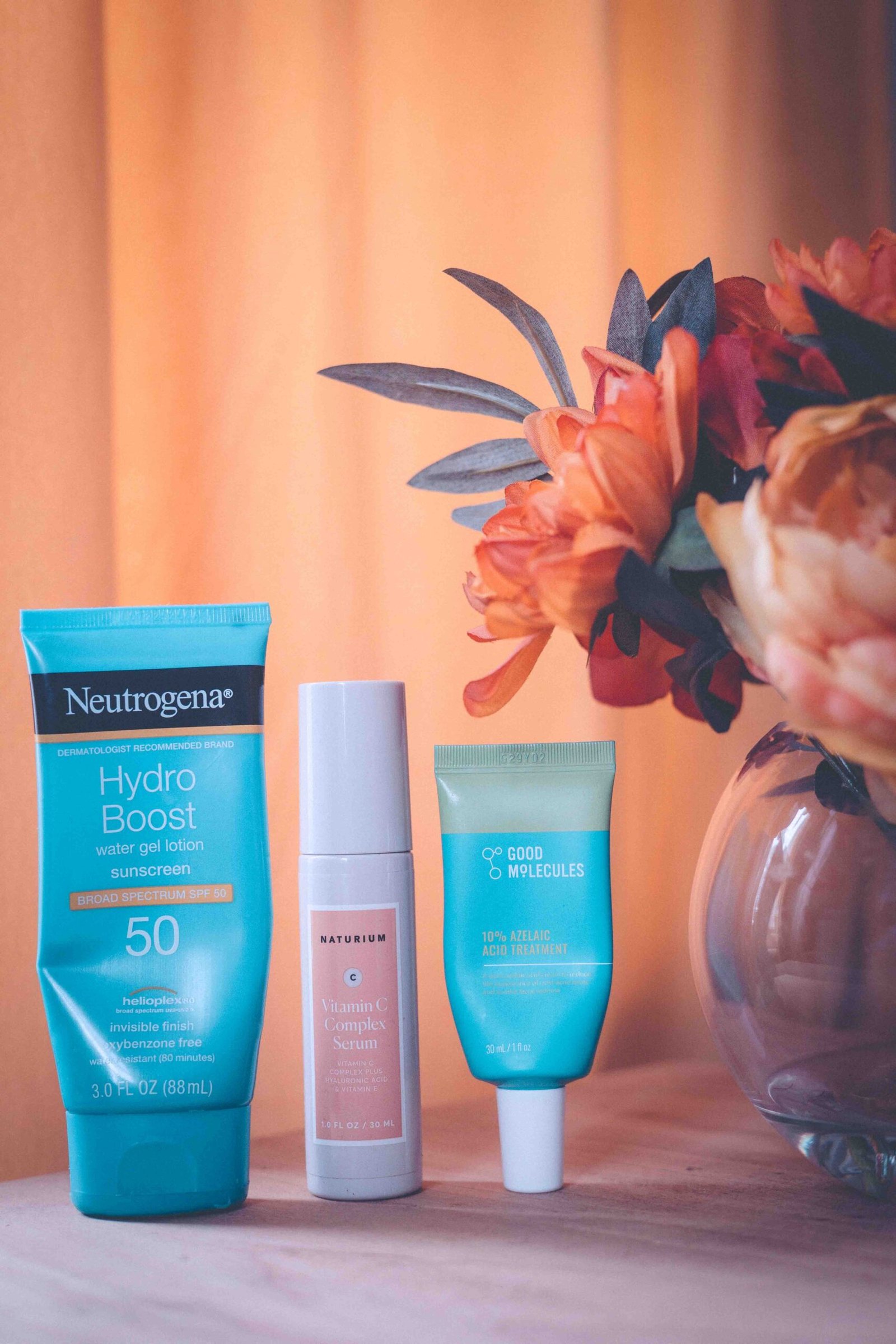
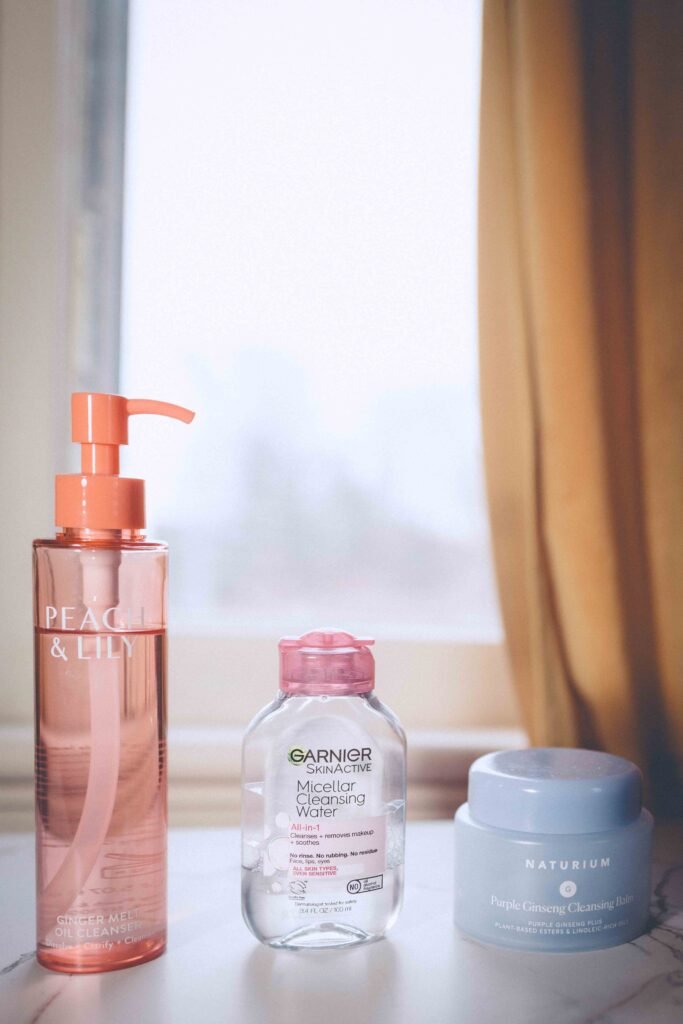
What actually worked were simple, well-formulated products—the kind you can buy without blowing your budget. The kind you can find at Walmart or CVS. They are gentle formulas that respected my skin when it felt fussy, reactive, and tired. Products that didn’t promise everything at once, but quietly repaired my skin barrier without draining my bank account. And the best part? They work better than their more expensive counterparts.
Returning to simplicity isn’t always easy. We’re conditioned to believe effectiveness must be complicated—that effort equals layers and luxury equals results. But simplicity, I learned, can be just as powerful. In the end, it felt like relief. Like exhaling. And for the first time in a long while, it was kind—to my skin and to my wallet.
Naturium + Drugstore superheroes
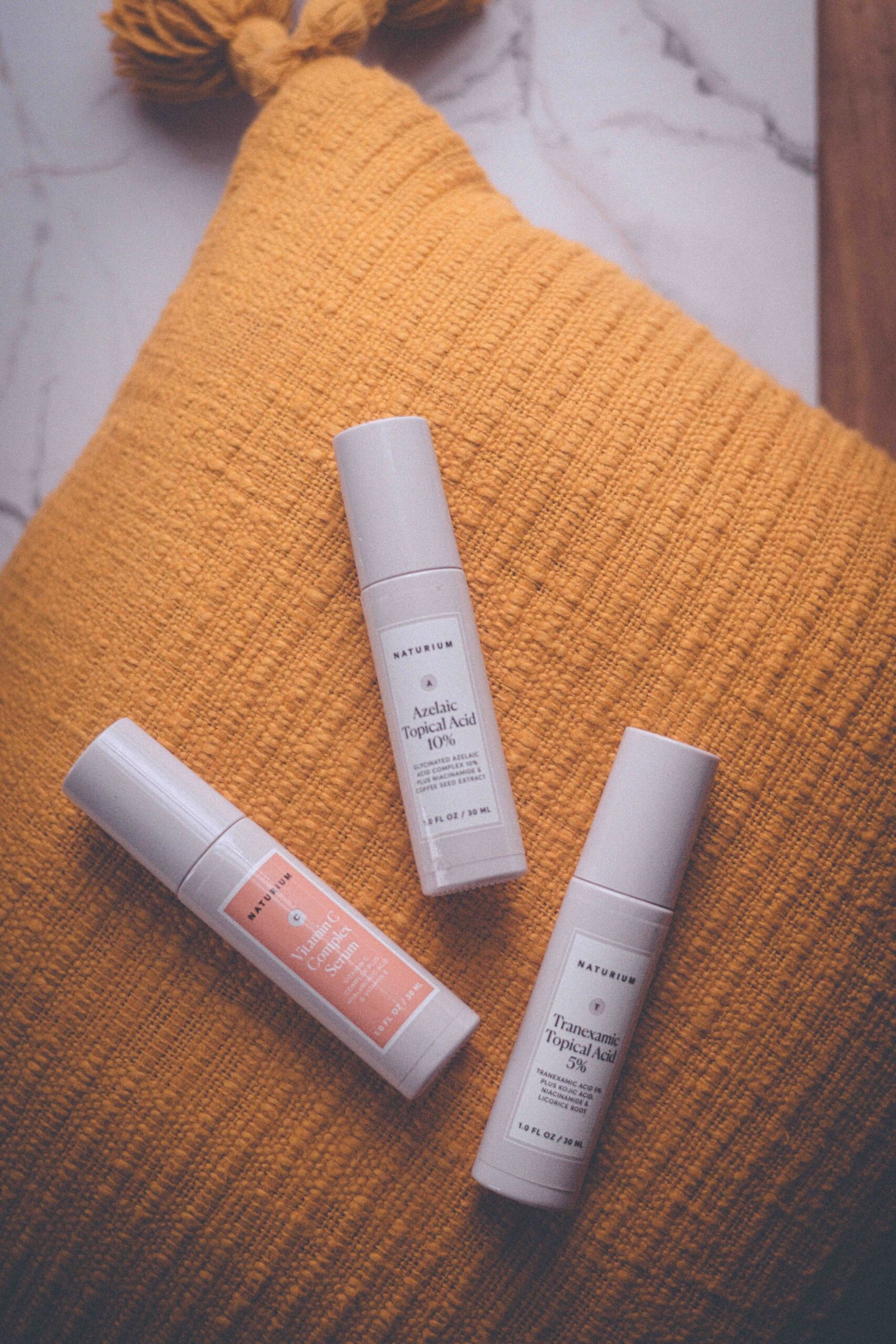
One of the biggest surprises in my routine has been how well reasonably priced products perform—often better than the luxury serums I once relied on. Naturium, in particular, earned its place slowly and quietly. Thoughtfully formulated, effective even on melanated skin, and accessible, the products worked with my skin instead of overwhelming it.
Over time, Naturium became part of the routine I trust most—not because of hype or packaging, but because it proved itself. There’s something deeply grounding about realizing you don’t need the most expensive option to take good care of yourself. Drugstore skincare taught me that consistency beats novelty every time.
Tretinoin: Long-Term Trust, Not overnight Miracle
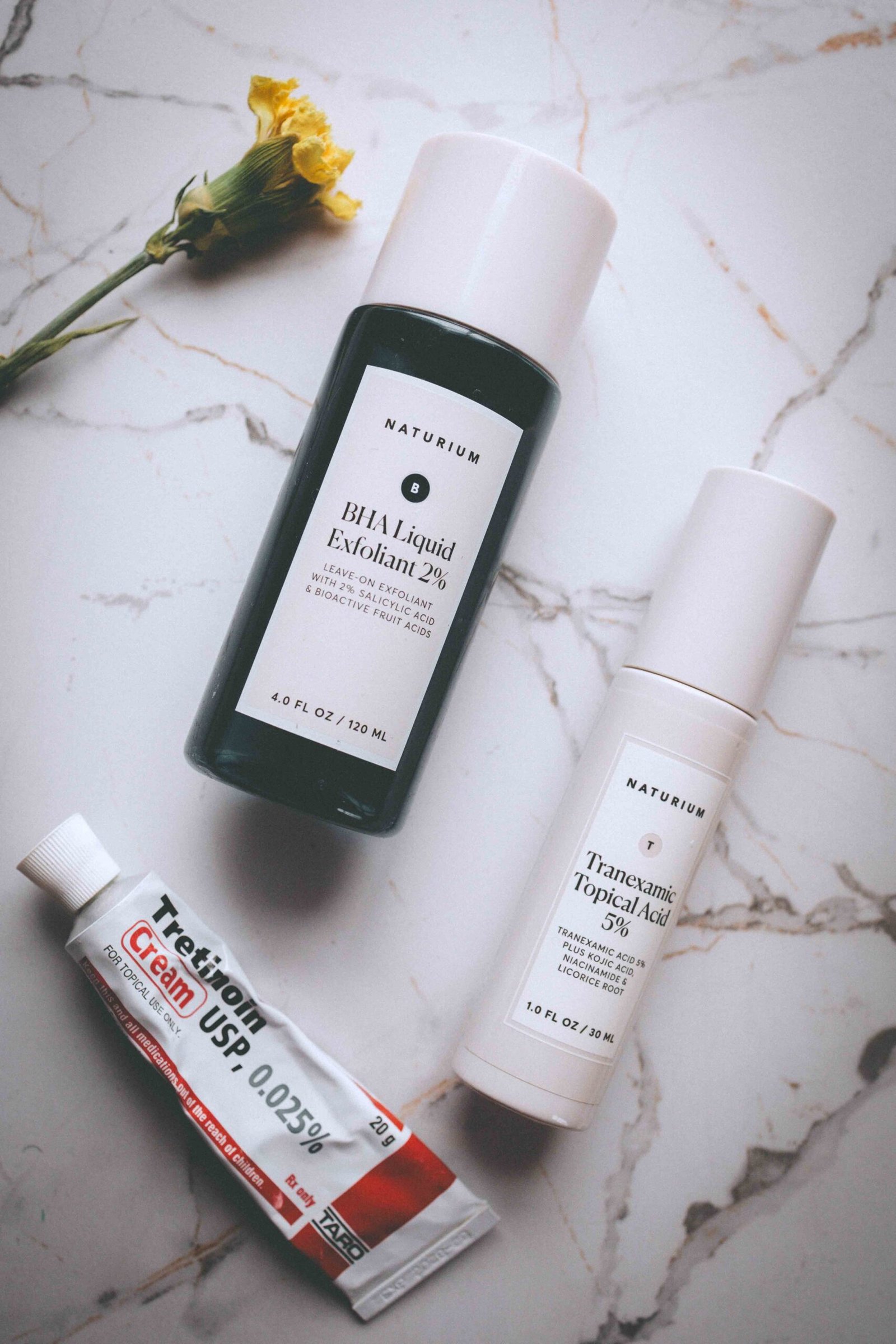
Tretinoin has remained my ride-or-die—not because it delivers results quickly, but because it doesn’t. Real results take time. Six months. Sometimes a year. It’s slow, methodical, and deeply unglamorous—and that’s exactly why it works.
Available by prescription and often covered by insurance plans, tretinoin doesn’t arrive dressed up or over-promised. There’s no beautiful packaging, no instant gratification, no viral hype. Just a small tube that asks for consistency and respect. Used correctly, it delivers a kind of glow no shortcut ever could. Used carelessly—too often, too strong, too fast—it pushes back, damaging the very skin you’re trying to heal.
Tretinoin doesn’t reward urgency. It rewards restraint. My tretinoin journey has been a slow one. Think months, not weeks. When acne and hyperpigmentation are stubborn. I do sometimes wonder if it’s working. But my tretinoin journey has taught me trust the process even when results are slow.
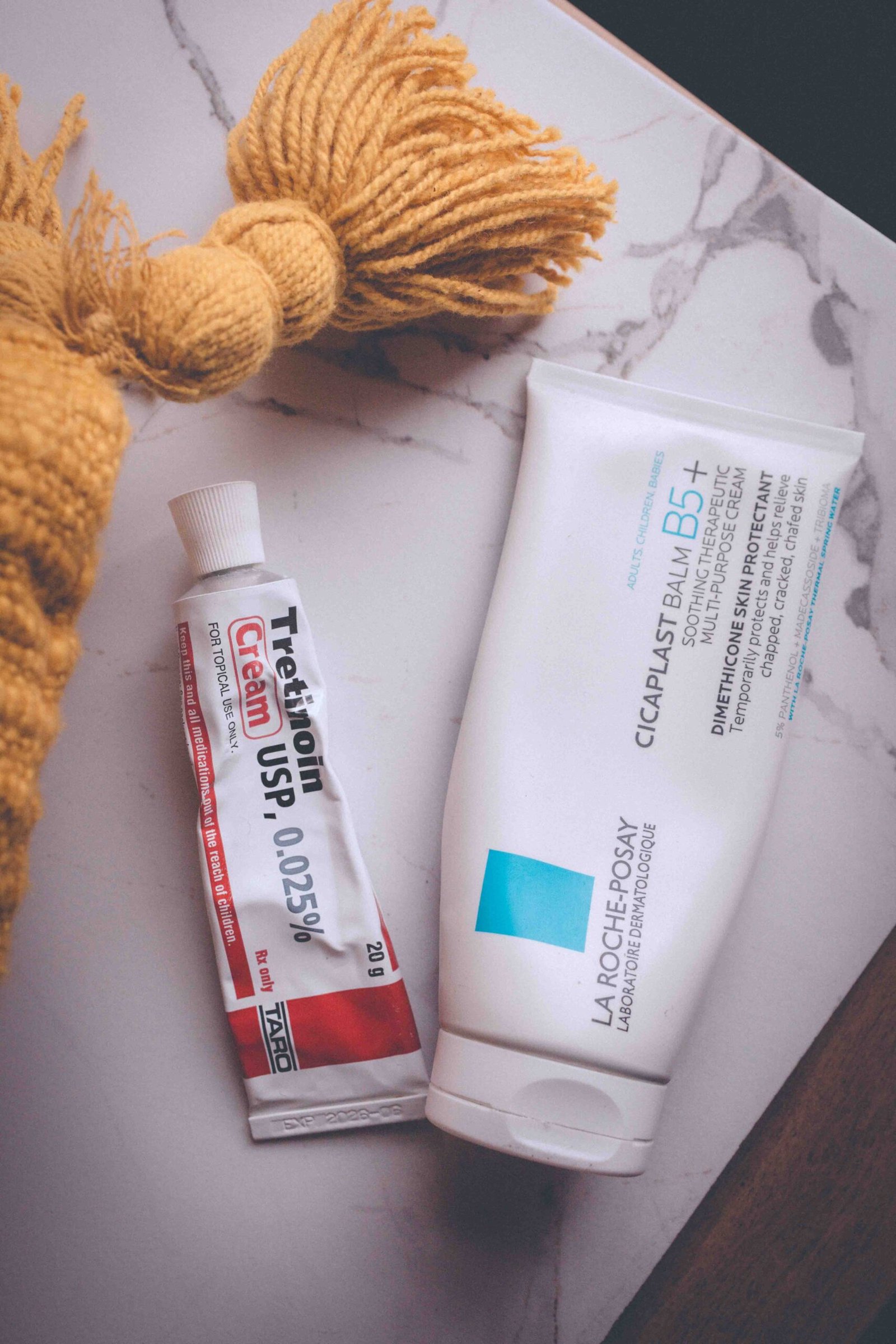
Working with it also taught me something I needed to learn beyond skincare: progress is quiet. It rarely announces itself and comes months later after consistent effort. You rarelt notice it day to day and it can be really hard to see the forest in the trees. There’s no dramatic reveal, no overnight transformation. You see it months later, almost by surprise, when your skin feels steadier—and so do you. Better not because you rushed, but because you learned to move at a pace that allowed real change to take hold.
Skincare as Self-Trust after depression
My skincare routine now is smaller than it’s ever been. Fewer steps. Fewer products. More intention.
What matters isn’t perfection—it’s showing up. Washing my face at night even when I’m tired. Moisturizing with Vanicream from Walmart instead of something expensive from Sephora. Applying sunscreen consistently, not out of fear, but out of care for the progress I’ve made.
Skincare isn’t how I fix myself anymore. I no longer treat my skin like a project or a problem to solve. I celebrate small victories instead of chasing poreless perfection. It’s how I stay connected to myself when my thoughts start to spiral, how I ground myself when stress creeps in. It’s a steady presence when life feels uncertain—like standing on solid ground after an earthquake.
This routine taught me how to care for myself as someone who matters inherently, not conditionally. Not because I’m productive or polished or perfect—but because I exist. Depression told me otherwise. Skincare, in its quiet way, helped me unlearn that lie.
Healing doesn’t ask for intensity, and it rarely happens overnight. Whether it’s your skin or your life, healing asks for patience—for showing up day after day even when progress feels invisible. It asks for self-compassion and courage.
Keep it simple. Sometimes the most radical thing you can do is choose gentleness—and trust that it’s enough.
🌻 Stay awhile. Get The Bohemian Bungalow delivered to your inbox each month—a quiet, creative escape filled with art, personal style, seasonal recipes, music, and reflections on living beautifully.